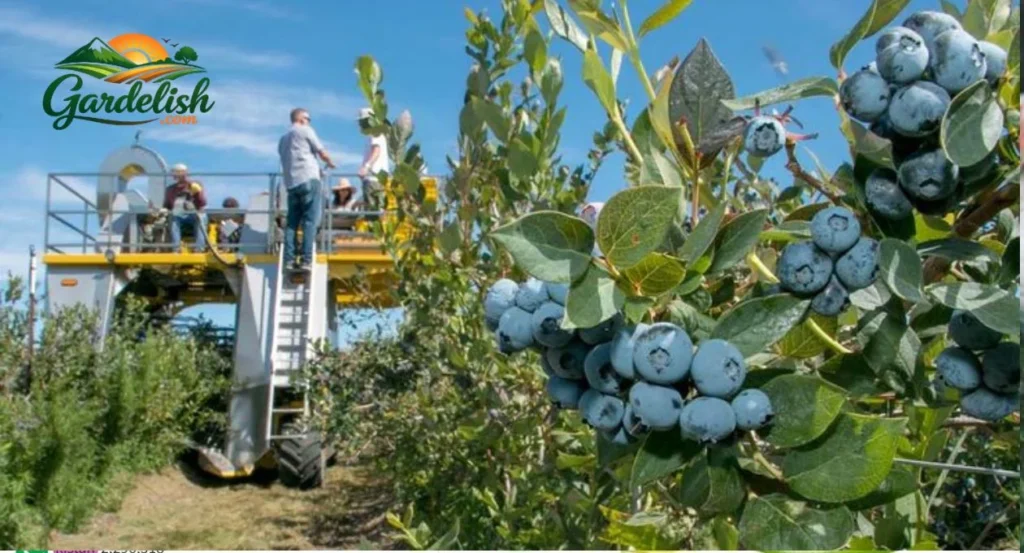
A blueberry harvest forecast depends on where you live, which blueberry variety you grow, and what kind of spring weather your plants experienced. In most home gardens, blueberries ripen from late spring through late summer, with southern regions harvesting first and northern gardens picking later. The best sign is not the calendar—it is the berry itself. Once blueberries turn fully blue, they usually need a few more days on the bush to develop their best sweetness.
For 2026, gardeners in parts of Florida and Georgia may see a lighter or delayed harvest after severe freeze damage affected early blueberry crops. In other regions, the forecast depends mainly on bloom timing, pollination, rainfall, heat, and bird pressure.
Quick Answer: Blueberries are ready when they are fully blue and come off easily
Blueberries are usually ready to pick a few days after they turn fully blue. A berry that looks blue from above may still be pink or reddish underneath, which means it is not fully ripe yet. The sweetest berries come off the stem with a gentle roll of your thumb, not a firm tug. If your berries are green, harvest is still weeks away; if they are pink or purple, picking may begin within one to two weeks.
Blueberries usually ripen from spring to late summer, depending on region
Blueberry season moves across the country in waves. Warm southern climates begin first, while cooler northern gardens usually harvest later in summer. Weather can move the harvest forward or backward by one to three weeks, especially if spring is unusually cold, wet, or hot.
| Region | Typical Blueberry Harvest Window | What Can Change the Forecast |
| Florida and Deep South | Late March to May | Winter freeze, early bloom damage, heat |
| Southeast and Gulf states | April to June or July | Late frost, rain during bloom, rabbiteye variety timing |
| Mid-Atlantic | June to August | Humidity, birds, drought, stormy weather |
| Midwest and Northeast | July to August or September | Cool spring, late frost, poor pollination |
| Pacific Northwest | June to September | Cool weather, irrigation, variety choice |
| Northern lowbush regions | Late July to September | Drought, bloom weather, heat stress |
In a home garden, two blueberry bushes in the same town can ripen at different times. A bush planted in full sun near a warm fence may ripen earlier than the same variety growing in a cooler, partly shaded spot.
The 2026 blueberry harvest may be lighter in freeze-affected southern areas
The 2026 blueberry forecast is uneven because several southeastern areas experienced damaging freeze events during a sensitive stage of growth. USDA’s Risk Management Agency reported rare freeze damage to blueberries in Florida and Georgia in early 2026, with some fields expected to produce little or no harvestable fruit.
For home gardeners in affected areas, this may show up as brown flowers, shriveled young berries, bare clusters, or healthy-looking plants with very little fruit. A blueberry bush can leaf out beautifully after a freeze and still have a poor crop because the flowers or tiny fruit were damaged earlier.
Gardeners outside the freeze zone should not assume a poor season. In cooler regions, the harvest forecast depends more on spring bloom timing, bee activity, rain, soil moisture, and how well the plants were cared for last year.
Your bush gives the most accurate harvest forecast
The easiest way to forecast your own blueberry harvest is to read the fruit stage. Calendars are helpful, but the plant gives better information.
| What You See on the Bush | Harvest Forecast | What to Do Now |
| White or pink flowers | 6–10+ weeks away | Protect from frost and encourage pollinators |
| Tiny green berries | 4–8 weeks away | Keep soil evenly moist |
| Full-size green berries | 2–4 weeks away | Mulch and water during dry weather |
| Pink or purple berries | 7–14 days away | Install bird netting immediately |
| Fully blue berries | Usually 3–7 days away | Taste-test before heavy picking |
| Berries fall off with a light touch | Ready now | Harvest in the cool part of the day |
A common beginner mistake is picking berries as soon as they look blue. Blueberries often color before they sweeten. Turn the berry gently and check the underside. If there is still pink near the stem end, leave it a little longer.
Blueberries taste best when picked a few days after turning blue
Blueberries do not all ripen at once, even on the same cluster. One cluster may hold green berries, pink berries, deep blue berries, and berries that are perfectly ripe. That is why hand-picking is better than stripping the whole cluster.
University of Minnesota Extension notes that blueberry fruit turns blue before it is fully ripe, and acidity continues to fall for several days after color change. Fully ripe berries should be blue underneath and should be picked only when dry.
For the best flavor, use this simple test:
- Look for berries that are blue all the way around.
- Lift the cluster and check the underside.
- Roll one berry gently with your thumb.
- If it drops easily, taste it.
- If it tastes sweet and full, begin picking the ripest berries.
- Leave firm, tart, or reddish berries for another few days.
Morning is usually the best time to harvest, after dew has dried but before the sun gets too hot.
Weather is the biggest reason blueberries are early, late, or scarce
Blueberry harvests are shaped long before picking season begins. Flower buds form the previous year, survive winter, bloom in spring, set fruit after pollination, and then size up with steady moisture.
A late frost can ruin flowers or young berries. Cold, wet, windy weather during bloom can reduce bee activity. Drought during fruit sizing can cause small, dry berries. Long stretches of cloudy weather can slow ripening. Heat waves may speed up color change but reduce berry size and flavor if the roots are dry.
Here is what weather usually means for your harvest:
| Weather Pattern | Likely Effect on Blueberries |
| Late spring frost | Fewer berries or damaged clusters |
| Rain during bloom | Poor pollination and uneven fruit set |
| Cool spring | Later harvest |
| Hot, dry weather | Smaller berries and faster ripening |
| Steady moisture | Larger, better-quality fruit |
| Heavy rain near harvest | Softer berries and more splitting risk |
If the bush has plenty of leaves but few berries, look back to bloom time. The problem often happened weeks earlier.
Variety choice can stretch or shorten your harvest
Your blueberry type has a major effect on harvest timing. Southern highbush blueberries usually ripen earlier in warm climates. Rabbiteye blueberries are popular in the South and often ripen from midseason into late season. Northern highbush blueberries are better suited to cooler areas and commonly ripen in midsummer. Lowbush blueberries are often harvested later in colder regions.
| Blueberry Type | Best Climate Fit | Typical Harvest Pattern |
| Southern highbush | Warm-winter regions | Early season |
| Rabbiteye | Southeast and warm climates | Mid to late season |
| Northern highbush | Cooler northern regions | Mid-summer |
| Lowbush or wild blueberry | Cold northern areas | Late summer |
For a longer harvest, plant early, midseason, and late-season varieties together. UGA Extension recommends planting more than one rabbiteye variety for cross-pollination and choosing varieties from different ripening groups to broaden the harvest season.
This is one of the best tricks for home gardeners. Instead of getting one short rush of berries, you can pick gradually for several weeks.
A poor blueberry harvest usually comes from frost, pollination, pruning, soil, or birds
When a blueberry harvest fails, the plant usually tells you why. Look at the symptoms before guessing.
| Symptom | Possible Cause | Solution | Prevention |
| Flowers turned brown | Frost damage | Remove dead tissue after damage is clear | Cover plants during late frost |
| Many flowers but few berries | Poor pollination | Add compatible varieties nearby | Attract bees and avoid spraying during bloom |
| Healthy bush but no fruit | Wrong pruning or immature plant | Prune lightly and give young plants time | Learn variety-specific pruning |
| Blueberries vanish overnight | Birds | Net the bush immediately | Net before berries turn blue |
| Berries stay small | Drought or overcropping | Water deeply and thin old wood | Mulch and prune yearly |
| Berries are sour | Picked too early | Wait several more days | Check underside before picking |
| Yellow leaves and weak crop | Soil pH too high | Soil test and correct acidity | Maintain acidic soil |
Birds are one of the most underestimated harvest problems. Many gardeners wait until the berries are blue before netting, but by then birds may already be visiting the bush every morning. Net when the first berries begin to blush pink or purple.
Blueberries need acidic soil and steady moisture for a good harvest
A strong harvest starts with the roots. Blueberries are shallow-rooted plants, so they struggle when soil dries out. They also need acidic soil. UGA Extension recommends a soil pH of about 4.5 to 5.2 for best blueberry growth and notes that blueberries become difficult to grow when soil pH is above 6.0 without major amendment.
If your blueberry bush has yellowing leaves, weak growth, and a poor crop, do not just add random fertilizer. Test the soil first. Blueberries cannot use nutrients properly when the pH is too high.
A good care routine looks like this:
- Plant blueberries in full sun.
- Keep soil acidic and well-drained.
- Mulch with pine bark, pine needles, or aged wood chips.
- Water deeply during dry spells.
- Avoid digging around the shallow roots.
- Prune old, weak, or crowded canes in late winter.
- Net the plants before berries ripen.
RHS guidance also emphasizes acidic soil, regular watering, spring mulch, and bird protection when needed.
Netting before ripening protects the harvest better than scare tactics
Plastic owls, shiny tape, and rubber snakes may work briefly, but birds learn quickly. A proper net or cage is more reliable.
The best setup is a simple frame that holds netting away from the fruit. If netting rests directly on the bush, birds can still peck berries through the mesh. Secure the bottom so birds cannot hop underneath.
Use this timing:
| Berry Stage | Bird Protection Task |
| Flowers open | Do not cover tightly; pollinators need access |
| Green berries | Prepare netting or frame |
| First pink berries | Install netting |
| Blue berries | Check daily for gaps |
| After harvest | Remove netting and store it |
Never leave loose netting where birds, snakes, or small animals can become tangled. A tidy frame is safer and easier to lift for picking.
Pick blueberries carefully so they stay fresh longer
Ripe blueberries should be handled gently. The pale, dusty coating on the berry is called bloom, and it helps protect the fruit. Rough handling removes this natural coating and shortens storage life.
For better harvest quality:
- Pick only dry berries.
- Use shallow containers instead of deep buckets.
- Do not squeeze or crush the fruit.
- Cool berries soon after picking.
- Do not wash berries until just before eating.
If rain is forecast and many berries are already ripe, pick the ripe ones before the storm if they are dry. Wet ripe berries spoil faster, especially in humid weather.
Young blueberry bushes may not give a full harvest yet
A newly planted blueberry bush often gives a small crop or no crop at all. That does not mean anything is wrong. Young plants need time to build roots and strong canes.
In fact, allowing a very young blueberry bush to carry too much fruit can slow establishment. Many experienced gardeners remove some flowers from newly planted bushes so the plant puts energy into roots instead of berries.
UGA Extension notes that rabbiteye blueberry plants can produce fruit by the second or third year, and by the sixth year they may yield as much as two gallons per plant under good care.
Patience matters with blueberries. A well-planted bush can become more productive every year once the soil, water, sunlight, and pruning are right.
Common mistakes that reduce the blueberry harvest
The first mistake is picking too early. Blueberries need time after turning blue to sweeten.
The second mistake is planting in ordinary garden soil without checking pH. Blueberries are not like tomatoes or peppers. They need acidic conditions.
The third mistake is planting only one rabbiteye blueberry. Cross-pollination can make a big difference in fruit set.
The fourth mistake is pruning too hard or not pruning at all. Removing too much young fruiting wood reduces the crop, but leaving old crowded canes can also weaken production.
The fifth mistake is waiting too long to protect the berries from birds. Once birds find ripe blueberries, they can clear a small bush faster than most gardeners expect.
FAQs About Blueberry Harvest Forecast
When are blueberries ready to pick?
Blueberries are ready when they are fully blue, including the underside near the stem, and they come off the plant with a gentle touch. Do not rely only on color from above. Many berries turn blue before they are fully sweet, so wait a few extra days after full color for better flavor.
Why are my blueberries late this year?
Blueberries are often late after a cool spring, cloudy weather, or delayed bloom. Late pruning, drought, or a naturally late-season variety can also push harvest back. If the berries are full-sized but still green or pink, keep the soil evenly moist and give them more warm days.
Why did my blueberry bush flower but produce no berries?
The most common reasons are frost damage, poor pollination, or having the wrong variety mix. Flowers may look fine at first and then fail to set fruit after cold weather. Rabbiteye blueberries especially benefit from compatible varieties nearby, so planting only one variety can reduce fruit set.
Why are my blueberries sour even though they are blue?
They were probably picked too early. Blueberries often turn blue before their acidity drops and sweetness improves. Leave fully blue berries on the bush for a few more days, then taste again. Ripe berries should roll off easily and taste sweet, not sharp or grassy.
Should I cover blueberry bushes with netting?
Yes, but timing matters. Wait until pollination is finished and fruit has formed, then cover before berries turn fully blue. The best time is when the first berries start changing from green to pink or purple. Use a frame so the netting does not sit directly on the fruit.
How can I increase next year’s blueberry harvest?
Improve soil acidity, water consistently, mulch well, prune in late winter, and plant compatible varieties for better pollination. Protect flowers from frost when possible and avoid letting young bushes overcrop. After harvest, continue watering during dry spells because next year’s flower buds begin developing before the season is over.
Do blueberries ripen after picking?
Blueberries may soften or change color slightly after picking, but they do not develop the same sweetness they gain on the bush. For the best flavor, pick only berries that are fully blue, easy to remove, and already sweet. Leave reddish or firm berries for later harvests.
Conclusion
A good blueberry harvest forecast starts with your region, but the real answer is on the bush. Green berries mean harvest is still weeks away. Pink and purple berries mean picking is getting close. Fully blue berries usually need a few more days before they reach peak sweetness.
For the best crop, keep blueberries evenly watered, maintain acidic soil, plant compatible varieties, protect flowers from frost, and net the bushes before birds find the fruit. Do not rush the first blue berries. Wait until they are fully blue underneath, taste sweet, and roll off easily. That is the moment your blueberry harvest has truly arrived.
Washington Apple Harvest: When to Pick, What Ripens First, and How to Tell Apples Are Ready