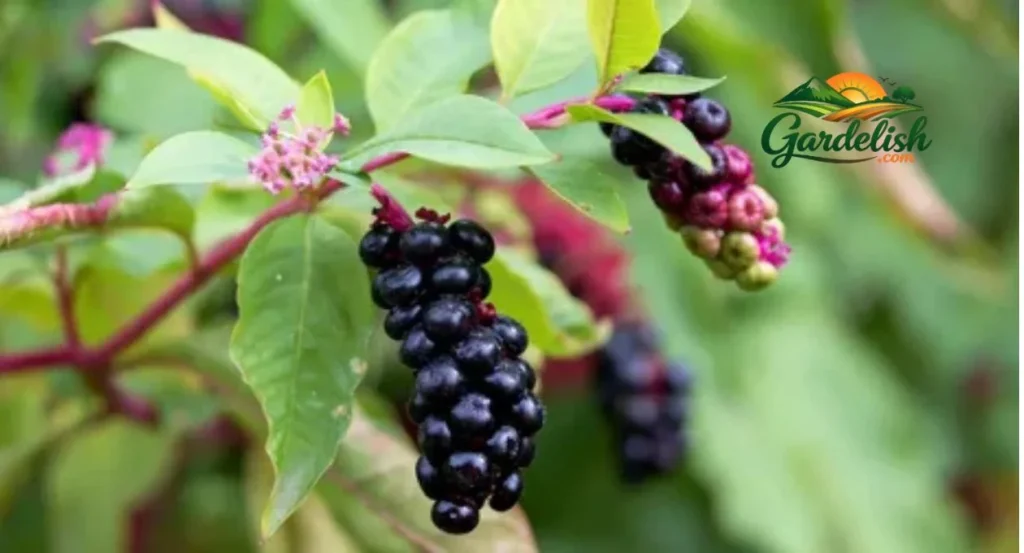
Pokeweed look alikes can easily confuse gardeners, especially in late summer and fall when many wild plants produce dark berries. Pokeweed has large green leaves, reddish-purple stems, and hanging clusters of dark purple berries. Because several other plants can share one or two of these features, it is important to identify the whole plant before touching, removing, or eating anything from it.
Pokeweed, also called American pokeweed, is a fast-growing perennial weed. It often appears along fences, woodland edges, roadsides, empty lots, and disturbed garden soil. While birds may eat the berries, pokeweed is not safe for people or pets. All parts of the plant can be toxic, especially the roots, berries, and mature stems.
The best way to identify pokeweed is to look at its overall shape. Mature plants are tall, thick-stemmed, and upright. The leaves are simple, smooth, and large. The berries grow in long drooping clusters, starting green and turning dark purple or almost black as they ripen.
What Does Pokeweed Look Like?
Pokeweed usually grows between 4 and 10 feet tall when mature. It has soft, thick stems that often become reddish or purple with age. The plant can look almost shrub-like, but it is not a woody shrub. It dies back in cold weather and grows again from its root system.
The leaves are large, oval to lance-shaped, and attached one by one along the stem. They are not divided into smaller leaflets. This is one of the easiest ways to separate pokeweed from plants like elderberry or Virginia creeper.
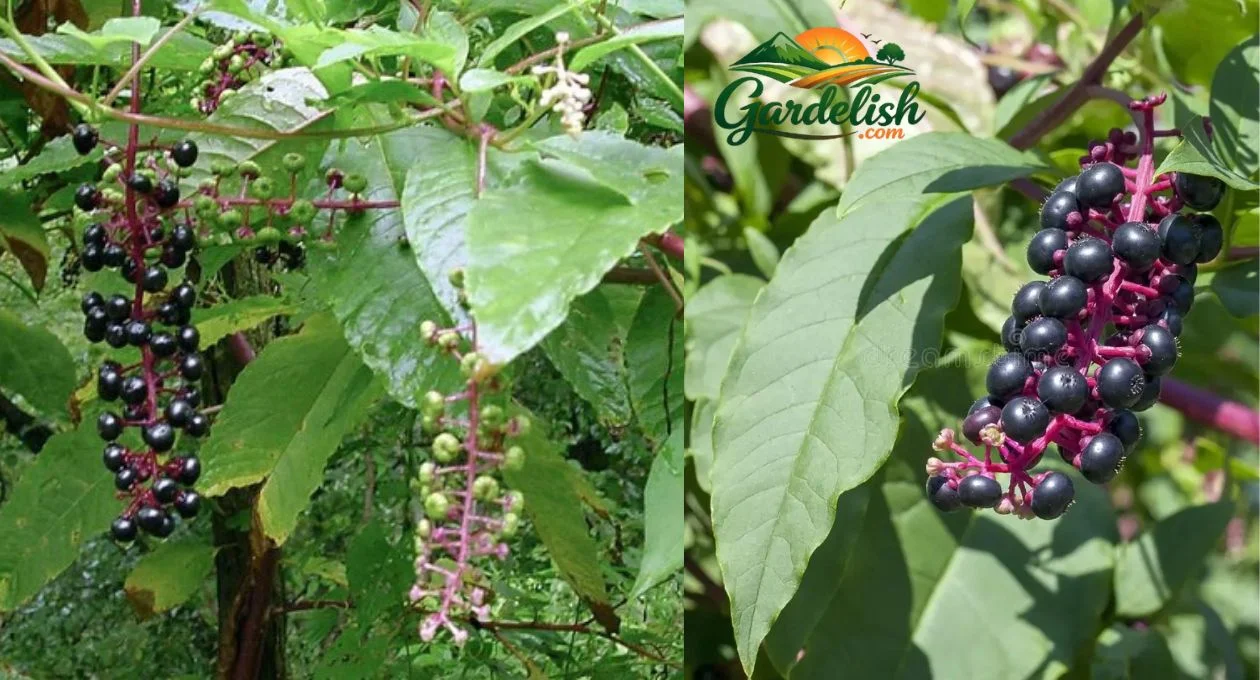
The flowers are small and pale greenish-white. Later, they become shiny berries arranged along hanging stems. These berry clusters are one of the most recognizable features of pokeweed. However, berry color alone is not enough for safe identification.
Why People Confuse Pokeweed With Other Plants
Pokeweed is often confused with plants that have dark berries, red stems, or large leaves. This is common because gardeners usually notice the berries first. But many unrelated plants produce purple, black, or blue-black berries.
The mistake usually happens when someone compares only one feature. For example, elderberry also has dark berries, but its leaves and growth habit are different. Virginia creeper may have dark berries and reddish stems, but it is a vine. Beautyberry has purple fruit, but the berries grow tightly around woody stems.
Good plant identification means checking the full plant, including:
- Leaf shape
- Stem color and texture
- Plant height
- Berry arrangement
- Growth habit
- Flower shape
- Growing location
- Season
When these details are checked together, pokeweed becomes much easier to recognize.
Elderberry vs Pokeweed
Elderberry is one of the most common plants mistaken for pokeweed. This mistake can be risky because people often look for elderberries for homemade syrups, jams, and other recipes.
The main difference is the leaf structure. Elderberry has compound leaves, meaning each leaf is made up of several smaller leaflets. Pokeweed has simple leaves, with one single leaf blade.
Elderberry is also a woody shrub. It often grows in a bushy form and may spread into thickets. Pokeweed has thick, soft stems and does not have true woody branches.
The berry clusters are also different. Elderberry fruit usually grows in broad, branched clusters. Pokeweed berries hang in longer drooping strings. If the plant has large simple leaves, reddish stems, and hanging berry clusters, it is more likely pokeweed than elderberry.
Virginia Creeper vs Pokeweed
Virginia creeper can also be confused with pokeweed because it produces blue-black berries and reddish stems. However, the growth habit is completely different.
Virginia creeper is a vine. It climbs fences, walls, trees, and shrubs using small tendrils. Pokeweed grows upright from the ground and does not climb.
The leaves are another clear difference. Virginia creeper usually has five leaflets joined from one point, while pokeweed has single, simple leaves. If the plant has five-part leaves and is climbing, it is not pokeweed.
Virginia creeper berries are also not safe to eat. Even though birds may feed on them, people should avoid consuming them.
Japanese Knotweed vs Pokeweed
Japanese knotweed may look similar to pokeweed when young because both can have large leaves and reddish stems. But Japanese knotweed usually grows in dense colonies and has hollow, bamboo-like stems.
Pokeweed has soft, thick stems and produces dark berries in hanging clusters. Japanese knotweed does not produce the same large, glossy berry clusters. Its flowers are small and grow in lighter, upright sprays.
Japanese knotweed is also a serious invasive plant in many areas. It spreads through underground rhizomes and can be difficult to remove once established. Unlike pokeweed, which often appears as scattered plants from bird-dropped seeds, knotweed commonly forms thick patches.
If you see a plant with bamboo-like stems growing in a dense stand, it may be Japanese knotweed instead of pokeweed.
American Beautyberry vs Pokeweed
American beautyberry is sometimes confused with pokeweed because both plants can have purple fruit. But once you look closely, they are very different.
Beautyberry is a woody shrub with bright purple berries clustered tightly around the branches. The berries look like small beads wrapped around the stem. Pokeweed berries hang away from the main stem in long drooping clusters.
Beautyberry is often grown as an ornamental plant in native gardens because of its attractive fall berries and wildlife value. Pokeweed, on the other hand, is more often considered a weed in home landscapes, especially where children or pets play.
If the berries are bright purple and wrapped tightly around woody branches, the plant is likely beautyberry, not pokeweed.
Black Nightshade vs Pokeweed
Black nightshade and related weedy nightshades can also look similar because they produce small dark berries. However, black nightshade is usually much smaller than pokeweed.
Black nightshade often grows as a low or medium-sized annual weed. It has smaller leaves, small white star-shaped flowers, and round black berries in small clusters. Pokeweed is taller, thicker, and much more noticeable.
The stems of pokeweed are usually heavier and more colorful, often turning red or purple. Black nightshade has a finer, more delicate appearance.
Because some nightshade plants are toxic, they should never be tasted unless identified by an expert.
Is Pokeweed Dangerous?
Yes, pokeweed can be dangerous if eaten. All parts of the plant contain toxic compounds, with the roots and mature plant parts being especially unsafe. The berries may look attractive, but they should not be eaten by people.
Children may be drawn to the shiny purple berries, so pokeweed should be removed from play areas, school gardens, pet spaces, and vegetable beds. Pets should also be kept away from the plant.
When removing pokeweed, wear gloves and avoid touching your face. Wash your hands and tools afterward. Do not burn or compost berry-covered plants because this can spread seeds or create other problems.
How to Remove Pokeweed From the Garden
Young pokeweed plants are easiest to remove. Pull them when the soil is moist, making sure to remove as much of the root as possible. Mature plants can have large taproots, so they may need to be dug out with a garden fork or shovel.
If the plant already has berries, cut off the berry clusters carefully and place them in the trash. Do not drop the berries on the soil, because the seeds can grow into new plants.
After removal, cover the bare soil with mulch. A 2–3 inch layer of organic mulch helps reduce new weeds and keeps soil moisture steady. You can also plant groundcovers, native shrubs, or dense perennials to prevent pokeweed seedlings from returning.
Check the area again during the growing season. Birds often spread pokeweed seeds, so new seedlings may appear even after the main plant is removed.
Safe Tips for Identifying Pokeweed Look Alikes
When identifying pokeweed or similar plants, never rely on one feature alone. Always compare several details.
Look carefully at the leaves. Pokeweed has simple leaves, while elderberry and Virginia creeper have divided leaves or leaflets.
Check the stem. Pokeweed stems are thick, soft, and often reddish-purple. Japanese knotweed has hollow, jointed stems. Beautyberry has woody stems.
Study the berries. Pokeweed berries hang in long drooping clusters. Beautyberry berries wrap closely around branches. Elderberry berries grow in broader clusters.
Notice the growth habit. Pokeweed stands upright. Virginia creeper climbs. Japanese knotweed grows in dense patches. Beautyberry grows as a shrub.
If you are still unsure, take clear photos of the whole plant, leaves, berries, and stem. Then ask a local garden center, extension office, or experienced gardener before handling or removing it.
FAQs
What plants look like pokeweed?
Common pokeweed look alikes include elderberry, Virginia creeper, Japanese knotweed, American beautyberry, and black nightshade. These plants may have dark berries, red stems, or large leaves, but their growth habit and leaf structure are different.
How can I tell pokeweed from elderberry?
Pokeweed has simple leaves and long drooping clusters of dark berries. Elderberry has compound leaves with several smaller leaflets and grows as a woody shrub.
Are pokeweed berries safe to eat?
No, pokeweed berries are not safe to eat. All parts of the pokeweed plant can be toxic to people and pets, especially the roots, berries, and mature stems.
Should I remove pokeweed from my garden?
Yes, it is better to remove pokeweed if it grows near children, pets, vegetable beds, or walkways. Remove it carefully before the berries spread seeds.
What is the easiest way to identify pokeweed?
The easiest way is to look for thick reddish-purple stems, large simple green leaves, and long drooping clusters of dark purple or black berries.
Conclusion
Pokeweed look alikes can be confusing, but careful observation makes identification much easier. Pokeweed has large simple leaves, thick reddish-purple stems, and drooping clusters of dark berries. Elderberry, Virginia creeper, Japanese knotweed, American beautyberry, and black nightshade may look similar in one way, but each has clear differences.
The safest rule is simple: never eat unknown berries from the garden or wild areas. If pokeweed is growing near children, pets, or vegetable beds, remove it carefully before the berries spread. By learning the main differences between pokeweed and similar plants, gardeners can keep their yards safer, cleaner, and easier to manage.