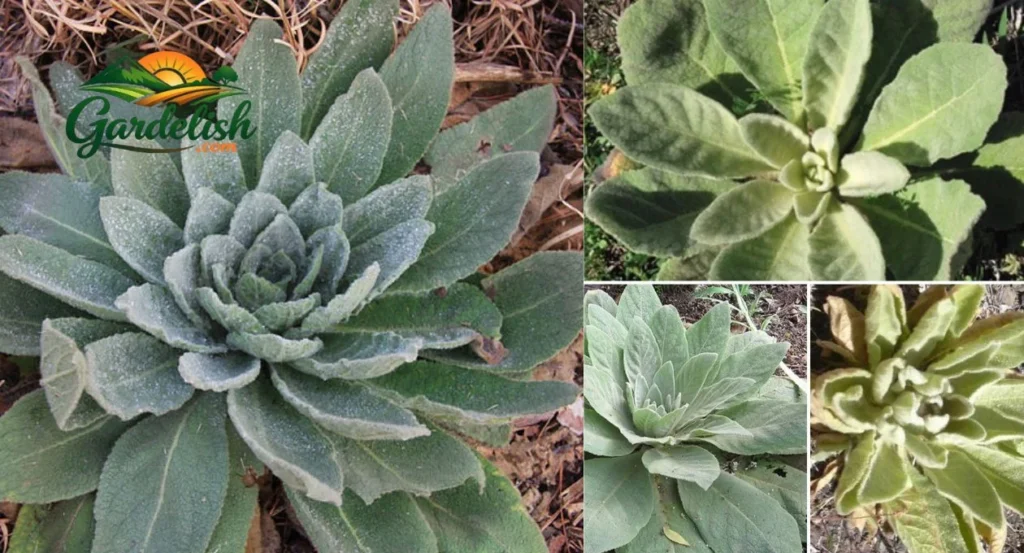
Mullein look alikes can confuse even careful gardeners, especially in the first year when common mullein is just a fuzzy rosette sitting close to the soil. The biggest reason identification matters is safety: several plants have broad, hairy leaves or tall flower spikes, but they are not used or handled the same way. Some are harmless ornamentals, some are useful garden plants, and at least one common look-alike, foxglove, is poisonous. Common mullein usually forms a low rosette of felt-like gray-green leaves in year one, then sends up a tall yellow flower spike in year two.
First, Know What True Common Mullein Looks Like
Common mullein, or Verbascum thapsus, is a biennial. That means it usually spends its first season building a root system and a leafy rosette, then flowers the following year. In the garden, I think of first-year mullein as a “silver-green cabbage of fuzz” rather than a tall plant.
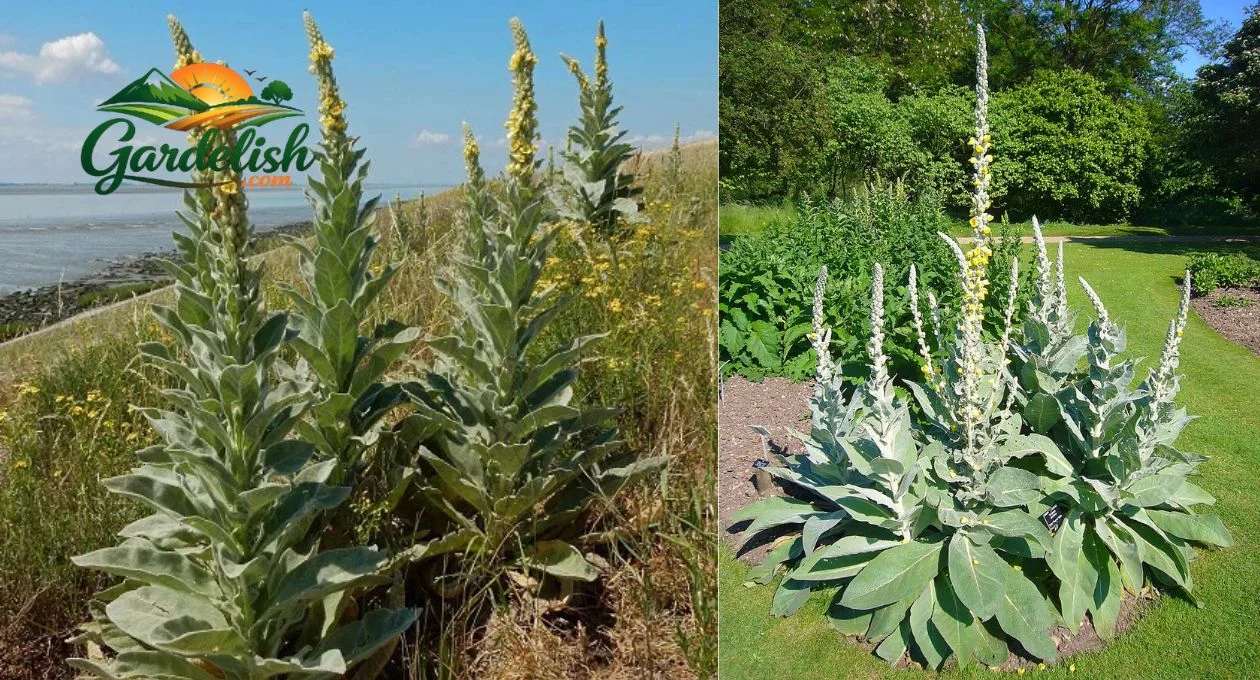
The leaves are usually soft, woolly, thick, and pale gray-green. They grow from a central crown and often look like they have been dusted with felt. In the second year, the plant becomes much easier to recognize because it produces a tall, upright flower stalk with small yellow flowers packed along the spike. Wisconsin Horticulture describes first-year plants as low-growing rosettes with felt-like leaves, while NC State notes that second-year plants produce a wand-like flower stalk.
A useful gardening clue is where it grows. Mullein often appears in dry, open, disturbed soil: gravel edges, sunny banks, neglected corners, old beds, paths, and poor sandy patches. It is not usually a plant that asks for rich compost, steady fertilizer, or pampered watering.
Why Mullein Is So Often Misidentified
The problem is that many garden plants make basal rosettes. A basal rosette simply means the leaves grow in a low circle from the base of the plant. Add fuzz, pale foliage, or a tall flower stem later in the season, and the confusion starts.
Beginners often identify plants too early, when the plant has not flowered yet. That is understandable, but with mullein it is risky. Leaf texture, leaf edge, vein pattern, flower color, stem shape, and growing habit all matter. One clue is rarely enough.
Here is the practical gardener’s rule: if you are not completely sure, do not harvest it for tea, tinctures, smoking blends, salves, or animal use. Let it grow until it flowers, take clear photos, and compare several features.
Mullein Look Alikes and How to Tell Them Apart
The plants below are the ones I would check first when a fuzzy rosette turns up in a garden bed, roadside patch, raised bed edge, or wild corner.
| Plant | Why It Looks Similar | How to Tell It Apart | Main Caution |
| Foxglove | Basal rosette, tall flower spike | Leaves are more toothed and veined; flowers are tubular, often purple, pink, or white | Poisonous |
| Lamb’s ear | Soft silver fuzzy leaves | Forms a low spreading clump; flowers are purple-pink, not yellow | Usually ornamental |
| Comfrey | Large hairy leaves | Leaves feel rough, not woolly; flowers hang in bell-like clusters | Avoid casual internal use |
| Burdock | Large basal leaves | Leaves are broad/heart-shaped, green above, often woolly below; produces burrs | Can dominate beds |
| Dock | Rosette of large leaves | Leaves are smooth or less fuzzy; seed stalks turn rusty brown | Can spread heavily |
| Borage | Hairy leaves | Hairs feel prickly; blue star-shaped flowers | Self-seeds freely |
| Other Verbascum species | Same genus, similar habit | Flower color, branching, and leaf shape may differ | Confirm species before use |
Foxglove: The Look-Alike to Take Most Seriously
Foxglove is the one I always mention first because it can be dangerous. In its young stage, foxglove can form a basal rosette, and a beginner may see hairy leaves and assume it is mullein. But foxglove leaves tend to have more obvious veins and toothed margins, and the plant later produces tall spikes of tubular flowers, usually purple-pink, though white forms exist. The Woodland Trust describes foxglove as having oval hairy leaves with toothed margins and purple-pink flowers, while poison-control sources warn that all parts of foxglove are poisonous.
In the garden, foxglove often looks a little greener and less dusty-gray than mullein. The leaf surface is hairy, but not that thick blanket-like wool you see on common mullein. If you rub a mullein leaf gently between your fingers, it often feels like soft felt. Foxglove feels more like a hairy leaf with structure underneath.
Never taste a plant to identify it. This is especially important with foxglove.
Lamb’s Ear: Soft, Silver, and Usually Much Lower
Lamb’s ear is probably the most innocent look-alike. It is a common ornamental perennial grown for its soft silver leaves. If you have ever planted it along a border, you already know how touchable it is. The confusion comes from the leaf texture: both lamb’s ear and mullein can look soft, pale, and fuzzy.
The difference is growth habit. Lamb’s ear usually forms a spreading groundcover-like clump rather than a single large rosette that later sends up one strong yellow flower spike. Its summer flowers are small and purplish-pink, and gardeners often remove the flower stems to keep the foliage tidy. NC State describes lamb’s ear as a dense clump of soft, velvety, silver-green leaves with purplish-pink summer flowers.
If the plant is creeping outward and making a mat, it is probably not common mullein.
Comfrey: Rougher, Greener, and More Vigorous
Comfrey is another plant that can fool people because it has large hairy leaves and a strong root system. But comfrey leaves are usually rougher to the touch. They are not soft and felted in the same way mullein leaves are. Comfrey also tends to form a robust clump, often returning strongly each spring from deep roots.
When comfrey flowers, the difference becomes much clearer. Its flowers usually hang in curved clusters and may be purple, blue, pinkish, or cream depending on the type. Washington State University’s Hortsense describes comfrey leaves as thick, broad, mostly basal, and roughly hairy on both upper and lower surfaces.
In a home garden, comfrey is often deliberately planted near compost areas, fruit trees, or permaculture beds because it produces lots of leafy biomass. Mullein, by contrast, is more likely to appear on its own in dry open soil.
Burdock and Dock: Big Rosettes Without the Woolly Feel
Burdock and dock can both produce large leaves from the base, so at a quick glance they may resemble young mullein. The difference is texture and shape.
Burdock leaves are usually much broader, often heart-shaped, and can become huge in fertile soil. The underside may feel fuzzy, but the top is greener and less felted than mullein. Later, burdock produces burrs that cling to clothing, pets, and gloves.
Dock leaves, including curly dock and broadleaf dock, are generally smoother and greener. They do not have the same woolly silver coating. Their seed stalks often turn reddish-brown or rusty as they mature.
These plants are also a good reminder that soil conditions can change appearances. In rich compost, many weeds grow larger and softer than usual. In dry poor soil, leaves may be smaller, tougher, and more gray. That is why identification should never depend on size alone.
Quick Field Checklist for Identifying Common Mullein
Use this table when you are standing in the garden with a mystery rosette and muddy gloves.
| Feature to Check | Common Mullein Usually Has | Warning Sign It May Be Something Else |
| Leaf texture | Thick, soft, felt-like, woolly | Hairy but rough, prickly, or thin |
| Leaf color | Gray-green to silvery green | Bright green or glossy |
| Leaf edge | Usually smooth to slightly wavy | Strongly toothed or sharply serrated |
| Growth habit | Single basal rosette in year one | Spreading mat, clump, or multiple crowns |
| Flower spike | Tall, upright, yellow-flowered spike | Purple bells, pink tubes, blue stars, burrs |
| Preferred site | Sunny, dry, disturbed soil | Damp shade or rich cultivated beds |
| Confidence level | Several traits match | Only one trait matches |
Seasonal Clues: Identification Gets Easier Over Time
One of the best pieces of advice I can give is to be patient. Many gardeners struggle because they try to identify mullein when the plant is only a few inches wide. Wait a few weeks, and the plant often reveals itself.
| Season / Growth Stage | What to Look For | Practical Tip |
| Early spring | Small fuzzy rosette | Avoid harvesting; many plants look similar now |
| Late spring | Larger leaves, stronger crown | Check texture, leaf edge, and color |
| Summer, year one | Big rosette, no flower spike | Photograph from above and side |
| Summer, year two | Tall yellow flowering stalk | Identification becomes much easier |
| Fall | Dry flower stalk and seed capsules | Remove stalks if you do not want self-seeding |
Common mullein can self-seed generously. If you want one or two plants for pollinators or garden interest, leave a few. If you let every flower stalk go to seed, you may be thinning seedlings from paths, gravel, raised beds, and dry borders for years.
Growing Conditions Can Change the Way Mullein Looks
Mullein is adaptable, but its appearance shifts with conditions. In lean, dry soil, it often looks compact, pale, and very woolly. In richer garden soil with regular watering, the rosette may look larger and greener. Too much fertility can make many plants look less like the tidy field-guide photo.
Drainage matters more than pampering. A simple improvement in drainage can noticeably improve plant health, especially in containers or raised beds. If mullein sits in soggy soil, the lower leaves may yellow, collapse, or rot. It prefers sunlight and open space, not humid crowded corners.
Mulch can be helpful around nearby garden plants, but do not bury the crown of a mullein rosette. Keep organic matter slightly away from the center so air can move around the leaves. In humid climates, crowded fuzzy leaves can hold moisture and invite fungal problems.
Container and Raised Bed Notes
Mullein can grow in containers, but it is not always graceful there. It has a strong taproot, and small pots restrict the root system quickly. If a volunteer appears in a container, you can let it grow for a while, but do not expect a tiny pot to support a tall second-year flower spike well.
In raised beds, mullein is usually best treated as a volunteer ornamental or wildlife plant rather than a crop. Give it space at the back or edge of the bed. The large rosette can shade out seedlings, herbs, and low vegetables.
If you want to keep it, choose one healthy plant and remove extras while they are young. Seedlings are much easier to pull before the root gets established.
Common Beginner Mistakes to Avoid
The first mistake is relying only on fuzzy leaves. Many plants have hairy leaves. Some are soft, some are rough, and some are toxic. Always compare several traits.
The second mistake is harvesting too early. If your goal is identification, patience is your friend. A flower spike can answer questions that leaves cannot.
The third mistake is growing mullein in overly rich, wet soil. Beginners often get better results when they focus on drainage and sunlight first. Mullein does not need heavy fertilizer, constant watering, or deep mulch over the crown.
The fourth mistake is ignoring local invasiveness. In some areas, common mullein behaves like a weedy plant and spreads into disturbed sites. Before encouraging it, check your local extension guidance, especially if you garden near open land, pastures, or restoration areas.
Practical Garden Safety Tips
If children, pets, or livestock use the area, be extra cautious with mystery rosettes. Label plants you are observing, and remove any unidentified plant from high-traffic areas until you know what it is.
Wear gloves when handling unknown hairy plants. Some gardeners are sensitive to leaf hairs, and rough plants like borage or comfrey can irritate skin. Wash hands after handling plants, especially before touching your face or preparing food.
And again, do not use a plant medicinally unless the identification is certain. A gardening app can be helpful, but it should not be your only source. Compare with a field guide, local extension page, or an experienced grower in your region.
Frequently Asked Questions
What is the easiest way to identify common mullein?
The easiest way is to look for a first-year rosette of thick, soft, gray-green felted leaves, followed in the second year by a tall upright stalk of small yellow flowers. Do not rely on fuzz alone, because several unrelated plants have hairy leaves.
Is foxglove commonly mistaken for mullein?
Yes, especially before flowering. Both can form basal rosettes, but foxglove leaves are usually more toothed and prominently veined. Foxglove is poisonous, so avoid harvesting any plant unless you are completely confident in the identification.
Can mullein grow in garden beds or containers?
Yes, but it usually performs best in sunny, well-drained soil. In containers, its taproot can become restricted, and in raised beds the large rosette may crowd vegetables or seedlings. Give it room and avoid overwatering.
Should I remove mullein from my garden?
Remove it if it is crowding plants, growing where you do not want seedlings, or considered weedy in your area. Keep it if you have space, want a dramatic flower spike, and can manage self-seeding. Cutting the flower stalk before seeds mature helps reduce spreading.
Conclusion
Mullein look alikes are easiest to sort out when you slow down and compare the whole plant: leaf texture, color, edge, growth habit, flower shape, and where it is growing. The biggest success tip is patience—let the plant mature enough to show clear features. The most common mistake is assuming every fuzzy rosette is mullein. Give mystery plants good light, avoid soggy soil, and never harvest until you are fully sure. A careful gardener keeps both the garden and the household safer.