Wild lettuce is often recognized by its tall stem, yellow flowers, lobed leaves, and milky sap. The problem is that many other plants share these same features.
Some Wild Lettuce Look Alikes are closely related species, while others only resemble wild lettuce during certain growth stages. This can make identification difficult, especially before the plant begins flowering.
Correct identification matters because appearance alone does not tell you whether a plant is safe to touch, harvest, or consume. This guide explains the most common plants mistaken for wild lettuce and gives practical tips for telling them apart.
What Is Wild Lettuce?
The name wild lettuce often refers to Lactuca virosa, also called bitter lettuce. However, people may also use the term for related Lactuca species, including prickly lettuce.
Wild lettuce belongs to the daisy family. It commonly grows in disturbed places such as:
- Roadsides
- Field edges
- Vacant lots
- Waste areas
- Dry banks
- Open ground
A mature plant can grow several feet tall and usually develops many small yellow flower heads near the top.
Key Features of Wild Lettuce
Common identification features include:
- A tall, upright central stem
- Alternate leaves growing along the stem
- Lobed or toothed leaves
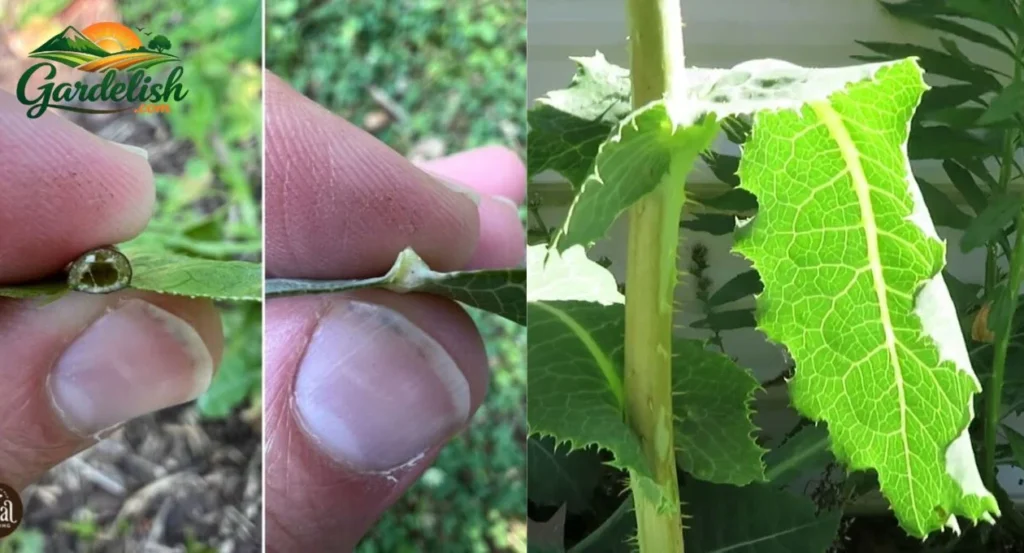
- Small prickles or hairs under the main leaf vein
- Milky white latex when a fresh stem or leaf is broken
- Small yellow flower heads
- Lightweight seeds with white hairs
These features can help narrow down the identification, but no single characteristic proves that a plant is wild lettuce.
Common Wild Lettuce Look Alikes
Several plants can be confused with wild lettuce. The closest matches are often found in the same habitats and may have similar flowers, leaves, or sap.
1. Prickly Lettuce
Scientific Name: Lactuca serriola
Prickly lettuce is one of the most convincing Wild Lettuce Look Alikes because it belongs to the same genus.
It shares many features with wild lettuce, including:
- Yellow flowers
- Milky latex
- Tall growth
- Lobed leaves
- Prickles under the leaf midrib
Prickly lettuce leaves are often more deeply divided, and the lobes may point backward toward the base of the plant. The leaves may also turn vertically, which is why the plant is sometimes called compass lettuce.
True Lactuca virosa usually has broader leaves and a heavier overall appearance. However, these differences can be difficult to see in young plants.
Practical Tip
Examine mature fruits and several leaves, not just one. Closely related Lactuca species may require a regional field guide for accurate identification.
2. Sow Thistle
Scientific Names: Sonchus oleraceus and Sonchus asper
Sow thistle is commonly mistaken for wild lettuce because it has yellow flowers, lobed leaves, and milky sap.
The best way to tell the plants apart is to inspect the leaf base and the underside of the central vein.
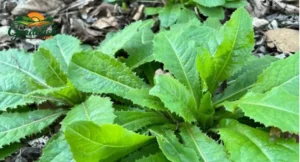
Sow thistle leaves often wrap partly around the stem with small ear-shaped lobes. The underside of the leaf midrib is usually smoother than that of wild lettuce.
Wild Lettuce vs Sow Thistle
Wild lettuce often has:
- A firmer leaf texture
- Small hairs or prickles under the midrib
- Smaller flower heads in loose clusters
Sow thistle often has:
- Softer or more succulent leaves
- Leaves that clearly clasp the stem
- Fuller-looking yellow flower heads
- A smoother central leaf vein
Do not rely on milky sap. Both plants produce it.
3. Dandelion
Scientific Name: Taraxacum officinale
Young wild lettuce can look similar to dandelion while both plants are in the rosette stage.
Dandelion leaves stay close to the ground. Each flower grows on a single hollow stalk without leaves.
Wild lettuce develops a tall, leafy central stem with many small flower heads near the top.
The Easiest Difference
Look at the flowering structure:
- Dandelion has one flower head per leafless stalk.
- Wild lettuce has many flower heads on a branched, leafy stem.
Dandelions also produce milky latex, so sap is not a reliable way to separate them.
4. Chicory
Scientific Name: Cichorium intybus
Chicory can resemble wild lettuce before it flowers. It has toothed leaves, bitter plant tissue, milky sap, and a similar roadside habitat.
Once it blooms, the difference becomes much clearer.
Chicory normally produces blue or blue-purple flowers along stiff, branching stems. Wild lettuce usually produces small yellow flowers.
Practical Tip
Flower color is helpful with mature plants, but it cannot be used when the plant is still a young rosette. Check leaf attachment and stem structure as well.
5. Cat’s Ear
Scientific Name: Hypochaeris radicata
Cat’s ear is sometimes called false dandelion. It has yellow flowers and a basal rosette of lobed leaves.
Its leaves are usually covered with coarse hairs. The flowering stalks are thin, branching, and mostly leafless.
Wild lettuce produces a stronger central stem with leaves growing along it.
Look for:
- Hairy leaves near the ground
- Thin flower stalks
- Larger, dandelion-like flower heads
- Few or no leaves on the upper stalk
6. Rush Skeletonweed
Scientific Name: Chondrilla juncea
Rush skeletonweed can resemble wild lettuce because it produces yellow flowers and milky latex.
As the plant matures, it develops many thin, wiry branches and loses much of its visible foliage. This gives it a skeletal appearance.
Wild lettuce usually keeps more noticeable leaves on a thicker central stem.
Key Difference
A mature rush skeletonweed plant looks open, wiry, and almost leafless. Wild lettuce looks broader, leafier, and more solid.
7. True Thistles
Young thistles may be confused with wild lettuce because both can have deeply divided leaves and upright growth.
Mature thistles are usually much easier to recognize.
True thistles often have:
- Strong, sharp spines
- Spiny stems or leaf edges
- Large flower heads
- Purple, pink, white, or yellow blooms
- Tough, heavily armed leaves
Wild lettuce may feel prickly, especially under the leaf midrib, but it does not usually have the heavily spined appearance of a mature thistle.
How to Identify Wild Lettuce Safely
The safest method is to compare several plant features at the same time.
Check the Growth Pattern
Ask whether the plant has:
- A low rosette only
- One central leafy stem
- Individual flower stalks
- A branching upper stem
- A thin, nearly leafless structure
Growth form often removes several look-alikes quickly.
Examine Both Sides of the Leaves
Turn the leaves over and inspect the central vein.
Wild lettuce often has small hairs or prickles underneath the midrib. Sow thistle and dandelion are usually smoother in this area.
Look at How the Leaf Meets the Stem
Leaf attachment is an important clue.
Check whether the leaf:
- Has a stalk
- Sits directly against the stem
- Wraps partly around the stem
- Forms small ear-shaped lobes
Sow thistle often clasps the stem more clearly than wild lettuce.
Wait for Flowers When Possible
Flowers provide stronger evidence than leaves alone.
Compare:
- Flower color
- Flower size
- Number of heads
- Branching pattern
- Presence or absence of leaves on flower stalks
When a plant is too young to identify confidently, return after it flowers.
Common Identification Mistakes
Avoid these common errors when comparing Wild Lettuce Look Alikes:
- Using milky sap as the only test
- Identifying a plant from one photo
- Relying only on leaf shape
- Assuming all tall yellow-flowered plants are wild lettuce
- Ignoring local plant distribution
- Tasting a plant to identify it
- Trusting a mobile identification app without verification
Take photos of the whole plant, leaf surfaces, stem, flowers, and seed heads. A complete set of images is more useful than one close-up.
Are Wild Lettuce Look Alikes Safe?
Some look-alikes, such as dandelion and chicory, have a long history of food use. Others may cause irritation or other unwanted effects.
An unidentified plant should never be treated as safe simply because it resembles an edible species.
Avoid harvesting plants from:
- Sprayed roadsides
- Industrial areas
- Polluted soil
- Dog-walking areas
- Fields treated with pesticides
- Busy roadside verges
Wild lettuce itself may also cause unwanted effects when consumed in concentrated or excessive amounts. Seek professional help if someone becomes unwell after eating an unknown plant.
Frequently Asked Questions
What plant looks most like wild lettuce?
Prickly lettuce is usually the closest match because it belongs to the same genus. Sow thistle is another common look-alike.
Is prickly lettuce the same as wild lettuce?
Prickly lettuce is sometimes called wild lettuce, but it is a separate species from Lactuca virosa.
Does wild lettuce always have milky sap?
Fresh wild lettuce usually releases milky latex when damaged. However, many look-alikes also produce white sap, so this feature is not enough for identification.
How can I tell wild lettuce from dandelion?
Dandelion flowers grow individually on leafless stalks. Wild lettuce produces many smaller flowers on a tall, branching stem with leaves.
Can beginners identify wild lettuce safely?
Beginners can learn the key features, but they should confirm the identification with a reliable regional guide or experienced plant expert before harvesting or consuming it.
Conclusion
The most common Wild Lettuce Look Alikes include prickly lettuce, sow thistle, dandelion, chicory, cat’s ear, rush skeletonweed, and true thistles.
Accurate identification requires more than checking for yellow flowers or milky sap. Study the leaf attachment, underside of the midrib, growth form, flowers, and mature seeds.
When the features do not clearly match, leave the plant alone and seek expert confirmation. Safe identification depends on careful observation, not guesswork.
Java Plum Shortage: Causes, Impact, and Practical Ways to Deal With It