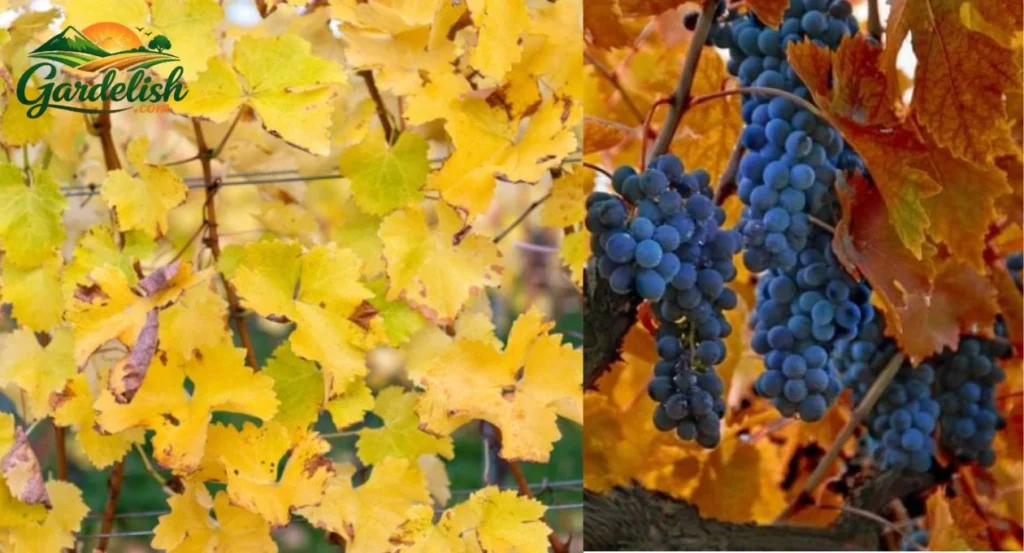
When grape vine leaves turn yellow, the vine is telling you something is off in the roots, soil, water, nutrients, canopy, or season. The most common causes are iron chlorosis, overwatering, poor drainage, nitrogen or magnesium deficiency, fungal disease, pest feeding, heat stress, or normal fall color. The pattern matters. Yellow leaves with green veins usually point toward nutrient uptake trouble, while yellow spots, mildew, browning, or sudden leaf drop suggest disease, water stress, or root damage.
Quick Answer
Grape vine leaves turning yellow usually means the plant is stressed by poor drainage, nutrient deficiency, high soil pH, inconsistent watering, disease, pests, or seasonal aging. If the veins stay green while the tissue turns yellow, suspect chlorosis, often linked to iron or magnesium problems. If leaves have yellow spots, mildew, brown patches, or drop early, check for fungal disease and poor airflow. Start by checking soil moisture, leaf pattern, drainage, and the age of the affected leaves before adding fertilizer.
Yellow grape leaves usually point to stress in the roots, soil, nutrients, or canopy
A healthy grapevine has large, firm leaves with an even green color through most of spring and summer. When yellowing appears, I look at three things first: where it starts, how fast it spreads, and whether the leaf has spots, green veins, curling, mildew, or crispy edges.
Yellowing on a few older leaves near the base can be mild stress or natural shedding. Yellowing on young shoot tips is more concerning, especially when the veins stay green. A whole vine turning pale usually means the root system is struggling, the soil is too wet or too dry, or the vine is short of nitrogen.
University grape nutrition guidance notes that mobile nutrient deficiencies such as nitrogen, potassium, and magnesium usually show first on older or midshoot leaves, while less mobile nutrients such as iron and zinc show first on the youngest leaves. That one detail helps prevent a lot of wrong treatments.
Iron chlorosis is likely when yellow leaves have green veins
If your grape leaves are yellow but the veins remain green, iron chlorosis is one of the first possibilities to check. This is especially common in alkaline soil, compacted soil, waterlogged soil, calcareous soil, or places where roots are not functioning well. Iron may be present in the soil but unavailable to the vine.
Iron chlorosis usually appears on the youngest leaves first. The leaf tissue turns pale yellow while the main veins stay greener, and severe cases can lead to scorching along the margins. Grape-specific nutrient references also describe iron deficiency as yellow-green to pale yellow interveinal chlorosis that starts on young leaves, with high pH and waterlogged soils making it worse.
What usually works
- Check the soil pH before treating repeatedly.
- Improve drainage if the soil stays wet after watering or rain.
- Keep mulch away from the trunk but use it over the root zone to moderate moisture.
- Use a chelated iron product labeled for alkaline soils if pH is high.
- Avoid heavy phosphorus applications unless a soil test shows a need.
A common beginner mistake is spraying iron once, seeing a little improvement, then ignoring the soil problem that caused it. If the soil stays soggy, compacted, or strongly alkaline, the yellowing usually returns.
Water stress should be checked before adding fertilizer
Before feeding a yellow grapevine, push your finger or a trowel 3 to 6 inches into the soil. Grapes dislike constantly wet roots. Poor drainage limits oxygen around the roots, weakens nutrient uptake, and can make the vine look hungry even when nutrients are present.
Oregon State University Extension notes that grapes grow best in well-drained soils, while heavy clay and poorly drained soils are not ideal. It also recommends keeping young vines moist without saturating the soil.
| What you notice | Likely water issue | What to do |
| Yellow, limp leaves and wet soil | Overwatering or poor drainage | Pause watering, improve drainage, clear mulch from trunk |
| Yellow leaves with crispy brown edges | Underwatering or heat stress | Deep water slowly, mulch root zone, avoid shallow daily watering |
| Yellowing after heavy rain | Root stress or disease pressure | Improve airflow, remove infected leaves, avoid watering foliage |
| Container vine yellows quickly | Rootbound, dry, or waterlogged pot | Check roots, drainage holes, pot size, and soil mix |
For established grapevines, deep watering is usually better than frequent shallow watering. A vine trained on a wall, fence, pergola, or hot patio may need more summer water than one growing in open ground, but it still needs oxygen at the roots.
Nutrient deficiencies show up in predictable patterns on old or new leaves
Grapevines are not heavy feeders compared with some fruiting plants, and overfeeding can create soft, leafy growth that shades fruit and invites disease. Oregon State University Extension specifically warns that more problems occur from overfeeding grapes than underfeeding.
Use the pattern of yellowing before choosing fertilizer.
| Symptom | Possible cause | Where it appears first | Practical fix |
| Whole vine looks pale green | Nitrogen deficiency or weak roots | Older and midshoot leaves | Soil test, light spring feeding, compost |
| Yellowing between green veins | Iron, magnesium, or zinc issue | Iron on young leaves, magnesium on older leaves | Check pH, improve drainage, correct specific deficiency |
| Yellow leaf margins, green veins | Magnesium deficiency | Older basal leaves | Soil and tissue test, magnesium correction if confirmed |
| Yellowing plus poor fruit set | Boron deficiency or other stress | Shoot tips, clusters | Test before applying boron, as excess can harm plants |
| Yellowing in containers | Nutrients depleted or roots restricted | Varies | Repot, refresh mix, feed lightly |
Nitrogen deficiency in grapes often appears as uniform lightening or yellowing and may reduce fruit set and berry size. Magnesium deficiency is usually seen on older basal leaves, with yellowing along the margins while tissue near the main veins stays dark green.
Disease is likely when yellowing comes with spots, mildew, or early leaf drop
Yellow grape leaves are not always a feeding problem. In humid climates, crowded canopies, wet summers, and shaded walls, disease can move fast.
Downy mildew often begins as small greenish-yellow, translucent spots that enlarge into pale yellow patches on the upper leaf surface. On the underside, you may see white to gray cottony growth during humid weather. Severe infections turn leaves brown, brittle, curled, and may cause early defoliation.
Powdery mildew looks different. It forms white or grayish-white patches on the upper leaf surface and can affect berries as well. The University of Minnesota diagnostic guide also lists phomopsis as dark brown spots with yellow edges along veins and petioles, and botrytis as large red-brown patches that may have gray mold.
Disease comparison table
| Disease or issue | Yellowing pattern | Other clues | Best prevention |
| Downy mildew | Yellow oil-like spots | White downy growth under leaves, wet weather | Airflow, sanitation, dry foliage |
| Powdery mildew | Yellow to brown patches | White powdery coating | Sun, pruning, resistant varieties |
| Phomopsis | Spots with yellow edges | Lower leaves, petioles, shriveled fruit | Remove infected wood, prune open |
| Botrytis | Brown patches | Gray mold, soft berries | Thin canopy, avoid wet clusters |
| Virus decline | Random yellow-green patterns | Stunting, poor yield over years | Remove infected vines, control vectors |
Cornell recommends reducing leaf wetness and improving canopy airflow through shoot thinning, shoot positioning, leaf pulling in the cluster zone, sucker removal, and post-harvest leaf litter cleanup to reduce downy mildew risk.
Pests can cause pale speckling, yellow edges, and curled leaves
Pest damage is easy to miss because it often starts on the underside of leaves. Leafhoppers feed underneath grape leaves and can cause pale yellow to white blotches, often near the leaf margins. Severe feeding may curl leaves downward. Spider mites can also cause fine stippling and bronzing, especially in hot, dry, dusty locations.
Check the undersides of five to ten affected leaves. Look for tiny insects, webbing, sticky honeydew, cast skins, or moving specks. A hand lens helps.
How to respond
- Spray leaves with a strong stream of water to dislodge light pest pressure.
- Remove badly damaged leaves only if there are plenty of healthy leaves left.
- Avoid broad insecticides unless the pest is identified, since they can kill beneficial insects.
- Improve watering during heat waves, because drought-stressed vines are more attractive to mites.
- Contact your local extension office if damage is spreading quickly or fruit is at risk.
Fall yellowing is normal when the vine is shutting down
Yellow grape leaves in autumn are usually not a problem. After harvest or as nights cool, grapevines begin moving energy back into permanent wood and roots. Leaves may turn yellow, gold, red, or brown depending on variety and weather.
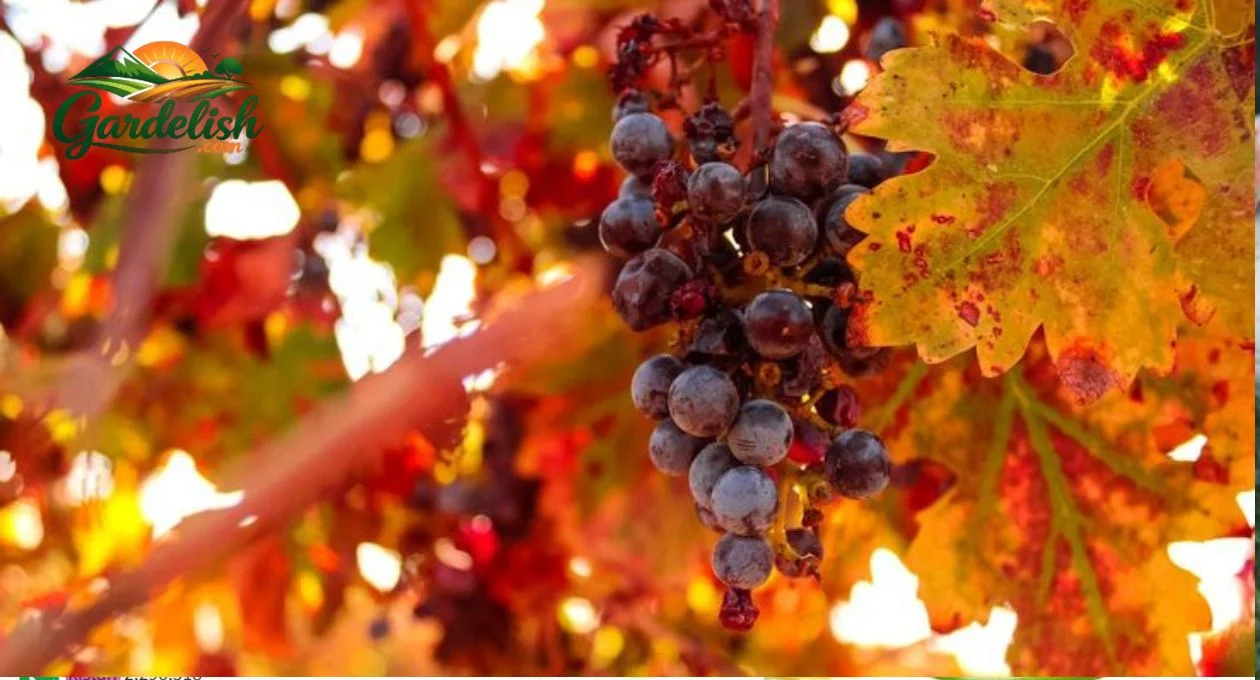
The difference is timing. Yellowing in late fall, after fruit ripening and cooler nights, is normal. Yellowing in spring or midsummer, especially with stunting, green veins, spots, mildew, or wilting, needs attention.
In colder regions, choose grape varieties suited to your local winter and growing season. Oregon State University Extension notes that grapes need a cool winter and a warm growing season of about 150 to 180 frost-free days to mature a crop, and that cultivar choice matters by region.
Fix yellow grape leaves by diagnosing the pattern first
Do not start with random fertilizer. Grapevines often yellow because roots cannot take up nutrients, not because the soil has none.
Step-by-step recovery plan
- Check soil moisture. If soil is wet and heavy, pause watering and improve drainage. If it is dry several inches down, water deeply.
- Look at leaf age. Young yellow leaves with green veins suggest iron or zinc. Older yellow leaves suggest nitrogen, magnesium, potassium, or natural aging.
- Inspect leaf surfaces. Yellow spots, white powder, gray mold, or brown lesions point toward disease.
- Turn leaves over. Check for leafhoppers, mites, eggs, webbing, or downy mildew growth.
- Clear the base. Remove grass and weeds around young vines so roots are not competing for water and nutrients.
- Prune for airflow. Thin crowded shoots and remove suckers that create a damp, shaded canopy.
- Test before major correction. Soil pH and nutrient testing prevent expensive mistakes.
- Feed lightly if needed. Use a balanced fertilizer or compost in spring, not heavy late-summer nitrogen.
Prevent yellow leaves with better soil, pruning, watering, and airflow
Prevention starts with the planting site. Grapevines want sun, drainage, airflow, and enough space to ripen wood and fruit. A shaded, damp, crowded vine is far more likely to develop yellow leaves from mildew, root stress, or weak nutrient uptake.
Oregon State University Extension says full sunlight is required for good table grape production and that vines stressed by drought or shade are more prone to diseases such as powdery mildew and botrytis fruit rot.
Seasonal care checklist
| Season | What to do | Why it helps |
| Early spring | Test soil if yellowing happened last year | Correct pH and nutrients before growth surges |
| Bud break | Feed lightly only if needed | Supports growth without overfeeding |
| Late spring | Thin shoots and train growth | Improves light and airflow |
| Summer | Water deeply during dry spells | Prevents drought stress and fruit shrivel |
| Humid weather | Avoid wetting leaves | Reduces mildew pressure |
| After harvest | Remove diseased leaves and fallen debris | Lowers overwintering disease pressure |
| Winter | Prune hard while dormant | Keeps vine balanced and productive |
A well-pruned grapevine often looks too bare to beginners in winter. That is normal. OSU notes that home gardeners often do not prune grapevines hard enough and that pruning removes about 90 percent of the previous season’s wood.
FAQs About Grape Vine Leaves Turning Yellow
Why are my grape vine leaves turning yellow with green veins?
Yellow leaves with green veins usually indicate interveinal chlorosis. On young leaves, iron deficiency or poor iron availability is a common cause, especially in alkaline, compacted, or waterlogged soil. On older leaves, magnesium deficiency is also possible. Check which leaves are affected first, then test soil pH before applying repeated treatments.
Should I remove yellow leaves from my grapevine?
Remove yellow leaves only when they are diseased, badly damaged, or already dying. Do not strip a vine heavily in summer, because grape leaves feed the fruit and help ripen canes for winter. If yellowing is caused by disease, dispose of infected leaves away from the compost pile unless your compost gets hot enough to break down pathogens.
Can overwatering make grape leaves turn yellow?
Yes. Overwatering and poor drainage can make grape leaves yellow because roots need oxygen as well as water. Wet soil also interferes with nutrient uptake, so the vine may look deficient even when nutrients are present. If the soil smells sour, stays soggy, or leaves wilt despite wet soil, reduce watering and improve drainage.
What fertilizer fixes yellow grape leaves?
There is no single fertilizer that fixes all yellow grape leaves. Nitrogen may help a generally pale, weak vine in spring, while chelated iron may help chlorosis in alkaline soils. Magnesium correction may help older leaves with interveinal yellowing. The safest approach is to match fertilizer to symptoms and confirm with a soil or tissue test.
Why are my grape leaves turning yellow and brown?
Yellow and brown grape leaves can come from drought stress, root stress, downy mildew, powdery mildew, nutrient deficiency, heat scorch, or advanced chlorosis. Brown crispy edges often suggest water or salt stress. Brown patches with yellow halos or mildew growth suggest disease. Look for spots, underside growth, soil moisture, and whether the damage is spreading.
Are yellow grape leaves normal in fall?
Yes, yellow grape leaves are normal in fall as the vine prepares for dormancy. The concern is timing and pattern. A grapevine turning yellow after harvest and cool nights is behaving normally. A vine turning yellow in spring or midsummer, especially with green veins, spots, wilting, or stunted growth, needs diagnosis.
Can a yellow grapevine recover?
A yellow grapevine can recover if the cause is corrected early. Vines often improve after drainage is fixed, watering is adjusted, soil pH is managed, pests are controlled, or a true nutrient deficiency is corrected. Recovery is slower when roots are damaged, the vine is severely diseased, or yellowing has continued for several seasons.
Conclusion
Grape vine leaves turning yellow are a symptom, not a final diagnosis. The fastest way to solve the problem is to read the pattern: young leaves with green veins suggest chlorosis, older yellow leaves suggest mobile nutrient issues, wet soil points to root stress, and yellow spots or mildew suggest disease. Check moisture and drainage first, then inspect leaves, pests, pH, and canopy airflow. Most home grapevines recover well when gardeners stop guessing and correct the real cause. Keep the vine sunny, well-pruned, evenly watered, and lightly fed, and yellow leaves become much less common.
Why Is My Persimmon Tree Dropping Fruit? Causes, Fixes, and Prevention Tips