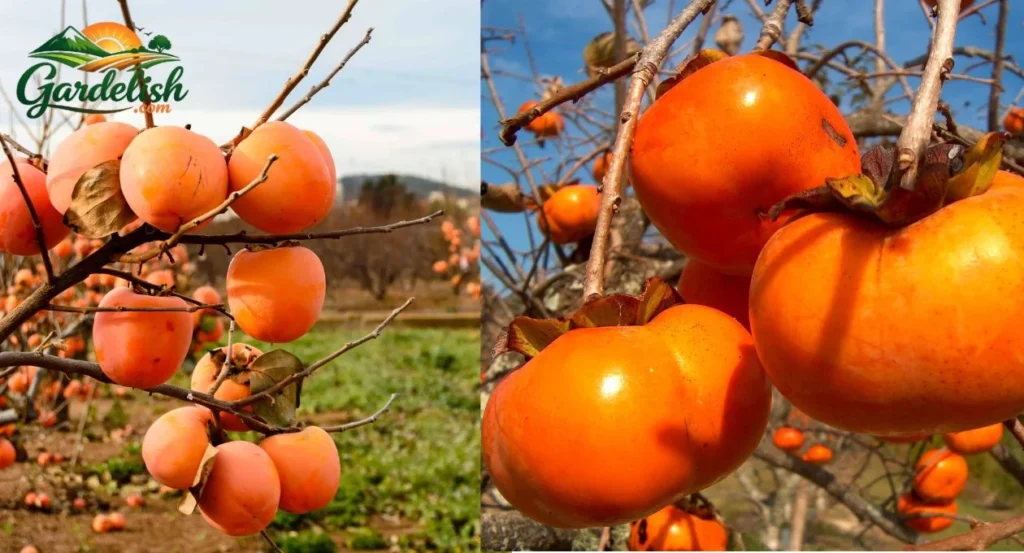
A persimmon tree dropping fruit is usually reacting to stress, crop overload, poor fruit set, or inconsistent watering. A small amount of fruit drop is normal, especially on young trees or after a heavy bloom, but losing most of the crop means the tree is struggling to carry the fruit to maturity. The most common reasons are dry soil followed by sudden watering, excessive nitrogen fertilizer, heat stress, poor pollination, a young root system, or too many fruits for the tree to support. The fix starts with steady deep watering, light feeding, mulch, and patience.
Quick Answer: Persimmon fruit drop is often normal, but heavy drop means stress
Persimmon trees naturally shed some young fruit as a way of thinning themselves. This is especially common in late spring and summer when the tree decides how much fruit it can ripen. If your persimmon tree is dropping fruit heavily, check soil moisture first, then look at fertilizer, heat, tree age, pollination, and crop load. Most home gardeners see improvement by watering deeply but less often, avoiding high-nitrogen fertilizer, and keeping the root zone mulched and stable.
Your persimmon tree is dropping fruit because it cannot support the crop
Persimmons are good at looking healthier than they feel. A tree may have glossy leaves, a strong canopy, and plenty of small green fruits, then suddenly start dropping them one by one. That usually means the tree has reached a limit underground, not above ground.
The roots may not be supplying enough water during hot weather. The tree may be too young to carry a full crop. The fruit may be seedless and weakly attached. Or the tree may have been pushed into leafy growth by too much nitrogen.
In the garden, the first thing most people notice is not a sick-looking tree. It is clean, firm, green fruit lying under the canopy. That detail matters. Firm green fruit usually points to physiological drop, not ripe fruit falling naturally.
Some fruit drop is normal when persimmons self-thin
A persimmon tree often sets more fruit than it can mature. When this happens, it drops the weakest fruit early. Gardeners sometimes panic when they see marble-sized or walnut-sized persimmons on the ground, but a moderate shed can be normal.
This natural thinning is most common:
| Timing | What it usually means | Should you worry? |
| Shortly after bloom | Poorly developed fruit is being shed | Usually no |
| Late spring to early summer | Natural crop adjustment | Usually no |
| Mid-summer during heat | Water or heat stress may be involved | Maybe |
| Late summer with large green fruit | Stress, crop overload, or weak fruit set | Yes |
| Near harvest | Ripe fruit, pests, wind, or splitting | Check closely |
A healthy mature tree can drop some fruit and still ripen a good crop. The warning sign is when the tree drops nearly all of its fruit for two years in a row.
Inconsistent watering is the most common fixable cause
Persimmons tolerate some drought once established, but fruiting trees perform best with steady moisture. The problem is not only dry soil. It is the swing from dry to soaked, then dry again.
A tree under drought stress will protect itself by dropping fruit. A tree sitting in soggy soil can also drop fruit because stressed roots cannot breathe or function well. This is why both underwatering and overwatering can look the same from above.
How to fix watering-related fruit drop
- Check the soil 6 to 8 inches deep under the canopy, not right beside the trunk.
- If it is dusty or hard, water slowly and deeply.
- If it is wet and sticky, pause watering and improve drainage if possible.
- Add 2 to 4 inches of organic mulch over the root zone.
- Keep mulch a few inches away from the trunk.
- Water deeply when the upper soil begins to dry, rather than giving frequent shallow sprinkles.
For established persimmons, deep watering every couple of weeks during dry summer weather is often better than light watering every day. In very hot, windy conditions, the tree may need water sooner.
Too much nitrogen makes persimmons drop fruit
Persimmons do not need the heavy feeding that peaches, citrus, or some vegetable crops require. In fact, overfeeding is one of the quickest ways to encourage fruit drop.
Too much nitrogen tells the tree to grow leaves and shoots instead of holding fruit. You may see long, soft, vigorous shoots, very dark green leaves, and a disappointing crop under the tree.
This often happens when persimmons are planted in lawns. Lawn fertilizer is usually high in nitrogen, and the tree roots absorb it even if you never fertilize the tree directly.
How to correct fertilizer problems
- Stop high-nitrogen fertilizer around the tree.
- Do not fertilize a stressed tree during heavy fruit drop.
- Use a soil test before adding more nutrients.
- If growth is weak and leaves are pale, use a balanced fertilizer lightly in late winter or early spring.
- Avoid fertilizing heavily in summer.
A persimmon that grows 10 to 12 inches of new shoot growth in a season usually does not need much help. More fertilizer is not always better. With persimmons, steady and modest care wins.
Heat stress can make young persimmons shed fruit fast
Hot weather can trigger sudden fruit drop, especially after a cool, wet spring. The tree begins fruit development under mild conditions, then a heat wave arrives and water demand jumps overnight. Young fruits are often the first thing the tree sacrifices.
This is especially common in USDA Zones 7 to 10 where Asian persimmons grow well but summer heat can be sharp. American persimmon, Diospyros virginiana, is generally more cold-hardy and adaptable, while Asian persimmon, Diospyros kaki, prefers a warm but not wildly fluctuating growing season.
Heat stress is worse when:
| Condition | Why it increases fruit drop |
| Bare soil | Roots heat up and dry quickly |
| Shallow watering | Roots stay near the surface |
| Reflected heat | Walls, paving, and gravel intensify stress |
| Wind | Leaves lose moisture faster |
| Heavy crop | The tree cannot cool and feed every fruit |
Mulch, deep irrigation, and avoiding summer fertilizer are the best protections.
Poor pollination can cause weak fruit set
Many Asian persimmons can form fruit without pollination. This is called parthenocarpy, and it is why some trees produce seedless persimmons. Seedless fruit can mature successfully, but in some cultivars it is more likely to drop when the tree is stressed.
This is where persimmons confuse gardeners. A Fuyu or Jiro may set fruit without a pollinator, while another cultivar nearby may behave differently. Pollination-variant types can also change flesh color, seediness, flavor, and holding strength depending on whether pollination occurred.
For home gardeners, the practical point is simple: if your tree flowers well every year but drops most fruit while care seems good, pollination may be part of the problem.
What to do about possible pollination problems
- Identify your cultivar if you can.
- Check whether it is self-fruitful, pollination-variant, or known for heavy drop.
- Avoid spraying insecticides during bloom.
- Grow pollinator-friendly flowers near the orchard.
- Consider planting a compatible persimmon cultivar if your variety benefits from cross-pollination.
Native American persimmons are often dioecious, meaning male and female flowers may occur on separate trees. If you are growing seedling American persimmons, a female tree may need a male tree nearby for reliable seeded fruit.
Young persimmon trees often drop fruit until they mature
A young persimmon tree may bloom and set fruit before its root system is ready. This happens often with newly planted grafted trees. The top looks eager, but the roots are still establishing.
A tree under five years old may drop most of its fruit and still be perfectly healthy. I usually tell gardeners not to judge a persimmon too harshly in its early bearing years. The goal is to build a strong framework and root system first.
If a young tree is dropping fruit:
- Remove competing grass in a circle around the tree.
- Mulch the root zone.
- Water deeply through dry spells.
- Avoid pushing growth with fertilizer.
- Thin heavy clusters if branches are bending.
- Protect the trunk from sunscald in very hot climates.
The best crop often comes after the gardener stops fussing and gives the tree consistent care.
A heavy crop can trigger biennial bearing and fruit drop
Persimmons can overdo it after a strong bloom. A tree may carry a huge crop one year, exhaust itself, then produce little the next year. This pattern is called alternate or biennial bearing.
On Asian persimmons, especially when the branches are loaded, thinning can help. Remove damaged, crowded, or misshapen fruit first. On very heavy crops, spacing fruit about 6 inches apart along branches reduces stress and helps prevent limb breakage.
This is not always necessary on every tree every year. But when a young or heavily loaded tree looks like it is carrying more fruit than leaves can support, thinning is kinder than letting the tree drop fruit randomly.
Troubleshooting: Match the symptom to the likely cause
Use this table before making changes. Persimmon fruit drop is easier to solve when you look at timing, fruit size, leaves, and soil together.
| Symptoms | Possible causes | Best solution | Prevention |
| Small fruit drops soon after bloom | Normal thinning or weak fruit set | Wait and monitor | Keep tree healthy during bloom |
| Many green fruits drop during heat | Heat or drought stress | Deep water and mulch | Maintain steady summer moisture |
| Fruit drops after heavy watering | Dry-to-wet moisture swing | Water slowly and consistently | Avoid long dry periods |
| Dark green leaves, lots of shoots, little fruit | Too much nitrogen | Stop high-nitrogen feeding | Soil test before fertilizing |
| Young tree drops most fruit | Immature root system | Focus on establishment | Mulch, water, and avoid overcropping |
| Fruit drops yearly despite good care | Pollination or cultivar issue | Identify cultivar and consider pollinator | Support bees and compatible planting |
| Fruit has cracks, mold, or punctures | Pest, bird, squirrel, or disease damage | Remove damaged fruit and inspect tree | Improve sanitation and net if needed |
| Sparse crop after huge crop last year | Alternate bearing | Thin heavy crops | Avoid overfeeding and overcropping |
The best step-by-step fix for a persimmon tree dropping fruit
Start with the basics before buying products. Most persimmon fruit drop is corrected by stabilizing care, not by spraying.
- Pick up fallen fruit. This helps you monitor fresh drop and reduces pests.
- Check soil moisture deeply. Do not rely on the surface.
- Water slowly if dry. Soak the root zone under the canopy.
- Pause watering if soggy. Persimmon roots dislike prolonged waterlogging.
- Mulch the tree. Use compost, wood chips, straw, or shredded leaves.
- Stop nitrogen-heavy fertilizer. Especially lawn fertilizer near the tree.
- Thin overloaded branches. Remove crowded, damaged, or tiny fruit.
- Watch the next two weeks. If drop slows, stress was likely the cause.
- Inspect for pests or disease. Look for holes, frass, mold, cracked calyxes, or animal damage.
- Record timing. Persimmons often repeat patterns, and notes help you prevent next year’s drop.
Seasonal care prevents fruit drop next year
Persimmon care changes with the season. The tree does not need constant attention, but it does need the right support at the right time.
| Season | What to do | Why it helps |
| Late winter | Prune lightly and remove dead or crossing wood | Preserves fruiting wood and improves structure |
| Early spring | Apply light fertilizer only if needed | Avoids excess nitrogen |
| Bloom time | Protect pollinators and avoid sprays | Improves fruit set |
| Late spring | Monitor first fruit drop | Separates normal thinning from stress |
| Summer | Deep water during dry heat and maintain mulch | Prevents drought-related drop |
| Late summer | Watch overloaded branches | Reduces breakage and stress |
| Fall | Harvest mature fruit before storms or wildlife damage | Prevents unnecessary loss |
| Winter | Avoid root disturbance | Helps the tree store energy for next year |
One pruning note matters: persimmons fruit on newer wood near the ends of branches. Heavy pruning can remove potential fruiting wood and encourage vigorous leafy growth, so keep pruning light unless you are correcting structure.
Common mistakes that make fruit drop worse
The most common mistake is reacting too strongly. Gardeners see fruit drop, then fertilize heavily, water every day, prune hard, or spray without a diagnosis. Persimmons usually dislike that kind of rescue mission.
Avoid these mistakes:
- Watering shallowly every day
- Fertilizing during active fruit drop
- Using lawn fertilizer near the root zone
- Removing too much canopy in winter
- Letting grass grow tightly around young trees
- Ignoring heat waves after fruit set
- Assuming all fruit drop is disease
- Expecting a young tree to hold a full crop
A persimmon tree rewards consistency. Give it sun, space, mulch, modest nutrition, and deep moisture, then resist the urge to overmanage it.
Frequently Asked Questions
Why is my persimmon tree dropping small green fruit?
Small green fruit usually drops because the tree is self-thinning, stressed, or holding weakly set fruit. A little drop after bloom is normal. Heavy drop can come from inconsistent watering, sudden heat, too much nitrogen, or poor pollination. Check soil moisture first because water stress is the easiest cause to correct.
Should I water my persimmon tree more when fruit starts falling?
Water more only if the soil is dry several inches down. Persimmons need deep, steady moisture, not constant shallow watering. If the soil is already wet, adding more water can stress the roots and make drop worse. Dig under the canopy, check moisture by hand, then water slowly if the soil is dry.
Can too much fertilizer make a persimmon drop fruit?
Yes. Too much nitrogen can push leafy growth at the expense of fruit retention. This is common when persimmon trees grow in fertilized lawns. If the leaves are very dark green and shoots are long and soft, stop feeding and wait. Use a soil test before adding more fertilizer next season.
Do persimmon trees need another tree for pollination?
It depends on the type and cultivar. Many Asian persimmons can set fruit without pollination, but seedless fruit may drop more easily under stress. Some American persimmons need male and female trees for reliable fruiting. If your tree flowers heavily but drops most fruit every year, cultivar and pollination should be investigated.
Is fruit drop worse on young persimmon trees?
Yes. Young persimmon trees often drop fruit because their root systems and branch structure are not mature enough to support a crop. This is frustrating but common. Focus on establishment for the first few years: mulch, deep watering, weed control, and light pruning. The tree usually holds fruit better as it matures.
Why does my Fuyu persimmon drop fruit before ripening?
A Fuyu persimmon may drop fruit because of heat, drought, excess nitrogen, crop overload, or weak seedless fruit set. Fuyu is often grown as a self-fruitful tree, but fruit retention still depends on stable growing conditions. Keep the root zone evenly moist in summer and avoid high-nitrogen feeding.
Should I thin persimmon fruit?
Thin only when the tree is heavily overloaded, especially on Asian persimmons with branches bending under clusters. Remove damaged, misshapen, or crowded fruit first. Spacing fruit about 6 inches apart can reduce stress and branch breakage in heavy crop years. Light crops usually do not need thinning.
Is persimmon fruit drop caused by disease?
Usually not. Most persimmon fruit drop is caused by stress, crop load, nitrogen, tree age, or pollination. Disease or pests are more likely if fruit has punctures, black spots, mold, cracking, frass, or obvious animal damage. Remove damaged fruit, inspect the tree closely, and avoid spraying unless you have identified a real pest or disease.
Conclusion: Stabilize the tree before trying drastic fixes
A persimmon tree dropping fruit is usually not failing. It is responding to stress or adjusting its crop. The key is knowing the difference between normal self-thinning and serious fruit loss. If the tree drops a small portion of young fruit, wait and watch. If it drops most of the crop, start with soil moisture, mulch, fertilizer habits, heat protection, and crop load. Avoid heavy nitrogen and shallow watering, especially in summer. For young trees, patience is part of the solution. With consistent care, mature persimmons often become reliable, low-maintenance fruit trees that reward a steady hand more than constant intervention.
Fig Tree Not Producing Fruit? Here’s Why It Happens and How to Fix It