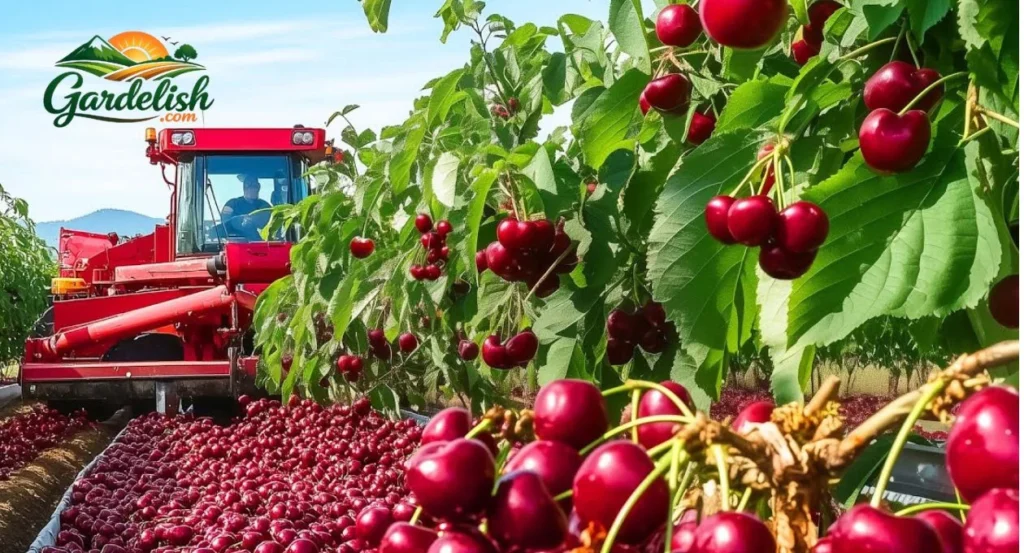
The cherry harvest labor shortage is not just a commercial farming headline. It affects how cherries are picked, how much fruit reaches markets, how growers plan their orchards, and what home gardeners can learn about managing a short, delicate harvest window.
Cherries are one of the most time-sensitive fruits in the garden. When they ripen, they do not wait politely on the tree for a convenient weekend. Sweet cherries, especially, can split after rain, soften in heat, attract birds overnight, or decline in flavor if they are picked too late. That is why labor matters so much. A cherry crop is often won or lost in a narrow seasonal window.
For backyard gardeners, the issue offers a practical lesson: grow cherry trees in a way that makes harvest easier, faster, and more reliable. For small orchard owners, it highlights the importance of pruning systems, dwarf rootstocks, harvest planning, local picking help, and post-harvest handling.
Agricultural labor is one of the largest costs for fruit and vegetable growers, and USDA’s Economic Research Service notes that producers have faced rising wages, worker shortages, heavier reliance on H-2A labor, and increased interest in mechanization. In cherries, that pressure is especially visible because the crop is fragile, seasonal, and still heavily hand-picked.
What the Cherry Harvest Labor Shortage Really Means
A cherry harvest labor shortage happens when there are not enough available, trained workers to pick ripe cherries at the right time. In simple terms, the fruit may be ready before the harvest crew is.
That timing problem matters because cherries have a short harvest season. Unlike apples or winter squash, cherries cannot sit in storage for weeks before picking. Once fruit reaches peak color, sugar, and firmness, the clock starts ticking.
For commercial growers, fewer workers can mean:
Less fruit picked at peak quality
More fruit left on trees
Higher harvest costs
Shorter market supply
Lower returns for growers
More pressure to use mechanical aids or redesign orchards
For home gardeners, the same principle applies on a smaller scale. A mature sweet cherry tree can ripen more fruit than one family can comfortably pick in a day. Without planning, the top branches go to birds, the lower branches over-ripen, and the gardener ends up with a sticky mess instead of bowls of glossy fruit.
Oregon State University Extension’s sweet cherry orchard guidance notes that cherries are labor intensive and that even small orchards need extra help at harvest. It also states that, on average, two to three employees may be needed for every acre harvested at the same elevation. That gives home growers a useful perspective: if one acre needs a crew, even one large backyard tree deserves a harvest plan.
Why Cherry Harvesting Depends on Skilled Hands
Cherry harvesting is difficult because the fruit is small, soft, and easily damaged. A picker must move quickly without bruising the fruit, tearing off spurs, or stripping leaves that feed next year’s crop.
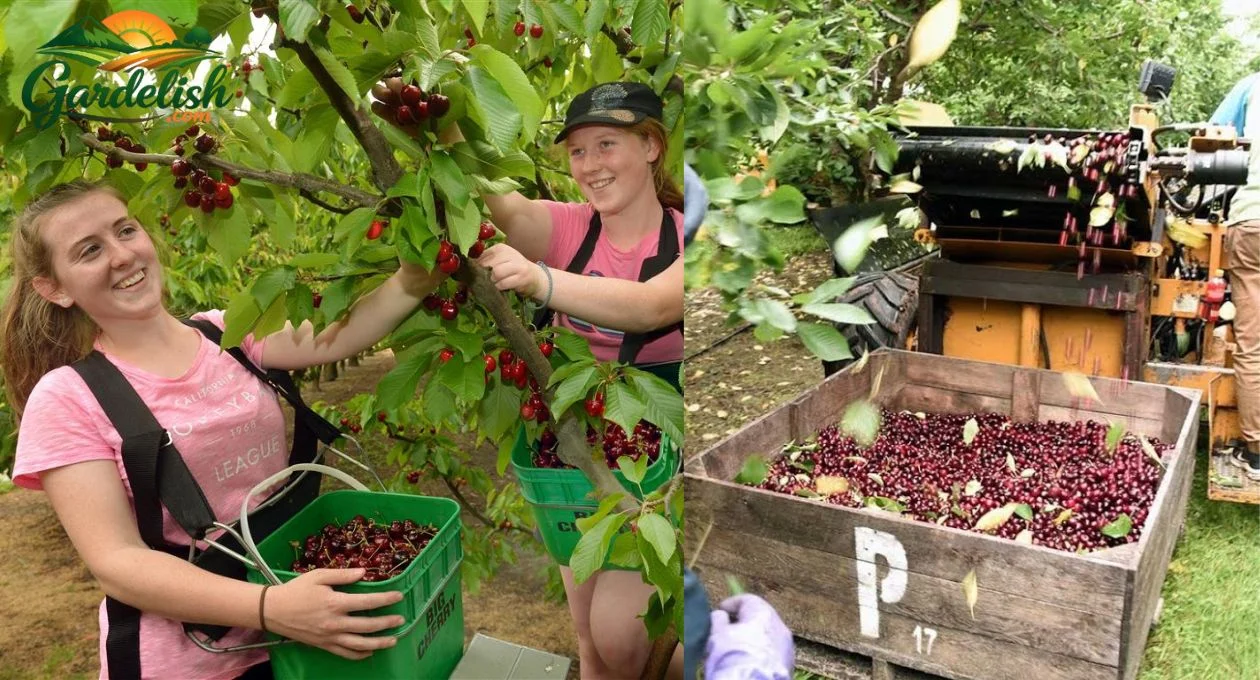
Unlike some crops that can tolerate rough handling, cherries show damage quickly. Bruising, stem loss, heat exposure, and cracked skins can reduce quality. Fresh-market cherries are usually picked with stems attached because the stem helps the fruit stay fresh longer and signals careful handling.
The Short Harvest Window
Cherry harvest often comes in a rush. A warm spell can push fruit from almost ripe to fully ripe in just a few days. Rain near harvest can cause splitting, especially in sweet cherries. Birds, raccoons, squirrels, and wasps also discover ripe fruit quickly.
This is why labor shortages hurt cherries more than many other garden crops. A tomato can often wait a day or two. A cherry crop may not.
In Washington state’s cherry regions, 2025 reporting described growers and pickers facing a short season with fewer workers available during harvest. While conditions vary by region and year, the underlying pattern is familiar to fruit growers: when the fruit is ready, the workforce must be ready too.
The Soft Fruit Problem
Cherries are delicate because their skin is thin and their flesh is juicy. Once picked, they need shade, ventilation, and cool storage as soon as possible.
A rough harvest can cause:
Stem punctures
Skin cracking
Bruising
Leaking juice
Shorter shelf life
Faster mold development
This is especially important for gardeners who plan to share, sell, freeze, or preserve cherries. A careful pick in the morning can make a noticeable difference compared with a hot afternoon harvest into a deep bucket.
How Shortages Affect Quality, Prices, and Waste
When labor is short, the first issue is timing. Cherries that would normally be picked across several careful passes may be harvested too late, too quickly, or not at all.
Commercial orchards often pick selectively. Workers look for fruit with the right color, firmness, and size. If there are not enough pickers, growers may have to prioritize the best blocks and leave weaker sections behind. That can create waste in the orchard and reduce total market supply.
Labor shortages may also raise costs. If growers must pay more to attract workers, provide housing, manage compliance, or use guest worker programs, those expenses become part of the cost of producing cherries. USDA ERS has reported that fruit and vegetable growers are relying more on H-2A workers and machinery as labor gets harder and more expensive to secure.
For gardeners, the “price” is not always money. It may be lost fruit, wasted effort, or a tree that becomes too tall to manage. The lesson is simple: the easier a cherry tree is to pick, the more of the crop you actually enjoy.
A neglected tree may produce hundreds of cherries, but if most of them are twenty feet high, the harvest is more decorative than useful.
What Backyard Gardeners Can Learn from Commercial Orchards
Commercial orchardists think about harvest long before the fruit turns red. Backyard gardeners should do the same.
A good cherry harvest begins with tree size, pruning style, variety choice, bird protection, soil health, irrigation, and access around the tree. These decisions determine whether harvesting feels like a pleasant seasonal ritual or a frustrating race against birds and weather.
The most useful lesson is this: do not grow more tree than you can manage.
Old-fashioned standard cherry trees can become tall and beautiful, but they are not always practical for modern home gardens. A smaller tree on a dwarfing or semi-dwarfing rootstock usually gives a better real-life harvest because more fruit stays within reach.
Good harvest planning for gardeners includes:
Choosing manageable tree size
Keeping the canopy open with pruning
Planting where ladders or picking baskets can move safely
Netting before birds become a problem
Picking in several passes
Cooling fruit quickly after harvest
Inviting help before peak ripeness
This is where gardening and orchard management overlap. A cherry tree is not only a plant; it is a seasonal project.
Choosing Cherry Trees for Easier Harvest
The best harvest starts before planting. If you are still choosing a cherry tree, think about your climate, space, pollination needs, and how you will pick the fruit.
Cherries generally perform best in full sun and moist, fertile, well-drained soil. Iowa State University Extension recommends at least eight hours of sun daily and warns against wet, poorly drained sites because cherries are susceptible to root rots in those conditions.
Sweet vs Tart Cherries
Sweet cherries, usually associated with Prunus avium, are the glossy fresh-eating cherries many people imagine first. They often need excellent drainage, full sun, bird protection, and careful harvest timing. Some varieties need a compatible pollinizer, although modern self-fertile cultivars are available.
Tart or sour cherries, commonly associated with Prunus cerasus, are often easier for home gardeners in colder climates. They are excellent for pies, preserves, juice, drying, and freezing. Penn State Extension notes that tart cherries are generally smaller and hardier than sweet cherries, with tart cherries often suited to USDA Zones 4 to 8 and sweet cherries to Zones 5 to 9.
For a gardener worried about harvest labor, tart cherries can be a smart choice. Many trees are naturally smaller, and the fruit is usually processed rather than judged only for perfect fresh-market appearance.
Dwarf Rootstocks and Pruning
Rootstock matters. A cherry variety grafted onto a dwarf or semi-dwarf rootstock can be much easier to pick, prune, net, and spray.
A smaller cherry tree offers several advantages:
More fruit within arm’s reach
Safer ladder use
Easier bird netting
Better airflow through the canopy
Faster harvesting
Less wasted fruit in the top branches
Pruning should aim for light, airflow, and access. Remove dead, diseased, crossing, and crowded wood. Keep the center open enough for sunlight to reach fruiting branches. Avoid letting the tree become a tall umbrella with fruit only at the outer tips.
For small gardens, a fan-trained cherry against a sunny wall, a compact sour cherry, or a dwarf tree in a large container can be more practical than a full-size tree in the lawn.
A Practical Backyard Cherry Harvest Plan
A good cherry harvest plan starts two to three weeks before the fruit is fully ripe.
Begin by watching color. Sweet cherries usually deepen from bright red to dark red, mahogany, or nearly black depending on variety. Tart cherries often become bright red and slightly softer. Taste is the best final test. If the fruit has color but still tastes flat, give it more time.
Before harvest:
Clear weeds and tall grass around the tree
Set up bird netting or reflective deterrents early
Check ladders, picking buckets, and containers
Plan shade or cool storage
Invite family, neighbors, or friends if the crop is heavy
Water consistently during dry spells
Pick in the cool part of the day, ideally morning after dew has dried. Handle cherries gently and avoid deep containers that crush the lower layers. If you want longer storage, pick with stems attached. If you are processing immediately for jam, pie filling, freezing, or juice, stemless fruit is less of a problem.
Sort as you pick. Keep cracked, bird-pecked, or overripe fruit separate from clean fruit. Damaged cherries can still be used quickly if they are safe and not moldy, but they should not be stored with perfect fruit.
For large backyard crops, do not try to do everything at once. Pick the ripest sections first, usually the sunnier side of the tree. Return every day or two while the crop is ripening.
This simple rhythm reduces waste and keeps the harvest enjoyable.
Reducing Labor with Good Seasonal Care
The easiest cherry harvest comes from a healthy, well-managed tree. Seasonal care reduces the last-minute scramble.
Start with soil. Cherries dislike waterlogged ground, but they also suffer when drought stress hits during fruit swell. A soil rich in organic matter drains well while holding enough moisture for steady growth. Compost, leaf mold, aged manure, and wood-chip mulch can all improve soil structure over time.
Mulch is especially useful. A 2–4 inch layer of organic mulch helps conserve moisture, reduce weeds, and protect soil life. Keep mulch a few inches away from the trunk to prevent bark problems.
Water young trees deeply during dry spells. Mature trees need less frequent watering, but fruit quality can decline when drought stress arrives during late spring and early summer.
Fertilizer should be moderate. Too much nitrogen can push leafy growth at the expense of fruiting and make pruning harder. A soil test is the best guide. If growth is weak and leaves are pale, compost or a balanced organic fertilizer may help. If the tree is already vigorous, feeding heavily can create more work rather than more fruit.
Pest and disease prevention also saves labor. Watch for aphids, cherry fruit fly, birds, brown rot, bacterial canker, powdery mildew, and leaf spot depending on your region. Good pruning, sanitation, airflow, and prompt removal of diseased fruit reduce pressure.
Internal linking opportunities fit naturally here for a gardening site: soil improvement, composting, organic fertilizers, fruit tree pruning, bird control in the garden, and seasonal pest prevention guides would all support this topic.
Small-Orchard Solutions: Planning, Tools, and Community Help
For small orchards, homesteads, community gardens, and pick-your-own growers, labor planning needs to be realistic.
The first step is mapping the harvest window. Different cultivars ripen at different times. A mix of early, midseason, and late cherries can spread labor needs across several weeks instead of creating one overwhelming peak. However, spreading harvest also means longer bird protection and more frequent monitoring.
Useful small-orchard strategies include:
Planting cultivars with staggered ripening
Using dwarfing rootstocks where possible
Training trees for pedestrian picking
Maintaining wide, safe access paths
Arranging local harvest help early
Offering community picking days
Using shallow picking lugs
Cooling fruit quickly
Preserving surplus immediately
Some growers also use U-pick models to reduce harvest labor, but this requires planning for insurance, parking, customer safety, signage, and clear picking instructions. For a very small orchard, inviting neighbors to pick in exchange for a share of fruit may be simpler.
Tools can help, but they do not replace good tree structure. A fruit-picking pole may reach high branches, but cherries bruise easily and often detach without stems. A stable orchard ladder, picking bucket, shade cloth, harvest crates, and a clean sorting table are usually more useful.
Mechanical harvesting is more common in some processed fruit systems than in fresh sweet cherries because fresh-market quality depends so heavily on gentle handling. That may change as technology improves, but for home gardeners and small growers, the most reliable “mechanization” is still a tree kept small enough for human hands.
FAQ
What is the cherry harvest labor shortage?
The cherry harvest labor shortage means there are not enough trained seasonal workers available to pick cherries during their short ripening window. Because cherries must be picked quickly and carefully, even a small delay can lead to overripe fruit, waste, or lower-quality harvests.
Why does cherry harvesting need so much labor?
Cherry harvesting needs a lot of labor because cherries are small, delicate, and usually picked by hand. Workers must avoid bruising the fruit, damaging the stems, or harming the fruiting spurs that produce future crops.
How does labor shortage affect cherry growers?
A labor shortage can force growers to leave fruit on the trees, delay picking, raise harvest costs, or reduce the amount of high-quality cherries reaching the market. For small orchards, it can also make harvest planning more difficult.
Can home gardeners face the same cherry harvest problem?
Yes. A backyard cherry tree can ripen a large crop all at once. If the gardener is not prepared, birds, rain, heat, or over-ripening can reduce the harvest before the fruit is picked.
How can gardeners make cherry harvesting easier?
Gardeners can make cherry harvesting easier by growing dwarf or semi-dwarf cherry trees, pruning for an open canopy, using bird netting early, picking in several passes, and harvesting in the cool morning hours.
What type of cherry tree is easiest to manage?
Dwarf and semi-dwarf cherry trees are usually easier to manage because they stay smaller and keep more fruit within reach. Tart cherries are also a practical choice for many home gardeners because they are often hardier and excellent for pies, jam, freezing, and preserving.
When should cherries be harvested?
Cherries should be harvested when they reach full color, taste sweet or properly tart, and come away from the tree easily. Sweet cherries are often picked with stems attached for better storage, while tart cherries are commonly harvested for quick processing.
How can cherry waste be reduced during harvest?
Cherry waste can be reduced by picking fruit at the right stage, using shallow containers, keeping harvested cherries cool, sorting damaged fruit separately, and preserving extra cherries through freezing, drying, canning, or jam-making.
Conclusion:
The cherry harvest labor shortage shows how important timing, planning, and careful handling are during cherry season. Cherries ripen quickly, bruise easily, and lose quality when they are left too long on the tree. For commercial growers, a lack of workers can mean wasted fruit, higher costs, and a smaller harvest.
For home gardeners and small orchard owners, the lesson is simple: make cherry harvesting easier before the fruit ripens. Choose manageable cherry varieties, keep trees pruned to a reachable size, protect fruit from birds, and plan your harvest early.
A well-managed cherry tree does not just produce fruit. It gives you a better, cleaner, and more enjoyable harvest with less waste and more cherries worth eating, sharing, freezing, or preserving.
Zucchini Shortage: Why Your Plants Aren’t Producing and How to Fix It