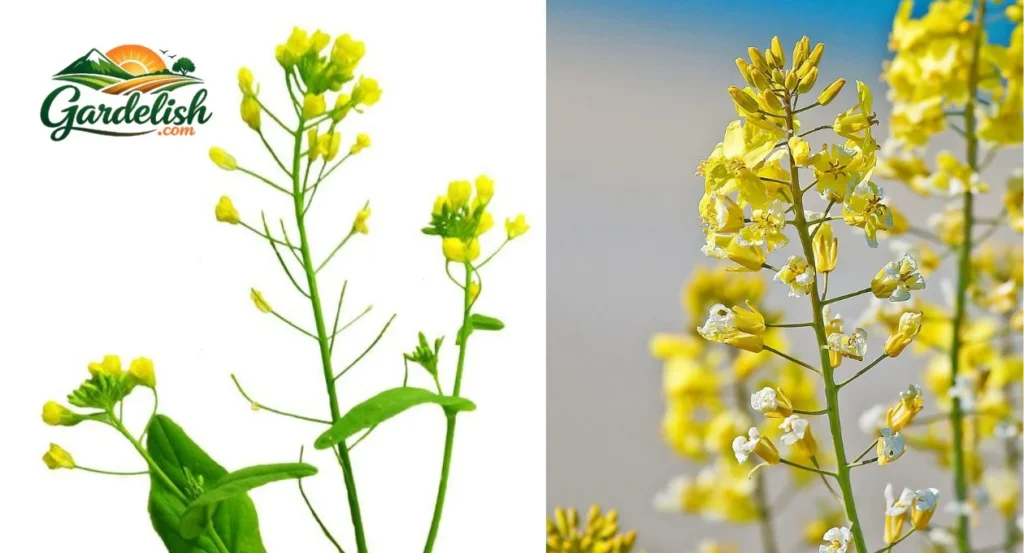
Wild mustard look alikes are common in gardens, fields, roadsides, and disturbed soil, especially during cool spring weather. Many of these plants belong to the mustard family, so they share similar features: four-petaled flowers, rough or lobed leaves, peppery-smelling foliage, and slender seedpods.
The plants most often mistaken for wild mustard include wild radish, yellow rocket, garlic mustard, black mustard, field mustard, and shepherd’s purse. Some yellow-flowered plants, such as wild parsnip, may look similar from a distance but are not true mustards and should be handled carefully.
Knowing the difference matters because some mustard-like weeds are easy to remove, some spread aggressively, and a few look-alikes can irritate skin or become invasive.
What Does Wild Mustard Look Like?
Wild mustard usually refers to Sinapis arvensis, also called charlock. It is a cool-season annual weed that grows quickly in open, disturbed soil.
It often appears in vegetable gardens, raised beds, field edges, paths, compost-rich soil, and bare patches where the ground has recently been turned.
Common features include:
- Bright yellow flowers with four petals
- Rough, lobed lower leaves
- Smaller upper leaves that may clasp the stem
- Upright branching stems
- Long, narrow seedpods after flowering
- A fast-growing habit in spring or mild weather
Young wild mustard plants can be tricky to identify because they look similar to other brassicas, including turnips, mustard greens, radish, and volunteer kale. The plant becomes easier to recognize once it flowers and forms seedpods.
Common Wild Mustard Look Alikes
Wild Radish
Wild radish is one of the closest wild mustard look alikes. It grows in the same kind of places: vegetable beds, roadsides, open fields, and disturbed garden soil.
The leaves are rough, hairy, and lobed, much like wild mustard. The main difference is usually in the flowers and seedpods.
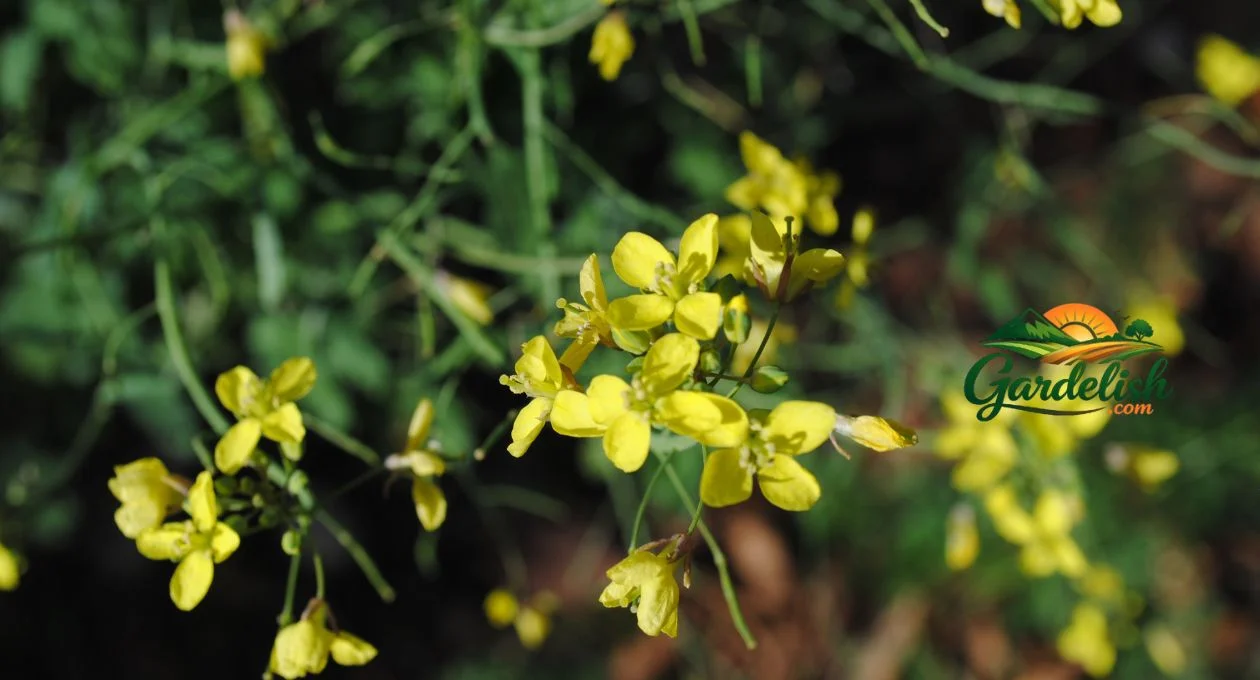
Wild radish flowers may be pale yellow, white, pinkish, or lightly purple-veined. Wild mustard flowers are usually brighter yellow. Wild radish seedpods are also thicker, segmented, and somewhat corky.
If you pull the plant, the root may have a strong radish-like smell. This is a useful clue, especially when the plant is still young.
Yellow Rocket
Yellow rocket, also called wintercress, produces clusters of small yellow flowers and can easily be mistaken for wild mustard in spring.
It often grows in moist soil, ditches, lawns, meadows, and garden edges. The leaves are usually glossy and dark green, with rounded lobes. Before flowering, the plant often forms a low rosette.
Yellow rocket is in the mustard family, so its flowers have the same four-petaled shape. However, its leaves tend to look smoother and shinier than wild mustard leaves.
In gardens, yellow rocket should be removed before it sets seed. It is easiest to pull when the soil is moist.
Garlic Mustard
Garlic mustard is another mustard-family plant, but it looks different once you know what to check.
The biggest clue is smell. When crushed, garlic mustard leaves give off a garlic-like odor. It usually has white flowers rather than yellow flowers.
Garlic mustard often grows in shade, woodland edges, hedges, and neglected garden borders. It is a biennial, meaning it grows leaves in the first year and flowers in the second year.
First-year plants form low rosettes with rounded, scalloped leaves. Second-year plants grow taller and produce small white flowers followed by long, narrow seedpods.
Garlic mustard can spread aggressively, so remove it before the seedpods mature.
Black Mustard
Black mustard is closely related to wild mustard and can look very similar. It usually grows taller and stronger, sometimes reaching several feet high in fertile soil.
It has yellow flowers, upright stems, and narrow seedpods. The lower leaves are larger and more lobed, while the upper leaves become smaller.
Black mustard often appears in fields, roadsides, vacant lots, and sunny garden edges. Like other mustard-family weeds, it should be removed before it drops seed.
Field Mustard
Field mustard is another close relative and is often confused with wild mustard. Some gardeners may not separate the two because both have yellow flowers, similar leaves, and a fast-growing spring habit.
Field mustard is related to several cultivated brassicas, including turnips and some leafy greens. If you recently grew mustard greens, turnips, rapini, or Asian greens, a “weed” may actually be a volunteer crop seedling.
The safest approach is to watch the plant’s growth habit, flower color, and seedpods before deciding whether to keep or remove it.
Shepherd’s Purse
Shepherd’s purse is in the mustard family, but it is usually smaller and less showy than wild mustard.
It has small white flowers and thin stems. The most recognizable feature is its seedpods. They are small, flat, and heart-shaped or triangular, like tiny purses along the stem.
Shepherd’s purse often grows in lawns, paths, pots, raised beds, and bare soil. It can flower while still small, so remove it early if you do not want it spreading.
Yellow Flowers Do Not Always Mean Wild Mustard
One common mistake is identifying plants by flower color alone. Many yellow-flowered plants are not mustards.
Wild parsnip is a good example. It has yellow flowers, but they grow in umbrella-shaped clusters. This plant belongs to the carrot family, not the mustard family.
Wild parsnip sap can irritate skin and cause painful reactions when exposed to sunlight. Wear gloves, long sleeves, and long pants if you need to remove it.
To avoid confusion, remember:
- Mustard-family flowers usually have four petals
- Wild parsnip flowers grow in flat umbrella-like clusters
- Mustard leaves are usually rough, lobed, or peppery-smelling
- Carrot-family weeds often have compound or divided leaves
If you are unsure, do not touch, taste, or compost the plant until it is properly identified.
How to Tell Wild Mustard from Its Look Alikes
The easiest way to identify wild mustard look alikes is to compare several features, not just one.
Check these details:
Flowers:
Wild mustard has bright yellow, four-petaled flowers. Garlic mustard and shepherd’s purse have white flowers. Wild radish flowers may be pale yellow, white, pink, or purple-veined.
Leaves:
Wild mustard leaves are rough and often lobed. Garlic mustard leaves are scalloped and smell garlicky. Yellow rocket leaves are glossier and more rounded.
Seedpods:
Wild mustard has narrow pods. Wild radish has thicker segmented pods. Shepherd’s purse has tiny heart-shaped pods.
Smell:
Garlic mustard smells like garlic when crushed. Wild radish may smell like radish. Many mustard-family plants have a peppery scent.
Location:
Wild mustard and wild radish prefer sunny disturbed soil. Garlic mustard often grows in shade. Yellow rocket likes moist areas.
Should You Remove Wild Mustard from the Garden?
In most vegetable gardens, yes. Wild mustard grows fast, competes with crops, and can produce many seeds if left alone.
It is especially troublesome around young vegetables because it steals light, water, and nutrients. It can also attract some of the same pests that affect brassica crops, such as flea beetles and cabbage worms.
Remove plants before seedpods mature. Once seedpods form, the plant can spread quickly and return in future seasons.
Best Ways to Control Mustard-Like Weeds
The best control method is early removal. Young plants are easier to pull and less likely to regrow.
Useful control tips:
- Pull weeds after rain or watering
- Remove the root crown when possible
- Hoe young seedlings before they flower
- Mulch bare soil with straw, leaves, compost, or wood chips
- Avoid leaving flowering weeds on moist soil
- Bag seed-bearing plants instead of composting them
- Keep garden beds planted or covered between seasons
A 2- to 3-inch mulch layer can reduce weed germination by blocking light from reaching weed seeds. In raised beds, mulch also helps maintain soil moisture and protects soil structure.
Can You Eat Wild Mustard Look Alikes?
Some mustard-family weeds are edible, but identification must be certain. Do not eat any wild plant based only on a quick visual guess.
Avoid eating plants from roadsides, sprayed lawns, contaminated soil, or areas with animal waste. Also avoid any plant if you are unsure whether it is wild mustard, wild radish, garlic mustard, or something unrelated.
For beginners, it is safer to grow known edible mustard greens, radishes, kale, or turnips from seed rather than foraging unknown plants.
FAQs
What is most often mistaken for wild mustard?
Wild radish is one of the most common plants mistaken for wild mustard because it has rough leaves, similar flowers, and grows in the same disturbed soil.
How do I tell wild mustard from wild radish?
Wild mustard usually has bright yellow flowers and narrow pods. Wild radish often has paler flowers with purple veins and thicker segmented pods.
Is garlic mustard the same as wild mustard?
No. Garlic mustard is a different plant. It has white flowers, scalloped leaves, and a garlic smell when crushed.
Are wild mustard look alikes poisonous?
Many mustard-family look-alikes are not poisonous, but some unrelated plants can be risky. Wild parsnip, for example, can cause skin irritation.
Should I pull wild mustard from my garden?
Yes, especially before it sets seed. Wild mustard can compete with vegetables and spread quickly if left to mature.
Conclusion
Wild mustard look alikes can be confusing because many garden weeds share yellow flowers, rough leaves, and similar seedpods. The most common look-alikes include wild radish, yellow rocket, garlic mustard, black mustard, field mustard, and shepherd’s purse.
The safest way to identify them is to check the flower shape, leaf texture, smell, seedpod type, and growing location. Do not rely on flower color alone, especially around yellow-flowered plants like wild parsnip.
For garden control, remove mustard-like weeds early, mulch bare soil, and prevent plants from setting seed. With careful observation, wild mustard and its look alikes become much easier to manage.