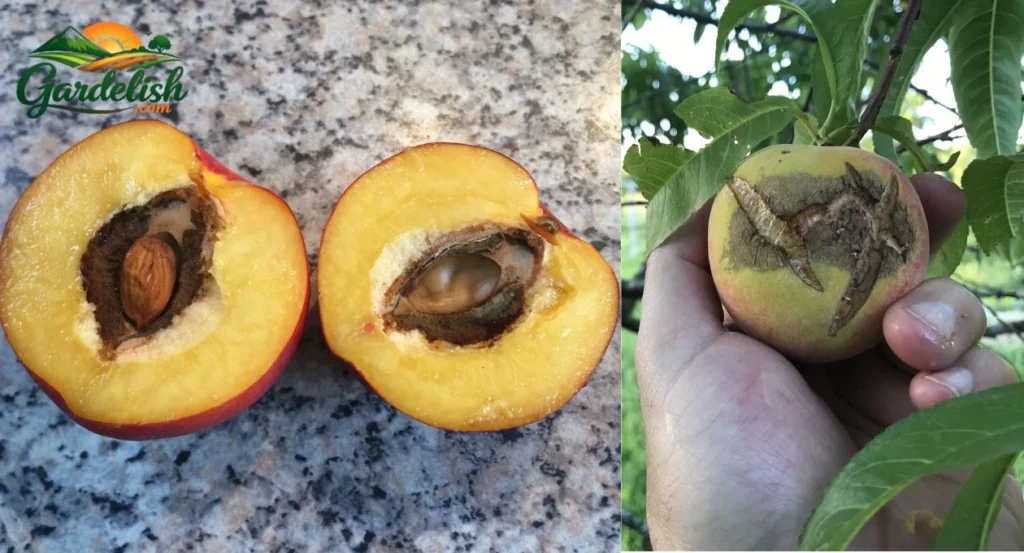
Peaches usually crack because the fruit grows faster than the skin or pit can handle. In a backyard orchard, I most often see it after a dry spell followed by heavy rain, deep watering, or sudden hot weather that pushes fruit to swell quickly. Sometimes the crack is only in the skin, but many homegrown peaches are actually suffering from split pit, where the stone inside separates and the fruit opens near the stem or seam. The fruit cannot heal once it cracks, but you can still save part of the crop and prevent a repeat next season.
Quick Answer: Peaches crack when water, growth, or pit development gets out of balance
Peaches crack when sudden water uptake makes the flesh expand faster than the skin or pit can keep up. The most common triggers are irregular watering, heavy rain after drought, excessive thinning, overfeeding with nitrogen, and rapid growth during the pit-hardening stage. Split peaches are often larger, softer, and earlier to ripen than normal fruit. Pick cracked peaches promptly, discard any with mold or insects, and focus prevention on steady moisture, correct thinning, mulch, and moderate feeding.
Peaches Crack Because Fast Growth Puts Pressure on the Skin and Pit
A peach is not a simple balloon of juice. It has skin, flesh, a developing pit, and a seam line that can become a weak point when growth surges. When the tree suddenly takes up a lot of water, the flesh swells. If the skin cannot stretch quickly enough, it splits. If the pit is still developing or has already weakened along its suture, the fruit may open from the inside out.
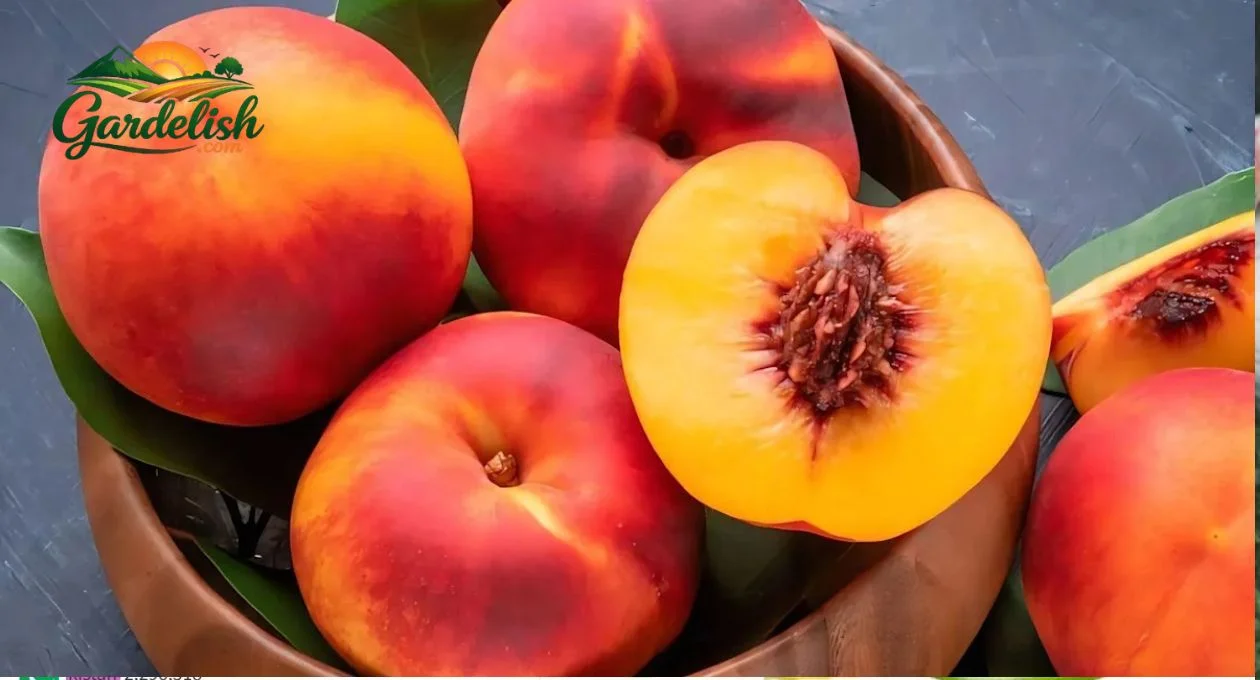
This is why cracking often appears after a thunderstorm, a late irrigation “catch-up,” or a heat wave followed by a generous watering. UC IPM identifies peach split pit as a disorder linked to rapid growth, especially excessive thinning or irregular watering during pit hardening. A recent review of split pit in peaches also notes that rapid fruit expansion and unstable development can put enough pressure on the endocarp—the pit—to crack along its suture.
In plain gardener language: the peach bulks up too quickly, and something has to give.
The Crack Location Tells You What Is Probably Happening
Use the fruit itself as your first clue. The pattern of cracking often tells you whether you are dealing with ordinary skin splitting, split pit, pest damage, or rot setting in after the crack.
| What you see | Likely cause | What to do now |
| Crack near the stem end or along the seam | Split pit or rapid internal growth | Pick, inspect inside, use quickly if clean |
| Large peach ripens earlier than the rest and feels soft | Split pit | Harvest before insects and rot move in |
| Shallow skin cracks after rain | Moisture surge after dry soil | Stabilize watering and mulch |
| Crack with brown, fuzzy, or sour-smelling flesh | Rot entering damaged fruit | Discard fruit and clean up fallen peaches |
| Crack with ants, earwigs, beetles, or larvae | Pests using the opening | Remove affected fruit and improve sanitation |
| Many cracked peaches after heavy nitrogen feeding | Overly vigorous growth | Stop summer nitrogen and test soil before feeding again |
The beginner mistake is blaming every cracked peach on insects. Pests love cracked fruit, but they are often secondary. The crack comes first, then ants, earwigs, dried fruit beetles, wasps, or fungal spores find the opening.
Irregular Watering Is the Most Common Cause in Backyard Peach Trees
The biggest practical answer to why are my peaches cracking is inconsistent moisture. Peach trees do not like being bone dry one week and soaked the next, especially when fruit is sizing up in early to mid-summer. RHS notes that moisture is especially important when peach fruits are swelling, while USU Extension recommends deep, less frequent irrigation for established peach trees, with water penetrating the root zone rather than just wetting the surface.
What usually fails is light daily sprinkling. It wets mulch, leaves, and the top inch of soil, but the feeder roots deeper in the drip line stay thirsty. Then a storm arrives, or the gardener finally gives the tree a long soak, and the fruit expands too abruptly.
A better watering rhythm:
- Check the soil 4–6 inches deep near the drip line, not beside the trunk.
- Water when that zone is beginning to dry, not after the tree wilts.
- Soak slowly with drip irrigation, a soaker hose, or a basin around the root zone.
- Avoid overhead sprinklers when possible, because wet foliage and fruit can increase disease pressure.
- Keep moisture steady during fruit swell, then reduce excess watering after harvest.
Sandy soil may need water more often. Clay soil may need slower watering and longer gaps. Container peaches dry much faster and are more prone to swings, so they need careful monitoring during heat.
Split Pit Is Different From Simple Skin Cracking
Split pit is one of the most frustrating peach problems because the outside can look almost normal until harvest. Sometimes the fruit looks flattened at the blossom end. Sometimes it is larger than the others, ripens early, or opens at the stem cavity. When you cut it, the pit may be split in two, separated, moldy around the seed, or loose inside the flesh.
Missouri Extension notes that peaches with split pits are often larger, ripen earlier, have shorter shelf life, and are more prone to disease infection near the pit. It also reports that early-ripening cultivars are generally more likely to show split pit, though midseason varieties can be affected too.
The timing matters. Pit hardening happens while the fruit is still developing. If the tree is pushed into rapid growth during that period—through irregular watering, too much nitrogen, or overly aggressive thinning—the pit and flesh may not develop in sync.
You Can Save Some Cracked Peaches, But You Need to Sort Them Quickly
A cracked peach will not seal itself. Once the skin opens, the fruit loses storage life fast. In warm, humid weather, I do not leave cracked peaches hanging “one more day” unless they are still very firm and clean. They usually go downhill faster than expected.
Follow this simple sorting routine:
- Pick cracked peaches first. Do not wait for perfect softness.
- Open and inspect them. Look around the pit and crack line.
- Keep fruit that smells fresh and has clean flesh. Use it the same day.
- Cut away dry, damaged edges. Do not save mushy or sour tissue.
- Discard fruit with mold, larvae, oozing rot, or fermentation smell.
- Remove fallen fruit under the tree. It attracts insects and disease.
Clean cracked peaches are best for jam, sauce, freezing, cobbler, smoothies, or eating over the sink. They are not good storage peaches.
The Best Prevention Is Steady Moisture, Mulch, and Correct Thinning
Prevention starts before the fruit cracks. Once you understand the pattern, the fix becomes a seasonal routine rather than a panic response.
Step-by-step prevention plan
- Mulch the root zone in spring. Use 2–4 inches of wood chips, shredded bark, straw, or composted leaves, keeping mulch several inches away from the trunk.
- Water deeply before drought stress appears. Do not wait until leaves curl and fruit stalls.
- Thin fruit carefully. Peaches and nectarines set too much fruit and need hand thinning for size and limb safety. UC IPM recommends spacing peaches about 6–8 inches apart, or up to 10 inches when the crop is very heavy.
- Avoid severe overthinning on split-prone trees. Leaving too few fruit can push the remaining peaches to grow too fast.
- Go easy on nitrogen. Heavy summer feeding encourages lush growth when the tree should be balancing fruit development.
- Prune for light and airflow. An open canopy dries faster after rain and supports more even fruit ripening.
- Choose the right cultivar for your climate. Chill hours, bloom timing, disease pressure, and ripening season all matter when selecting peach varieties.
The experienced grower’s trick is consistency. You are not trying to make the tree grow as fast as possible. You are trying to avoid sudden surges.
Seasonal Timing Matters More Than Most Gardeners Realize
Peach cracking is rarely caused by one bad day. It usually builds from spring care, early fruit development, and summer weather.
| Season | What to watch | Best task |
| Late winter | Dense canopy, weak branches | Prune to an open center before growth starts |
| Bloom to fruit set | Frost, poor pollination, early stress | Protect blossoms where practical; avoid overfeeding |
| Early fruit growth | Heavy fruit load | Thin damaged fruit first, then space remaining fruit |
| Pit-hardening period | Rapid growth swings | Keep watering even; avoid excessive thinning and nitrogen |
| Fruit swell | Heat, drought, sudden rain | Deep water consistently and maintain mulch |
| Harvest | Cracked fruit, rot, insects | Pick damaged peaches promptly and clean fallen fruit |
| Fall | Stressed tree after crop | Water during dry spells; avoid late nitrogen |
In humid regions, cracked peaches often rot quickly. In hot, dry climates, the bigger issue is drought followed by sudden irrigation. In low-chill winter areas, cultivar selection is crucial because trees that bloom at the wrong time may suffer frost injury or irregular fruit development.
Common Mistakes That Make Peach Cracking Worse
The most common mistake is trying to “make up” for missed watering with one enormous soak during fruit swell. Deep watering is good; dramatic moisture swings are not.
Another mistake is fertilizing a fruiting peach tree heavily in summer. Nitrogen has its place, especially for young trees and weak growth, but too much vigor during fruit development can worsen soft, fast growth. A soil test is better than guessing.
Overthinning can also backfire. Gardeners are often told to thin peaches, and that advice is correct, but removing too much fruit too early on a split-prone variety can push the remaining fruit into rapid expansion. Aim for balanced thinning, not stripping the tree bare.
Finally, do not ignore cracked fruit on the ground. Fallen peaches are pest hotels. Clean them up every few days during harvest season, especially after storms.
Expert Troubleshooting: Match the Symptom to the Fix
| Symptom | Possible causes | Solution | Prevention |
| Peaches split after a big rain | Drought followed by sudden water uptake | Pick damaged fruit; stabilize irrigation | Mulch and water before drought stress |
| Peaches crack near stem and pit is split | Split pit | Use clean fruit quickly; discard infested fruit | Avoid irregular watering, overthinning, and high nitrogen during pit hardening |
| Cracked fruit has bugs inside | Insects entered after cracking | Remove fruit; clean ground | Harvest cracked fruit early; improve sanitation |
| Many huge peaches crack while smaller ones stay sound | Too few fruit or rapid growth | Reduce nitrogen; water evenly | Thin moderately and consistently |
| Container peach fruit cracking | Pot drying out then being soaked | Water more evenly; check drainage | Larger pot, mulch surface, regular moisture checks |
| Crack followed by brown rot | Fungal infection entered wound | Discard infected fruit | Open pruning, sanitation, avoid wet canopy |
FAQ
Are cracked peaches safe to eat?
Cracked peaches can be safe to eat if the flesh is clean, smells fresh, and has no mold, insects, fermentation, or soft brown decay. Use them quickly because they will not store well. Cut away damaged edges and inspect around the pit. When in doubt, compost the fruit rather than risking spoiled flesh.
Why do my peaches crack before they are ripe?
Peaches often crack before ripening because the fruit expands rapidly during development, especially after rain or heavy watering. Split pit can also cause fruit to open early near the stem or seam. These peaches may soften earlier than the rest of the crop, which is why they attract insects before you expect harvest to begin.
Does too much rain make peaches split?
Yes, rain can contribute to cracking, especially when it follows a dry period. The tree suddenly takes up water, the flesh swells, and pressure builds inside the fruit. Rain near harvest also increases rot risk because cracked skin gives fungi and insects an easy entry point.
Should I remove cracked peaches from the tree?
Yes. Remove cracked peaches as soon as you notice them, especially in warm or humid weather. They usually ripen or rot faster than sound fruit. Picking them also reduces pests, fungal spores, and fallen-fruit mess under the tree. Keep only fruit that is clean and still smells fresh.
Can fertilizer cause peaches to crack?
Fertilizer is not usually the only cause, but too much nitrogen can push soft, rapid growth and make cracking or split pit more likely when other stresses are present. Avoid heavy summer nitrogen on fruiting peach trees unless a soil test or clear deficiency points to a need.
Do peach varieties differ in cracking problems?
Yes. Some peach cultivars are more prone to split pit than others, and early-ripening types are often more vulnerable. Local climate also matters. A variety that behaves well in one region may crack badly where spring frost, summer storms, humidity, or chill-hour mismatch create stress.
Will cracked peaches heal if I leave them on the tree?
No. Once a peach cracks, the skin does not heal back together. The fruit may continue softening, but the open area remains vulnerable to rot, insects, and drying. Harvest cracked fruit promptly, sort it carefully, and use clean fruit the same day.
Conclusion
Peach cracking is usually a water-and-growth problem, not a mysterious disease. The most common pattern is dry soil followed by heavy rain or deep watering, but split pit, overthinning, excess nitrogen, cultivar sensitivity, heat stress, and poor timing can all play a part. The immediate fix is simple: pick cracked peaches, inspect them, use clean fruit quickly, and remove anything moldy, buggy, or rotten. Long term, focus on steady moisture, mulch, careful thinning, moderate feeding, and a well-pruned canopy. A peach tree rewards consistency. Keep growth even during fruit swell and pit hardening, and next year’s crop has a much better chance of ripening whole, sweet, and clean.
Why Are My Strawberries So Small? 9 Causes and How to Fix Them