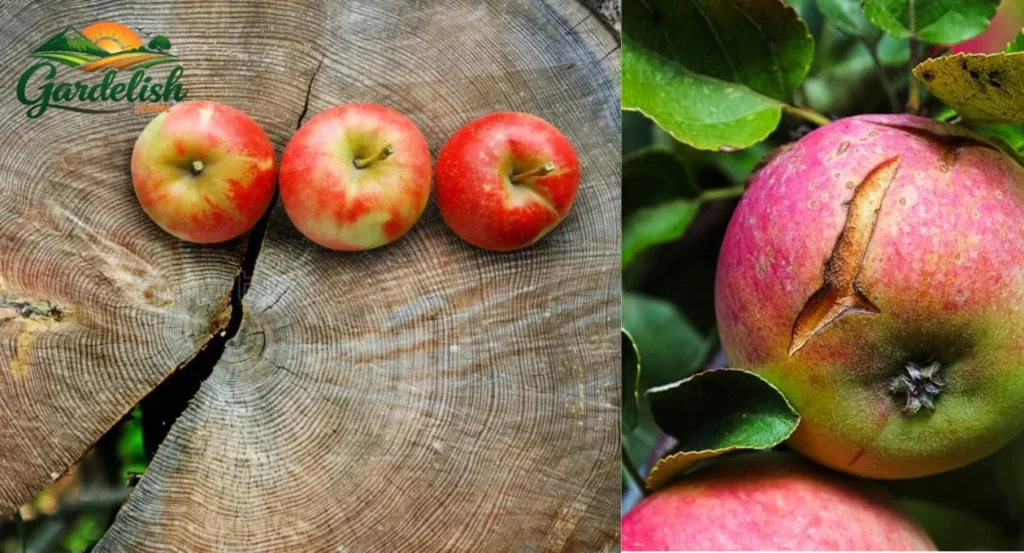
Apples usually split because the fruit takes up water faster than the skin can stretch. The most common trigger is a dry spell followed by heavy rain or sudden deep watering, especially as apples begin sizing up in summer and early fall. The flesh swells quickly, pressure builds under the skin, and the apple cracks around the stem, calyx, shoulder, or side. It is frustrating, but it is usually a growing-condition problem rather than a pest attack. Split apples can often still be used if caught early, but they spoil fast once the flesh is exposed.
Quick Answer: Apples Split When Water Uptake Is Too Sudden
Your apples are splitting because the fruit is expanding faster than the skin can grow. This usually happens after rain follows a dry period, or when watering is irregular during fruit development. Some varieties, including Gala, Fuji, Golden Delicious, Pink Lady, Honeycrisp, and Stayman types, are naturally more prone to cracking. The best fix is steady soil moisture, mulch, careful thinning, balanced nutrition, and harvesting vulnerable fruit before heavy rain when it is nearly ripe.
Sudden Water Swings Are the Main Reason Apples Split
The classic pattern is easy to spot. The tree looks fine for weeks, the apples are coloring nicely, then after a soaking rain you notice crescent-shaped cracks near the stem or a long split down the side of the fruit.
That happens because apples absorb water in two ways: through the roots and, to some extent, through the fruit skin. After dry weather, the tree and fruit are under moisture stress. When rain finally arrives, water rushes into the fruit. The inner cells expand quickly, but the skin and cuticle cannot stretch fast enough, so the surface tears. University of Maryland Extension describes apple cracking as beginning with tiny microcracks in the skin that can deepen into visible splits as fruit growth continues.
In home gardens, this is especially common when:
- Trees are watered heavily only after they start wilting.
- Lawn sprinklers wet the fruit but do not soak the root zone.
- A tree is growing in thin, sandy, or compacted soil.
- A dry summer is followed by late-season storms.
- Apples are left hanging past peak ripeness.
I see this most often on trees growing in grass, where the lawn steals moisture first and the apple roots get whatever is left. The gardener thinks the tree has been “getting rain,” but two inches below the turf the soil is powdery dry.
Split Apples Are Usually a Physiological Disorder, Not a Disease
Apple splitting is usually a physiological disorder, meaning the fruit is reacting to weather, water, nutrition, or growth conditions rather than being directly infected by a pathogen. RHS also lists cracking skin on apples as typically caused by heavy rain after a dry period, which makes the fruit expand and break the skin.
That said, disease can enter after the split happens. Once the apple flesh is exposed, brown rot, wasps, fruit flies, yeasts, and molds can move in quickly. A fresh, clean crack may only look dry and corky. An older crack often turns brown, soft, sour-smelling, or sunken.
A good gardener’s test is simple: press gently around the split. If the flesh is firm and smells fresh, the apple may be usable right away. If it is soft, leaking, moldy, or full of insects, remove it and discard it away from the tree.
Certain Apple Varieties Split More Easily Than Others
Some apples simply have less forgiving skin. Varieties with thinner skin, high sugar levels, rapid late-season swelling, or a tendency toward stem-end cracking are more likely to split. Extension sources identify cultivars such as Gala, Fuji, Golden Delicious, Pink Lady, Honeycrisp, and Stayman-type apples as more crack-prone in certain conditions.
This is why one tree in a garden may split badly while another nearby tree looks perfect. The weather is the same, but the fruit skin, ripening speed, sugar concentration, and growth habit are different.
| Apple Type or Situation | Splitting Risk | What Gardeners Often Notice |
| Gala | High | Cracks around the stem end |
| Fuji | Moderate to high | Side splits after rain |
| Honeycrisp | Moderate to high | Stem or calyx-end cracking |
| Pink Lady / Cripps Pink | Moderate to high | Late-season cracks near harvest |
| Stayman-type apples | High | Deep fruit cracking |
| Thick-skinned cider or storage apples | Lower | Usually tolerate rain better |
If your tree splits every year even with good care, the variety may be part of the problem. That does not mean the tree is bad; it means you need to manage water more carefully and harvest promptly.
Apple Scab, Boron, and Calcium Can Make Cracking Worse
Water stress is the main cause, but it is not the only factor. WVU Extension notes that boron deficiency and apple scab lesions can also contribute to cracking, although irregular water supply is usually the primary reason.
Apple scab creates rough, corky, weakened patches on fruit skin. As the apple expands, those damaged areas do not stretch normally, so they can crack. Scab is worse in wet spring weather, crowded canopies, and trees where fallen infected leaves remain under the canopy. UC IPM recommends sanitation, improved airflow, avoiding wet foliage where possible, and resistant varieties as key scab-management practices.
Calcium and boron matter because they are involved in cell wall strength and fruit development. But this is where many home gardeners make a costly mistake: they hear “boron” and immediately apply it. Boron is needed in tiny amounts, and too much can injure plants. Do not add boron unless a soil or tissue test suggests a deficiency. For most home apple trees, steady watering, compost, mulch, and balanced fruit-tree nutrition solve more problems than guesswork supplements.
Here’s How to Diagnose Why Your Apples Are Splitting
Use the symptoms before reaching for sprays or fertilizer.
| Symptom | Most Likely Cause | What to Do Now | Prevention |
| Clean split after rain | Dry spell followed by sudden water | Pick badly split fruit | Keep soil evenly moist |
| Cracks near stem end | Variety sensitivity, especially Gala-type apples | Harvest ripe fruit promptly | Mulch and avoid late harvest |
| Corky cracks with rough spots | Apple scab or old skin injury | Remove damaged fruit | Improve airflow and clean fallen leaves |
| Splits plus soft brown rot | Secondary infection after cracking | Discard rotten fruit | Pick split fruit early |
| Many huge apples splitting | Over-thinning or light crop | Harvest vulnerable fruit | Thin moderately, not excessively |
| Potted apple splitting | Irregular container moisture | Water deeply and evenly | Use larger pot and mulch surface |
| Repeated splitting every year | Variety + local weather pattern | Adjust harvest timing | Consider more crack-resistant cultivars |
A common beginner mistake is looking only at the cracked apple and ignoring the soil. Push a trowel 4–6 inches into the ground under the canopy. If the top looks damp but the lower soil is dry, the tree has been living on short drinks.
Fix Split Apples by Stabilizing Moisture First
You cannot close a split apple once it has cracked. The goal is to save what you can now and prevent the next round of fruit from splitting.
- Pick badly split fruit immediately. Do not leave open fruit hanging. It attracts wasps, fruit flies, birds, and rot.
- Use clean, fresh split apples quickly. Peel and cook them into sauce, pie filling, chutney, cider, or baked apples the same day.
- Discard rotten or insect-filled fruit. Do not compost diseased or maggoty fruit unless your compost pile heats properly.
- Check soil moisture deeply. Watering the surface is not enough for fruit trees.
- Water slowly at the drip line. Focus under the outer canopy, not against the trunk.
- Add mulch. Apply 2–4 inches of wood chips, leaf mold, straw, or composted bark, keeping it several inches away from the trunk.
- Avoid sudden overwatering. After drought, rehydrate gradually rather than flooding the tree all at once.
The biggest practical improvement is mulch. A mulched apple tree copes with heat and rainfall swings far better than a tree standing in bare, cracked soil or thirsty turf.
Prevent Apple Splitting With a Consistent Watering Routine
Apple trees do not need pampering, but fruiting trees need consistency. A mature tree in the ground usually prefers deep, occasional watering rather than daily sprinkles. Young trees, dwarf trees, espalier apples, and container-grown apples dry out faster and need closer attention.
| Season | What to Watch | Best Practice |
| Spring | Fruit set, scab risk, soil moisture | Mulch after soil warms; avoid overhead watering |
| Early summer | June drop, fruit sizing | Water during dry spells; thin clusters carefully |
| Mid to late summer | Rapid fruit swelling | Keep moisture steady before storms arrive |
| Early fall | Ripening, sugar increase, cracking risk | Harvest nearly ripe vulnerable varieties before heavy rain |
| Winter | Dormancy and pruning | Prune for airflow, structure, and balanced cropping |
A good rule is to water before drought stress becomes obvious. By the time leaves curl or apples stop sizing, the tree is already under pressure. Slow soaking with a hose, drip line, or watering ring is better than a quick blast from a sprinkler.
For trees growing in lawn, remove grass in a wide circle under the canopy if possible. Grass competes heavily with young feeder roots. Replace it with mulch and you will usually see better fruit size, fewer stress symptoms, and easier watering.
Thin Apples Carefully, But Do Not Overdo It
Thinning helps apples grow to a good size and reduces branch breakage, but overly light crops can produce very large, sugar-rich fruit that may split more easily. University of Maryland Extension notes that over-thinning can increase cracking susceptibility because remaining fruit can become larger and higher in sugar.
For home trees, thin when fruitlets are about marble-sized. Keep one good apple per cluster and space fruit roughly 4–6 inches apart on the branch, depending on variety and tree vigor. Remove damaged, misshapen, wormy, or scabbed fruit first.
What usually fails is waiting too long. Once apples are already large, thinning does not give the tree the same chance to balance the crop. Early thinning is cleaner, easier, and better for next year’s flower bud formation.
Prune for Airflow, Not Just Shape
A dense apple canopy holds humidity and dries slowly after rain. It also hides cracked fruit until it has already started rotting. Good pruning lets light and air move through the tree, which helps reduce disease pressure and makes fruit easier to inspect.
Prune during dormancy for structure, then make only light summer adjustments if needed. Avoid severe late-summer pruning on heavily cropped trees. University of Maryland Extension notes that hard, late pruning can reduce evapotranspiration and increase water retention in fruit before harvest, contributing to cracking in susceptible situations.
Aim for a tree where you can see dappled light through the canopy, not a tangled green umbrella.
Harvest Timing Can Reduce Late-Season Splitting
Apples become more vulnerable as they mature because fruit size and sugar increase while firmness and skin strength can decline. Late harvest can increase cracking risk, especially when a storm arrives just before picking.
For crack-prone varieties, watch the weather forecast closely in the final weeks. If apples are nearly ripe and heavy rain is predicted, it is often better to pick slightly early than lose a large portion of the crop to splitting and rot.
Signs apples are close to harvest include:
- Seeds turning brown.
- Background skin color changing from green to yellowish.
- Fruit lifting easily with a gentle twist.
- Typical flavor developing.
- A few sound fruits beginning to drop.
Do not judge ripeness by red color alone. Many apples color before they taste fully ripe, especially in cool nights and sunny days.
Common Mistakes That Make Apple Splitting Worse
The most common mistake is inconsistent watering: ignoring the tree for weeks, then soaking it heavily once apples look stressed. That swing is exactly what encourages cracking.
Another mistake is watering the trunk instead of the feeder-root zone. Most active feeder roots are farther out, around and beyond the drip line. Watering against the trunk may keep bark damp without helping the fruit much.
Gardeners also leave split apples on the tree too long. Once a crack opens, the apple is on borrowed time. Pick it, use it, or remove it.
Finally, avoid adding random calcium, boron, Epsom salt, or high-nitrogen fertilizer without knowing what your soil needs. Excess nitrogen can push soft, lush growth, and boron can be toxic if overapplied. A soil test is far more useful than guessing.
FAQs About Apples Splitting
Why are my apples splitting before they are ripe?
Apples often split before they are fully ripe because the fruit is still expanding quickly. If dry weather is followed by heavy rain, the flesh swells faster than the skin can stretch. This is common from mid-summer to harvest, especially on thin-skinned or crack-prone varieties.
Are split apples safe to eat?
Freshly split apples can be safe to eat if the flesh is firm, clean, and smells normal. Use them right away because exposed flesh spoils quickly. Do not eat apples that are soft, moldy, leaking, fermented-smelling, badly browned inside, or filled with insects.
Should I remove split apples from the tree?
Yes. Remove split apples as soon as you notice them. They attract wasps, birds, fruit flies, and rot organisms, and they rarely improve after cracking. Clean split fruit can be cooked immediately, while rotten or insect-damaged fruit should be discarded away from the tree.
Can too much rain make apples crack?
Yes. Too much rain after a dry spell is one of the most common reasons apples crack. The sudden water uptake causes rapid fruit expansion. Rain is especially troublesome near harvest, when apples are larger, sweeter, and often less firm than earlier in the season.
Does apple scab cause apples to split?
Apple scab can contribute to splitting by damaging and weakening the skin. The rough, corky scabbed areas do not stretch evenly as the apple grows, so cracks can form around them. However, irregular moisture is still the most common cause of widespread splitting on otherwise healthy-looking fruit.
How do I stop my apple tree from splitting every year?
Start with steady moisture. Mulch under the canopy, water deeply during dry spells, reduce grass competition, thin fruit early but not excessively, prune for airflow, and harvest crack-prone varieties promptly. If the same variety splits badly every year, it may be naturally susceptible in your climate.
Do container apple trees split more easily?
Container apple trees can split more easily because pots dry out quickly and then become suddenly saturated during watering or rain. Use a large container, maintain even moisture, mulch the pot surface, and avoid letting the compost swing from bone-dry to soaking wet during fruit development.
Conclusion: Keep Moisture Steady and Harvest Vulnerable Apples Promptly
Apples split when fruit growth outruns skin strength, and the usual trigger is irregular moisture. A dry spell followed by heavy rain or sudden deep watering creates the perfect conditions for cracking. Variety, apple scab, calcium or boron imbalance, over-thinning, dense pruning, and late harvest can all make the problem worse, but water swings are the first thing to correct. Remove split fruit quickly, use clean apples right away, and focus prevention on mulch, deep watering, open pruning, sensible thinning, and timely harvest. A well-mulched apple tree with steady soil moisture will always handle summer weather better than one forced through repeated drought-and-soak cycles.
Why Are My Peaches Cracking? Causes, Fixes, and How to Prevent Split Fruit