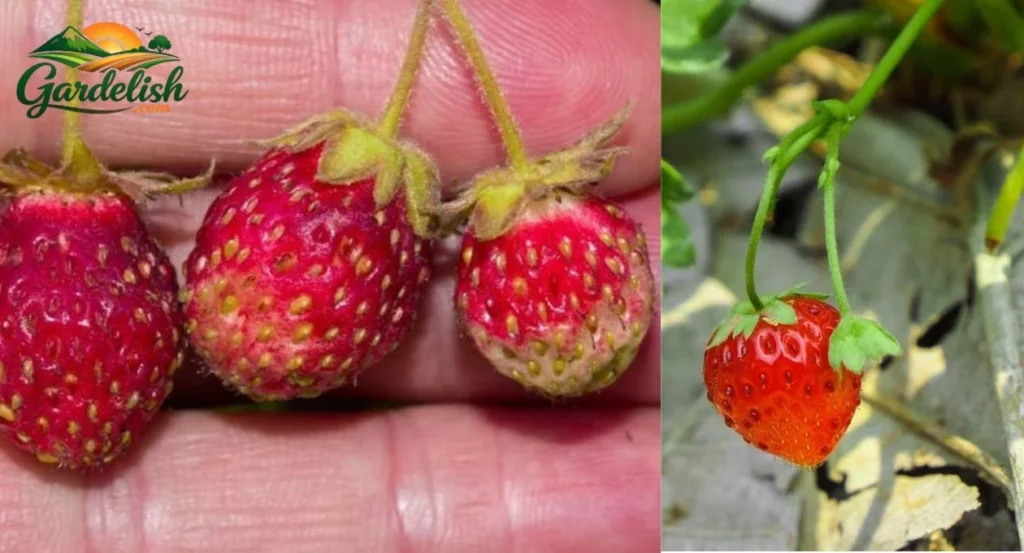
why are my strawberries so small?Small strawberries usually mean the plant was stressed, crowded, poorly pollinated, too dry, too young, too old, or carrying more fruit than it can properly size up. Sometimes, though, tiny berries are completely normal—especially if you are growing alpine or wild strawberries, which naturally produce small, intensely flavored fruit.
The first thing I check is the shape of the berry. Small but evenly shaped fruit usually points to water stress, plant age, variety, crowding, or nutrition. Small, knobbly, lopsided berries usually point to poor pollination, frost damage, or insect feeding. The good news is that most causes are fixable, and even a disappointing harvest can teach you exactly what to adjust before next season.
Quick Answer: Small strawberries are usually caused by stress, crowding, or poor pollination
Your strawberries are small because the plant did not have enough energy, water, nutrients, pollination, or healthy flowers to produce full-sized fruit. Common causes include dry soil, too many runners, overcrowded plants, old strawberry crowns, late frost, weak pollination, excess nitrogen, pests, or simply growing a naturally small-fruited variety. Strawberries are still safe to eat if they are ripe, clean, and free from mold or pest damage. To fix the problem, improve watering, remove runners, thin crowded plants, mulch the bed, encourage pollinators, and renovate or replace older plants.
Small strawberries are a symptom, not a single problem
A small strawberry is the plant’s way of showing that something interrupted fruit development. Strawberries are aggregate fruits, meaning each berry depends on many individual ovules being pollinated and developing properly; when pollination or flower health is uneven, fruit can stay small or become misshapen.
In a home garden, I usually separate the problem into four questions:
| What you notice | Most likely cause | What to check first |
| Small but nicely shaped berries | Dry soil, variety, crowding, old plants, low potassium | Soil moisture, plant age, spacing |
| Small and misshapen berries | Poor pollination, frost, tarnished plant bug | Flower damage, bee activity, distorted tips |
| Lots of leaves but poor fruit | Too much nitrogen, too many runners | Fertilizer type, runner growth |
| Tiny berries in pots | Root restriction, drying compost, underfeeding | Pot size, watering frequency, drainage |
| First-year plants produce small fruit | Plants are still establishing | Planting date and crown strength |
Small berries are not automatically a disaster. The real problem is when the whole crop is undersized, the berries are hard and dry, or the fruit is distorted before it ripens.
Dry soil causes small strawberries because berries need steady moisture to swell
The most common cause I see in raised beds, hanging baskets, and terracotta pots is inconsistent watering. Strawberries have shallow roots, and once the top few inches of soil dry out during flowering and fruiting, the berries stop sizing properly.
This often shows up as a flush of promising green berries that never plump up. They turn red, but they stay small, firm, and sometimes a little seedy-looking. RHS advises watering strawberries during prolonged dry spells and giving container plants regular attention because compost dries quickly.
How to fix dry-soil strawberries
- Check the soil 2 inches deep, not just the surface.
- Water deeply in the morning so moisture reaches the root zone.
- Add straw, pine needles, shredded leaves, or clean compost as mulch.
- Keep water off the crown and fruit when possible to reduce fungal problems.
- In pots, water whenever the top inch of compost feels dry.
Do not try to “catch up” with heavy watering right before harvest. Sudden swings from dry to soaked can make berries bland, split, or prone to rot.
Poor pollination makes strawberries small, lumpy, or uneven
When pollination is incomplete, the berry may grow on one side but not the other. Gardeners often describe these as cat-faced, button-like, seedy, or folded-looking strawberries. This happens because each tiny seed-like achene on the outside of the strawberry is linked to fruit development beneath it.
Cool, wet, windy weather during bloom can reduce bee activity. So can a garden with few flowers nearby, pesticide use during bloom, or strawberries tucked where pollinators rarely visit. University of Minnesota Extension identifies poor pollination as a major cause of small or misshapen strawberries.
How to improve strawberry pollination
- Grow pollinator plants nearby, such as alyssum, calendula, borage, thyme, chives, or native flowers.
- Avoid spraying insecticides while strawberries are flowering.
- Keep row covers off during the day once flowers open, unless frost protection is needed.
- In a greenhouse or balcony garden, gently brush open flowers with a small paintbrush.
- Grow several strawberry plants together rather than one isolated plant.
A well-pollinated strawberry is usually fuller, more symmetrical, and heavier for its size.
Frost damage can shrink strawberries before you notice a problem
Late spring frost is sneaky. The flower may look only slightly browned in the center, but the damage has already affected the future berry. Frost-injured blossoms often produce small, hard, misshapen fruit—or no fruit at all.
This is why a frost during bloom can affect the harvest weeks later. Michigan State University Extension notes that spring freezes can damage flowers and young fruit, contributing to small berries in affected crops.
How to protect strawberry flowers from frost
- Watch forecasts carefully once flower buds appear.
- Cover plants with horticultural fleece, frost cloth, or lightweight row cover before sunset.
- Remove covers the next morning so pollinators can reach open flowers.
- Mulch around plants, but avoid burying the crown.
- Grow strawberries where cold air can drain away, not in a frost pocket.
In USDA Zones with unpredictable spring weather, frost protection matters most during flowering—not after the berries are already red.
Overcrowding creates small strawberries because plants compete for light, water, and food
A packed strawberry bed may look lush, but it often produces disappointing fruit. Too many crowns, runners, and daughter plants compete with each other. The result is lots of leaves, tangled growth, poor airflow, and small berries hidden under foliage.
In older matted rows, this is especially common. Delaware Extension also notes that too many branch crowns can lead to too many buds, flowers, and fruits per plant, which can reduce berry size.
How to thin an overcrowded strawberry patch
- After harvest, remove weak, diseased, or tiny plants.
- Keep the strongest young plants with healthy crowns.
- Space plants about 12–18 inches apart in home garden beds.
- Keep rows narrow enough that you can see and pick fruit easily.
- Remove excess runners unless you need them for replacement plants.
A productive strawberry bed should look full but not choked. You should be able to see the crown area and move air through the plants.
Too many runners reduce berry size because the plant spends energy on babies
Strawberry runners are wonderful when you want free plants. They are less wonderful when your goal is bigger fruit. A plant that is constantly making runners is dividing energy between leaves, roots, baby plants, flowers, and berries.
This is one of the most common beginner mistakes: letting every runner root because it feels wasteful to cut them. In reality, removing runners is often the fastest way to help a fruiting plant put more energy into the crop.
What to do with runners
| Your goal | What to do |
| Bigger berries this season | Snip runners as soon as they appear |
| More plants for next year | Root only the strongest runners after harvest |
| Renovating an old bed | Keep young daughter plants, remove exhausted old crowns |
| Container growing | Remove most runners because pot space is limited |
Use clean scissors and cut runners close to the mother plant. Do not yank them; strawberries have shallow roots and pull up easily.
Too much nitrogen gives you leaves instead of large fruit
A strawberry plant with glossy, oversized leaves and disappointing fruit may be getting too much nitrogen. Nitrogen pushes leafy growth. Strawberries need leaves, of course, but during flowering and fruiting they also need balanced nutrition—especially potassium for fruit development.
RHS recommends a high-potassium feed in spring if harvests are poor, and container strawberries often need regular feeding during the growing season.
How to fertilize without shrinking the crop
- Avoid heavy lawn fertilizer or high-nitrogen feeds near strawberries.
- Use compost before planting to build soil health.
- Apply a balanced organic fertilizer in early spring if plants are weak.
- Switch to a tomato or fruiting feed for container strawberries once flowering begins.
- Do not overfeed stressed plants; fix watering first.
If your plants are lush but berries are small, pause the nitrogen and focus on sunlight, spacing, pollination, and steady moisture.
Old strawberry plants naturally produce smaller crops and smaller berries
Strawberry plants do not stay at peak productivity forever. In many home gardens, plants crop best in their second and third years, then gradually decline. Older crowns become woody, crowded, disease-prone, and less vigorous.
RHS suggests refreshing overcrowded strawberry patches by keeping the youngest, strongest plants and discarding old, weak growth.
When to replace strawberry plants
| Plant age | What to expect |
| First year | Establishing roots; fruit may be limited or smaller |
| Second year | Usually strong production |
| Third year | Often still productive, depending on care |
| Fourth year and older | Smaller berries, weaker crowns, more disease risk |
For a steady harvest, root a few healthy runners every year and remove the oldest plants after they decline.
The variety may naturally produce small strawberries
Not every strawberry is bred to be huge. Alpine strawberries and wild strawberries are naturally tiny, often no bigger than the tip of your thumb, but they can be wonderfully aromatic. RHS notes that alpine strawberries produce tiny, sweet fruit and tolerate some shade.
June-bearing strawberries often produce larger berries in a concentrated harvest. Everbearing and day-neutral types usually crop over a longer period, but individual fruit can be smaller depending on variety, weather, and plant care.
How to tell if small berries are normal
Small berries may be normal if:
- The plants have white flowers and small, sweet, fragrant fruit.
- The berries are evenly shaped.
- The plants are healthy and productive.
- You bought alpine, wild, or ornamental strawberries.
- The fruit tastes good despite being small.
Small berries are more likely a problem if the fruit is hard, dry, misshapen, bland, or shrinking across the whole patch.
Pests and diseases can deform strawberries before they size up
Tarnished plant bug feeding can cause small, seedy, distorted fruit. Flower diseases such as anthracnose can also damage blossoms and reduce marketable fruit. University of Minnesota Extension lists tarnished plant bug, anthracnose infection on blossoms, and other stress factors among causes of small or deformed strawberries.
Look closely at both flowers and young green berries. Pest damage often shows up early as uneven tips, hard patches, bronze areas, or fruit that looks pinched.
Troubleshooting small strawberries
| Symptoms | Possible causes | Solutions | Prevention |
| Small, dry, evenly shaped berries | Drought stress | Deep morning watering, mulch | Keep soil evenly moist during bloom and fruiting |
| Small, lopsided berries | Poor pollination | Attract bees, hand-pollinate pots | Grow flowers nearby, avoid bloom-time sprays |
| Brown-centered flowers | Frost damage | Remove badly damaged blooms | Cover plants before cold nights |
| Lots of leaves, few berries | Too much nitrogen | Stop high-nitrogen feed | Use balanced or fruiting fertilizer |
| Tiny berries in crowded bed | Overcrowding | Thin plants after harvest | Renovate yearly |
| Small berries on old plants | Declining crowns | Replace with young runners | Renew patch every 3–4 years |
| Distorted, seedy fruit tips | Tarnished plant bug or flower damage | Remove damaged fruit, inspect flowers | Control weeds, monitor during bloom |
| Small berries in hanging baskets | Dry compost, root restriction | Water more often, feed lightly | Use larger containers and mulch surface |
The best way to fix small strawberries this season is to reduce stress immediately
You may not turn already-formed berries into giant fruit, but you can still improve the next flush—especially on everbearing and day-neutral strawberries.
Do this now
- Water consistently. Keep soil evenly moist, not soggy.
- Remove runners. Let fruiting plants focus on berries.
- Thin crowded leaves lightly. Improve airflow without stripping the plant.
- Mulch under fruit. Straw, pine needles, or shredded leaves help conserve moisture.
- Feed container plants. Use a fruiting feed at label strength.
- Check flowers. Look for frost damage, poor pollination, or pest injury.
- Harvest ripe berries promptly. Leaving ripe fruit on the plant invites rot and pests.
Avoid drastic pruning while plants are actively fruiting. A stressed strawberry plant needs its leaves to produce energy.
The best prevention starts after harvest, not next spring
For June-bearing strawberries, the work you do after harvest affects next year’s crop. University of Minnesota Extension explains that renovation after harvest helps plants grow vigorously and prepare fruiting buds for the following season; those buds generally form in fall.
Seasonal strawberry care calendar
| Season | What to do | Why it helps berry size |
| Early spring | Remove dead leaves, weed, mulch lightly | Reduces competition and disease pressure |
| Bloom time | Protect from frost, support pollinators | Improves flower survival and pollination |
| Fruiting season | Water consistently, harvest often | Helps berries swell and prevents rot |
| After harvest | Renovate June-bearing beds, thin runners | Builds stronger crowns for next year |
| Late summer | Root selected runners | Replaces aging plants |
| Fall | Keep plants watered in dry weather | Supports bud formation for next crop |
| Winter | Protect crowns in cold regions | Prevents crown injury and weak spring growth |
This is the part many gardeners miss: strawberry size is not decided only when the fruit is red. It begins with healthy crowns, strong roots, and good flower bud formation months earlier.
Common mistakes that keep strawberries small
The mistakes I see most often are simple ones:
- Planting too many strawberries in one pot.
- Letting every runner root.
- Watering lightly instead of deeply.
- Feeding high-nitrogen fertilizer during fruiting.
- Ignoring frost during bloom.
- Keeping an old strawberry patch too long.
- Growing strawberries in half shade and expecting full-size fruit.
- Forgetting that containers dry out much faster than garden soil.
Strawberries like sun, steady moisture, fertile well-drained soil, airflow, and room to renew themselves. When one of those is missing, berry size is often the first thing to suffer.
FAQs About Small Strawberries
Are small strawberries safe to eat?
Small strawberries are safe to eat if they are ripe, clean, and free from mold, rot, or pest damage. Size alone does not mean the berry is bad. In fact, alpine and wild strawberries are naturally small and often very flavorful. Discard berries that are gray, fuzzy, mushy, fermented-smelling, or badly insect-damaged.
Will small strawberries get bigger after they turn red?
No, strawberries do not continue to grow much once they are fully red and ripe. They may soften slightly, but they will not plump up like tomatoes sometimes do. Pick ripe small berries promptly so the plant can keep producing and so pests, slugs, and gray mold do not move in.
Why are my strawberries small but very sweet?
Small, sweet strawberries may be normal for your variety, especially if you are growing alpine, wild, or smaller-fruited everbearing types. Sunny weather and moderate moisture can concentrate flavor. If the berries are evenly shaped and the plants look healthy, small size may not be a problem—it may simply be the plant’s natural fruit habit.
Why are my strawberries small and sour?
Small, sour strawberries usually come from stress, not ripeness alone. Common causes include too much shade, inconsistent watering, cool cloudy weather, overcrowding, or plants carrying too many berries. Let fruit ripen fully red before picking, improve sunlight, keep soil evenly moist, and thin crowded plants after harvest.
Why are my potted strawberries so small?
Potted strawberries are often small because containers dry quickly and restrict root growth. Hanging baskets are especially prone to drought stress during warm weather. Use a larger pot, water consistently, mulch the compost surface, remove runners, and feed lightly with a fruiting fertilizer once flowers appear.
Should I cut off small strawberries?
You do not need to remove small strawberries if they are ripening normally. Pick and eat them when ripe. Remove berries that are misshapen from pest damage, moldy, or rotting. On very young first-year plants, removing early flowers can help the plant establish stronger roots before carrying a full crop.
How do I make strawberries bigger next year?
Start after harvest. Thin crowded plants, remove excess runners, renew old beds, water during dry spells, and keep only strong young crowns. In spring, protect flowers from frost, encourage pollinators, and avoid too much nitrogen. Consistent care before and during bloom is what produces larger berries later.
Conclusion: Small strawberries are fixable once you identify the cause
Small strawberries usually come down to stress, poor pollination, dry soil, overcrowding, too many runners, weak nutrition, frost-damaged flowers, old plants, pests, or a naturally small-fruited variety. The fastest improvement comes from steady watering, removing runners, mulching, improving pollination, and giving crowded plants more space. For next year’s harvest, focus on post-harvest renovation, young healthy crowns, fall bud formation, and spring frost protection. My best advice is to diagnose by shape first: evenly small berries usually mean care or variety issues, while misshapen small berries usually mean pollination, frost, or pest damage. Once you read those signs, strawberries become much easier to fix.
Grape Harvest Forecast: When Grapes Will Be Ready and How to Pick Them at Their Best