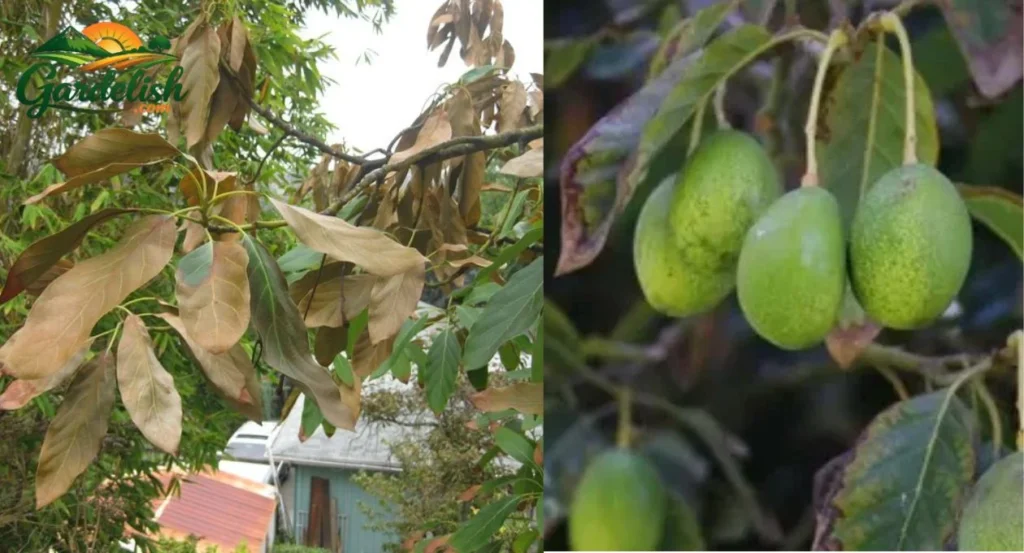
Avocado tree leaves turning brown usually means the tree is under stress from salts, water problems, damaged roots, dry indoor air, cold, heat, pests, or too much fertilizer. The pattern matters. Crispy brown tips usually point to salt burn or inconsistent watering, while drooping brown leaves can mean overwatering or root rot. Brown speckling may be mite damage. The good news is that many avocado trees recover well once you correct the cause, though already-brown leaf tissue will not turn green again.
Quick Answer Box
Avocado tree leaves turn brown most often because salts have built up around the roots, the tree is being watered too shallowly or inconsistently, or the roots are staying too wet. Outdoor trees commonly show brown tips and edges during hot, dry weather or after poor irrigation. Indoor avocado plants often brown from low humidity, weak winter light, fertilizer salts, or hard tap water. Fix the problem by checking drainage, watering deeply, flushing salts, pausing fertilizer, and protecting the tree from heat, frost, and dry air.
Brown avocado leaves usually point to salt buildup, water stress, or root damage
The first thing I look at is the pattern of browning. Avocado leaves are excellent storytellers if you slow down and read them. A leaf that is brown only at the tip is saying something different from a leaf covered in speckles, and both are different from a whole branch of wilted leaves.
Avocados are sensitive to salts, especially chloride and sodium, in the root zone. UC Master Gardeners describe salt burn as a common abiotic disorder that causes the tips and edges of avocado leaves to turn brown, often followed by leaf drop. They also note that salts can build up from light shallow watering, well water, excessive fertilizer, manure, mushroom compost, and drought conditions that limit natural flushing from rain.
That is why a tree can look “burned” even when it has not been scorched by the sun. The injury often begins at the tip, moves along the margins, and slowly creeps inward. In the garden, I see this most often at the end of summer, on potted avocados, or on trees watered frequently but not deeply enough.
Brown tips and edges usually mean salt burn or inconsistent watering
Crispy brown tips are the classic avocado complaint. Many gardeners respond by watering a little more often, but light watering is usually the wrong fix. A small splash wets the surface and leaves salts sitting where feeder roots are active. Avocado roots need moisture, but they also need oxygen and drainage.
A better approach is deep, slow watering that moves moisture through the root zone. Gardening Know How notes that avocado leaf burn at the tips and edges is usually associated with salt accumulation, and that regular deep watering helps wash salts out of the soil. It also warns that watering near the trunk misses many roots, since mature avocado roots spread toward and beyond the canopy edge.
For an outdoor tree, water around the drip line, not just at the trunk. For a potted avocado, water until liquid runs freely from the drainage holes, then empty the saucer. Do not let the pot sit in water.
How to flush salt from a potted avocado
- Move the pot to a sink, shower, patio, or place where water can drain freely.
- Slowly run room-temperature water through the potting mix.
- Use enough water to thoroughly rinse the root ball, not just wet the surface.
- Let the pot drain completely.
- Repeat monthly if you use hard water or fertilize regularly.
- Switch to rainwater, filtered water, or distilled water if brown tips keep returning.
Do not fertilize immediately after flushing a stressed plant. Give it two to four weeks of steady care and watch for healthy new growth.
Drooping brown leaves can mean overwatering, poor drainage, or root rot
When brown leaves also droop, curl, or hang limp while the soil is wet, I worry less about leaf burn and more about roots. Avocados hate “wet feet.” They need regular water, but the soil must drain well enough for air to reach the feeder roots.
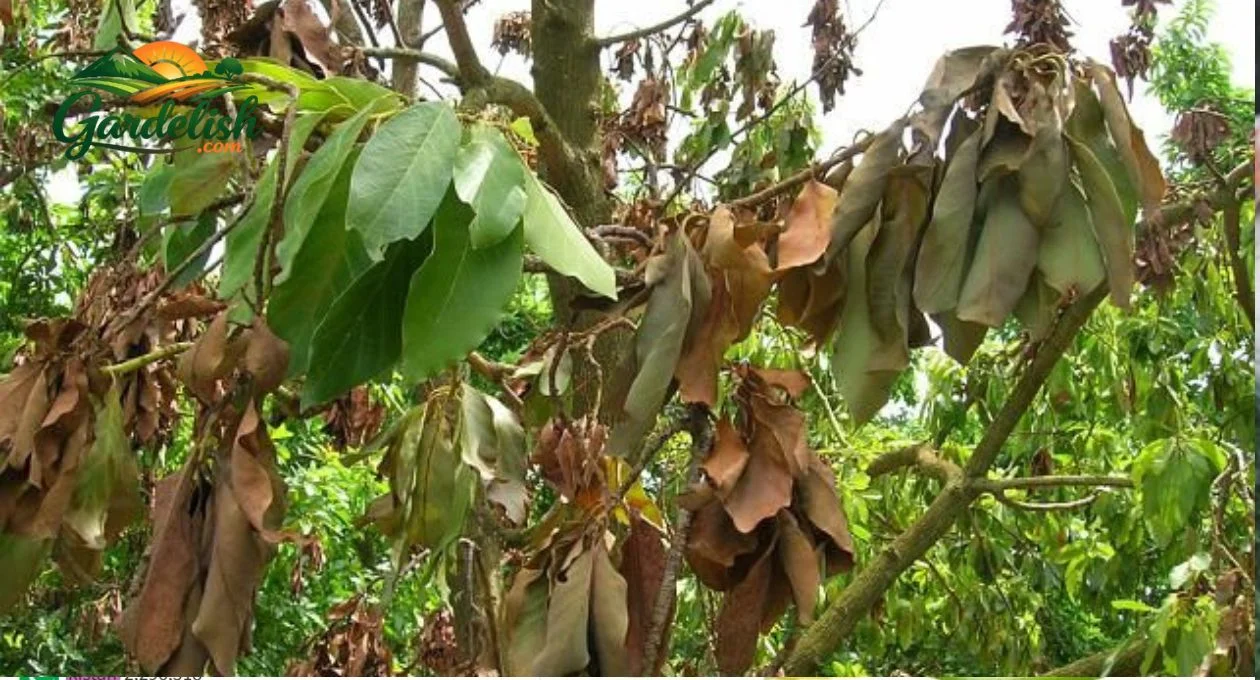
UC IPM lists small pale green or yellowish leaves, wilting, brown necrotic tips, sparse foliage, rare new growth, branch dieback, and poor fruit production as symptoms of Phytophthora root rot in avocado. It also notes that affected trees may wilt even when the soil is wet, because damaged roots can no longer take up water properly.
In containers, the usual cause is a pot with poor drainage, dense soil, or a saucer that stays full. Outdoors, it is often heavy clay, compacted soil, low planting sites, or irrigation that runs too often.
How to check for root trouble
- Push a finger or moisture meter several inches into the soil. If it is wet below the surface, do not water.
- Check whether water drains within a few minutes after irrigation.
- For potted trees, slide the plant partly out of the pot if possible. Healthy feeder roots are firm and pale to tan. Rotten roots are dark, soft, sparse, or brittle.
- Smell the potting mix. Sour, swampy soil usually means poor aeration.
- Repot only if the container is staying wet or roots are clearly failing.
If root rot is advanced on an outdoor tree, improving drainage and irrigation is more important than spraying leaves. UC IPM emphasizes prevention, well-drained soil, careful irrigation, sanitation, and mulch as part of root rot management.
Brown spots or speckling often mean mites, pests, disease, or sun injury
Not all brown avocado leaves are caused by water. If the browning appears as small dots, scattered patches, or bronzed areas rather than clean brown tips, inspect the leaves closely. Turn over the leaf and look for mites, fine webbing, tiny insects, sticky residue, or black specks.
UC Master Gardeners note that Persea mites feed on avocado leaves, causing brown spots and sometimes leaf drop. On smaller trees, they recommend a strong stream of water directed at the undersides of leaves as an environmentally friendly treatment.
Sunburn looks different again. It usually appears on exposed leaves, branches, or fruit after a sudden increase in sun, heat, or pruning that removed shade. Young trees are especially vulnerable. Epic Gardening notes that young avocado trees need some protection from intense sunlight, while mature trees benefit from full sun for fruiting.
Fungal leaf spots can also appear indoors or in humid, stagnant conditions. The practical fix is to improve airflow, avoid wetting foliage late in the day, remove badly affected leaves, and avoid crowding.
Indoor avocado leaves brown when air is dry, light is weak, or salts collect in the pot
Indoor avocado plants are charming but demanding. They are tropical trees being asked to behave like houseplants, often in dry rooms with weak winter light. After two or three years, RHS notes that avocado plants often show leaf discoloration and deterioration indoors, possibly due to dry air and low light levels. RHS also lists aphids, fungal leaf spots, whitefly, mealybugs, red spider mites, root rots, and thrips as potential problems.
For indoor plants, the first brown tips usually appear on older lower leaves. Beginners often react by watering more, which can make things worse. In a heated room, the leaves may be dry while the roots are still wet.
Keep indoor avocados in the brightest position available, ideally near a sunny window or under a grow light. Raise humidity with a humidifier or by grouping plants. Iowa State University Extension explains that low humidity, inconsistent watering, excess fertilizer salts, and water quality can all cause brown leaf tips on houseplants.
Fix brown avocado leaves by correcting care in the right order
Do not start with fertilizer. A stressed avocado rarely needs a sudden feeding. In many cases, fertilizer is part of the problem because excess salts burn sensitive roots.
Follow this order instead:
- Remove fully dead leaves. Trim leaves that are completely brown, dry, or hanging. If only the tip is brown, you can trim the brown part for appearance, leaving a thin margin of brown tissue so you do not cut into healthy green leaf.
- Check soil moisture deeply. Dry surface soil does not always mean the root ball is dry.
- Correct drainage. Make sure containers have open drainage holes. Outdoors, redirect water away from low, soggy areas.
- Water deeply, not lightly. Outdoor trees need water to reach the active root zone. Potted plants should be watered until excess drains out.
- Flush salts. This is especially important for potted plants, trees irrigated with hard or salty water, and trees that have been fertilized heavily.
- Pause fertilizer. Wait until the tree produces healthy new growth before feeding again.
- Protect from extremes. Shade young trees during severe heat, shelter indoor plants from drafts, and protect outdoor trees from frost where needed.
- Watch the new leaves. Old brown edges will not heal. Recovery shows up as clean new growth.
A common mistake is judging recovery by old leaves. I judge recovery by the newest flush. If the next set of leaves emerges green and holds its color, the tree is moving in the right direction.
Troubleshooting table: Match the brown pattern to the likely cause
| Symptoms | Possible Causes | Solutions | Prevention |
| Crispy brown tips | Salt buildup, hard water, shallow watering | Flush soil, water deeply, reduce fertilizer | Use better water, leach pots monthly, avoid overfeeding |
| Brown edges moving inward | Drought stress, dry winds, salt burn | Deep soak, mulch, protect from wind | Maintain even moisture, mulch wide, water during heat |
| Brown leaves with wet soil | Overwatering, poor drainage, root rot | Stop watering temporarily, improve drainage, repot if potted | Use airy soil, avoid saucers full of water |
| Brown speckles or bronzing | Mites, thrips, pest feeding | Spray undersides with water, inspect weekly, use appropriate low-toxicity controls | Keep tree vigorous, rinse foliage, monitor early |
| Brown patches on exposed leaves | Sunburn, heat stress | Provide temporary shade, avoid hard pruning in heat | Acclimate young trees, protect during heatwaves |
| Brown after frost | Cold damage | Wait before pruning, protect from future frost | Use frost cloth, grow in pots outside warm zones |
| Indoor brown tips | Low humidity, weak light, salts, inconsistent watering | Increase light and humidity, flush pot, stabilize watering | Use bright placement, humidifier, fresh potting mix |
Prevent brown leaves by watering deeply, mulching, and feeding lightly
Prevention is easier than rescue. Avocados are not difficult once the root zone is right, but they are unforgiving of extremes. They want moisture without waterlogging, fertility without salt buildup, sun without sudden scorching, and humidity without stagnant air.
Outdoor avocado trees grow best in warm climates, commonly USDA zones 9 to 11, with full sun, well-draining soil, and consistent watering. Epic Gardening notes that avocados need plenty of water but must not become waterlogged, and that mulch helps regulate soil temperature and reduce evaporation.
Use organic mulch under outdoor trees, spreading it broadly under the canopy while keeping it away from the trunk. Wood chips, leaf mold, or coarse compost help protect shallow feeder roots. Avoid piling manure or rich compost directly against the trunk, especially in hot weather.
Feed modestly. Young avocado roots are tender, and overfertilizing can burn them. If your soil is decent and the tree is newly planted, wait until it is established before fertilizing. For container plants, use a diluted balanced fertilizer during active growth only, then flush the pot periodically.
Seasonal brown leaves need different treatment in summer, winter, and after planting
Summer browning is often about heat, drought, dry wind, and salts. During hot spells, check soil moisture more often and water deeply. Young trees may need temporary shade cloth, especially after planting or repotting.
Winter browning has a different pattern. Indoor plants suffer from dry heated air and lower light. Outdoor trees may show cold injury after frost. Cold-damaged leaves may curl, darken, or brown quickly, but pruning too soon can expose more tissue to damage. Wait until the danger of frost has passed and you can clearly see what is dead.
Spring browning often happens after transplanting. A newly planted avocado has not yet grown enough feeder roots into the surrounding soil, so it can dry out faster than expected. Water the original root ball as well as the surrounding soil, and mulch to reduce moisture swings.
Fall is the time to clean up care habits. Flush containers, reduce feeding, check drainage before winter rains, and remove pest-damaged leaves. A tree that enters winter with healthy roots has a much better chance of holding clean foliage.
FAQs answer the common brown-leaf questions gardeners ask
Should I cut brown leaves off my avocado tree?
Remove leaves that are completely brown, dry, or diseased-looking. If only the tips are brown, you can trim them for appearance, but leave most of the green leaf because it still feeds the tree. Do not strip a stressed avocado bare. The goal is to reduce dead tissue without taking away useful foliage.
Will brown avocado leaves turn green again?
No. Once avocado leaf tissue turns brown and crispy, it will not become green again. Recovery appears in new growth. After correcting the cause, watch the next flush of leaves. If new leaves emerge green, full-sized, and unburned, the tree is improving even if the older leaves still look rough.
Why are my avocado leaves brown at the tips only?
Brown tips usually point to salt buildup, hard water, inconsistent watering, or too much fertilizer. Avocados are particularly sensitive to salts around their roots. Flush potted plants thoroughly, water outdoor trees deeply, and avoid frequent light watering. If you fertilize often, stop until the plant produces healthy new leaves.
Why are my indoor avocado leaves turning brown?
Indoor avocado leaves usually brown because the air is too dry, the light is too weak, the watering is inconsistent, or salts have built up in the potting mix. Move the plant to brighter light, raise humidity, water thoroughly when the upper mix dries, and flush the container. Avoid letting the pot sit in a saucer of water.
Can overwatering make avocado leaves turn brown?
Yes. Overwatering damages roots by excluding oxygen and can lead to root rot. The leaves may droop, curl, yellow, or develop brown tips even though the soil is wet. Let the soil dry to a more appropriate level, improve drainage, and repot container plants if the mix stays soggy.
Is brown leaf burn the same as sunburn?
Not always. Salt burn usually starts at the leaf tips and edges, while sunburn tends to appear on exposed leaves after sudden intense sun, heat, or pruning. Young avocado trees are more prone to sun damage. Salt burn is usually fixed through better watering and salt flushing; sunburn requires gradual acclimation and temporary protection.
How long does an avocado tree take to recover from brown leaves?
A mildly stressed avocado may show cleaner new growth within a few weeks during active growing weather. A tree with root damage, salt buildup, or transplant shock may need several months. Old brown leaves will not heal, so judge recovery by new leaves, stronger stems, and steadier moisture use.
What is the best water for an avocado plant with brown tips?
Rainwater, filtered water, or low-salt water is best when brown tips keep returning. Hard water, softened water, and high-salinity well water can contribute to salt buildup in containers and soil. If better water is not available, flush the pot regularly and avoid heavy fertilizer use.
Conclusion
Avocado tree leaves turning brown are usually a warning sign, not a death sentence. Start by reading the pattern: brown tips suggest salt buildup or watering stress, drooping brown leaves point toward root trouble, and speckled brown leaves may indicate mites or disease. Correct the basics first. Improve drainage, water deeply, flush salts, reduce fertilizer, protect the tree from heat or cold, and give indoor plants brighter light and better humidity. The damaged leaves will not turn green again, but that is not the real test. A recovering avocado tree proves itself with healthy new growth. Keep the root zone evenly moist, airy, and low in excess salts, and most trees reward you with cleaner, stronger foliage.
Why Is My Orange Tree Dropping Fruit? Causes, Fixes, and Prevention