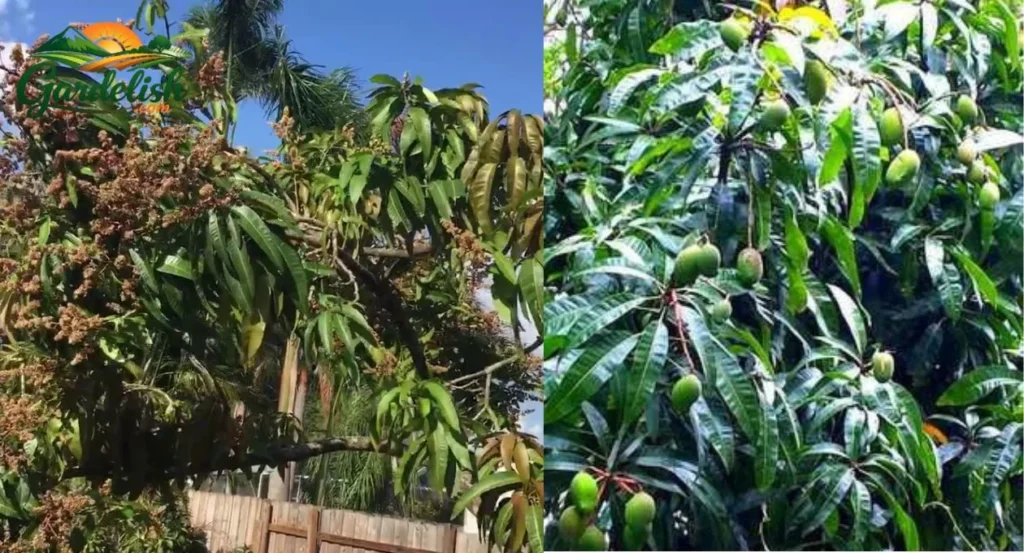
A mango tree not fruiting is usually stressed, immature, shaded, overfed with nitrogen, pruned at the wrong time, or losing flowers to cold, wet weather, anthracnose, or powdery mildew. The fastest way to diagnose the problem is to separate it into three stages: the tree never flowers, it flowers but drops blooms, or tiny fruit forms and then falls. Each stage points to a different fix. In warm, frost-free gardens, a healthy grafted mango can begin bearing in about 3 to 5 years, but poor timing or poor care can delay crops for several seasons.
Quick Answer Box
A mango tree may not fruit because it is too young, lacks full sun, receives too much nitrogen, is watered too often, or suffers from cold, rain, humidity, anthracnose, or powdery mildew during bloom. If your tree has never flowered, check age, sunlight, pruning, and fertilizer first. If it flowers but produces no mangoes, focus on weather, disease, and flower health. The best fix is to correct care before the next bloom cycle, not after the flowers have already failed.
A Mango Tree Usually Fails to Fruit Because It Has Not Flowered Well or It Cannot Hold Fruit
The first thing I look for on a reluctant mango is not the fertilizer bag. It is the bloom history. A mango with no panicles has a different problem from a mango that blooms heavily and then drops every flower.
| What you notice | Most likely causes | What to do first |
| No flowers at all | Young tree, too much shade, too much nitrogen, heavy pruning, warm winter in some climates | Check age, sun exposure, fertilizer, and pruning timing |
| Lots of flowers, no fruit | Cold snap, rain during bloom, poor pollinator activity, anthracnose, powdery mildew | Inspect panicles closely and improve disease prevention |
| Tiny mangoes form, then drop | Weather stress, fungal disease, irregular watering, weak tree nutrition | Reduce stress and protect the next bloom cycle |
| Big leafy tree, no mangoes | Lawn fertilizer, excess nitrogen, frequent sprinklers | Stop high-nitrogen feeding and adjust irrigation |
| Broom-like flower clusters | Possible mango malformation disease | Remove affected material where appropriate and contact local extension or biosecurity guidance |
Do not panic when most flowers do not become mangoes. Mango trees naturally produce far more flowers than fruit, and UF/IFAS notes that many varieties average less than one fruit per panicle in Florida conditions. The goal is not to make every flower set fruit. The goal is to keep enough healthy flowers alive through pollination and early fruit development.
A Young Mango Often Needs More Time Before It Can Bear Fruit
A young mango tree may simply not be ready. Grafted mango trees commonly begin bearing 3 to 5 years after planting under good conditions, while seed-grown trees can take longer and may not produce fruit identical to the parent tree.
This is where many beginners get impatient. A 4-foot grafted tree in a nursery pot may bloom early, but that does not mean it has the canopy, roots, or stored energy to carry a crop. I usually remove fruit from very young trees for the first year or two if the tree is weak, because one small crop can slow the framework you need for reliable harvests later.
What to do:
- Confirm whether the tree is grafted or seed-grown.
- Give young trees full sun and steady establishment care.
- Avoid forcing flowers with harsh pruning or excessive fertilizer.
- Build a strong, open canopy before expecting regular crops.
If the tree is older than 5 to 7 years, healthy, and still never flowers, age is no longer the best explanation. Move on to sun, fertilizer, pruning, and climate.
Too Much Shade or Lawn Competition Keeps a Mango in Leaf Growth
Mango trees fruit best in full sun. A tree tucked between walls, palms, large shade trees, or a tall hedge may stay green and handsome while producing little or no fruit. UF/IFAS recommends planting mangoes in full sun for best growth and fruit production, away from competing trees, buildings, and structures.
The easy test is simple: stand where the canopy is in late morning, midday, and afternoon. If the tree receives less than about 6 to 8 hours of strong light, fruiting will usually suffer. In containers, move the tree to the brightest protected position you have. In the ground, selectively thin nearby vegetation rather than hacking the mango itself.
Grass is another quiet competitor. Mature mango roots spread beyond the drip line, and lawn fertilizer or timed sprinklers near the tree can reduce fruiting or fruit quality. UF/IFAS specifically warns against heavy lawn fertilization beside mangoes and notes that frequent sprinkler irrigation can contribute to decline and root problems.
Too Much Nitrogen or Daily Watering Can Stop a Mature Mango From Fruiting
A mango that grows glossy leaves but never crops is often being treated like a lawn shrub. Too much nitrogen encourages vegetative growth at the expense of flowering and fruiting. For bearing mango trees, UF/IFAS recommends drastically reducing or eliminating nitrogen, increasing potassium, and paying attention to minor elements such as magnesium, zinc, manganese, iron, and boron where deficiencies occur.
| Tree stage | Fertilizer approach | Practical note |
| Newly planted to 3 years | Light, regular feeding during active growth | Build roots and canopy, not fruit load |
| Mature but not bearing | Reduce nitrogen and review sunlight, pruning, and watering | Do not keep pushing leafy growth |
| Bearing tree | Emphasize potassium and micronutrients based on soil needs | Follow local extension and label rates |
| High-pH soil | Watch for iron, zinc, manganese, and boron issues | Use appropriate chelated or foliar products carefully |
Watering matters just as much. Newly planted mangoes need regular water while they establish, but mature mango trees usually need irrigation only during prolonged dry periods. Frequent watering in fall and winter can work against bloom and may contribute to poor tree health.
A practical fix:
- Stop applying lawn fertilizer within the mango root zone.
- Do not use high-nitrogen “all purpose” fertilizer on a mature tree.
- Water deeply only when needed, not by automatic daily habit.
- Keep mulch over the root area, but pull it back 8 to 12 inches from the trunk.
- Use a soil test where possible before adding phosphorus or micronutrients.
One common mistake is dumping bone meal or bloom booster around every nonfruiting mango. That only helps if the soil actually needs it. Mango fruiting is rarely fixed by one product.
Cold, Rain, and Humidity During Bloom Can Wipe Out Fruit Set
Mangoes are tropical to subtropical trees, and flowers are much more tender than leaves. UF/IFAS notes that flowers and small fruit may be damaged or killed when temperatures fall below 40°F for a few hours, while anthracnose, powdery mildew, and low temperatures during bloom are among the biggest limits to mango production in Florida. Dry weather before and during bloom is considered best for fruit production.
This explains the maddening years when a tree looks loaded with flowers and then gives almost nothing. A cool night, several cloudy wet days, or persistent humidity can ruin fruit set before you see obvious damage. In humid coastal gardens, the panicles may brown, blacken, or shed. In drier regions, powdery mildew may show up as a pale, dusty coating on flowers and young fruit.
Climate notes:
- In frost-prone USDA Zone 9 gardens, mangoes need a warm microclimate and frost protection.
- In humid tropical and subtropical gardens, fungal disease prevention during bloom is often the main task.
- In containers, cold protection is easier, but fruiting indoors is still difficult because light and pollination are limited.
- After unseasonal rain during bloom, inspect flowers within a few days rather than waiting until fruit should appear.
Flowers That Dry, Blacken, or Turn Powdery Need Disease Management
If your mango flowers appear and then collapse, look closely at the panicles. Anthracnose often causes dark lesions, bloom blight, and fruit drop in wet or humid weather. UF/IFAS describes anthracnose as especially serious where rain occurs during flowering and fruiting, and notes that it can destroy inflorescences and infect immature fruit.
Powdery mildew looks different. It appears as a whitish powdery growth on flowers, panicles, young fruit, and sometimes leaves. University of Hawaii guidance describes mango powdery mildew as a severe disease of panicles and young fruit that can heavily reduce fruit set and yield in susceptible areas.
How to manage bloom disease:
- Prune after harvest to open the canopy and improve airflow.
- Remove fallen infected leaves, mummified fruit, and diseased debris.
- Avoid wetting flowers with overhead irrigation.
- Keep the tree in full sun so panicles dry quickly after dew or rain.
- Use labeled fungicides preventively where disease is recurring, especially before or during humid bloom periods.
- Follow local extension recommendations because products and timing vary by region.
UF/IFAS recommends combining cultural practices such as pruning, sanitation, and proper spacing with preventive fungicide use during high disease pressure, noting that copper-based fungicides can be effective when used according to label directions.
Heavy or Late Pruning Can Delay Mangoes for a Season or More
Mango pruning should be calm and timely, not a once-in-five-years punishment. Severe pruning can reduce production for one to several seasons, even though the tree may survive the cut. UF/IFAS recommends pruning soon after harvest and warns that severe height or width reduction can reduce production.
The worst time to prune is just before the tree would normally flower. That removes the mature terminals most likely to bloom. I see this often with homeowners who “clean up” the tree in late winter, then wonder why the spring crop vanished.
Better pruning routine:
- Prune lightly right after harvest.
- Remove dead, diseased, crossing, and inward-growing branches.
- Shorten overly tall limbs gradually over several years.
- Keep the center airy enough for light and spray coverage.
- Do not repeatedly tip-prune a young tree once you are ready for fruit.
Young trees benefit from formative pruning to create a strong frame, but once the tree is old enough to bear, restraint matters.
Malformed Broom-Like Flowers May Be Mango Malformation Disease
A mango tree covered in tight, broom-like flower clusters that never set fruit may have more than ordinary flower drop. Mango malformation disease causes compact, distorted flower and shoot growth. Queensland Government guidance notes that affected flower panicles can become shortened, thickened, highly branched, sterile, and unable to bear fruit.
This is not the same as a normal heavy bloom. Malformed panicles look congested and abnormal, sometimes with dwarfed leaves in the flower cluster. The disease is associated with Fusarium species and can reduce fruit yield severely, although it does not usually kill the tree.
What to do:
- Photograph the symptoms clearly.
- Do not graft from affected material.
- Do not move suspect plant material off-site in regulated areas.
- Contact your local extension office, plant health authority, or biosecurity service for region-specific advice.
- Remove affected panicles only according to local recommendations.
This is one area where guessing is risky because rules differ by country and region.
A Simple Seasonal Routine Prevents Most Fruiting Problems
Mango fruiting is won months before harvest. The best growers think seasonally: build leaves after harvest, mature the canopy before bloom, protect flowers, then support fruit without overwatering.
| Season or growth stage | What to do | What to avoid |
| After harvest | Light pruning, sanitation, mulch refresh | Severe pruning every year |
| Active summer growth | Correct nutrient deficiencies, water young trees | Heavy nitrogen on mature trees |
| Fall and early winter | Reduce unnecessary irrigation on mature trees | Daily sprinklers and lawn feeding |
| Bloom period | Monitor cold, humidity, anthracnose, powdery mildew | Overhead watering and late pruning |
| Fruit set | Keep moisture steady during dry spells | Letting young trees carry too much fruit |
| After fruit drop | Diagnose symptoms before fertilizing | Assuming every drop means nutrient deficiency |
Most Mango Tree Not Fruiting Problems Improve With This Checklist
Use this order. It saves time and prevents the usual mistake of feeding when the real problem is shade, weather, or disease.
- Confirm age and propagation. Grafted trees are more predictable than seed-grown trees.
- Check sunlight. Aim for the brightest, warmest, frost-protected position.
- Look at last season’s pruning. Heavy or late pruning can remove fruiting wood.
- Review fertilizer. Cut back nitrogen on mature trees and avoid lawn fertilizer drift.
- Review watering. Young trees need establishment water; mature trees dislike constant wet soil.
- Inspect flowers. White powder suggests powdery mildew; blackened panicles suggest anthracnose or weather injury.
- Watch the weather. Cold nights, rain, and humidity during bloom can explain a failed crop.
- Improve airflow. Open the canopy lightly after harvest.
- Protect the next bloom. Disease control must begin before flowers are already ruined.
- Ask locally. Mango performance is highly regional, especially in marginal climates.
Common Mango Tree Not Fruiting Questions Have Practical Answers
Why does my mango tree flower but not produce fruit?
A mango tree that flowers but produces no fruit usually loses blooms to cold, rain, humidity, anthracnose, powdery mildew, or stress during fruit set. Look at the panicles closely. Powdery white coating points to powdery mildew, while blackened or blighted flowers often suggest anthracnose or weather damage. Prevention before and during bloom is more effective than trying to rescue dead flowers later.
How long does a mango tree take to fruit?
A grafted mango tree commonly begins fruiting about 3 to 5 years after planting in suitable warm climates. Seed-grown mangoes often take longer and may produce unpredictable fruit, especially if the seed came from a monoembryonic variety. If a mature tree has good sun and still never flowers, investigate nitrogen, pruning, shade, and climate rather than waiting indefinitely.
Can too much fertilizer stop a mango tree from fruiting?
Yes. Too much nitrogen can push leafy growth instead of flowers, especially when lawn fertilizer reaches the mango root zone. Mature bearing mangoes generally need much less nitrogen than young trees. Potassium and micronutrient balance matter, but do not apply random bloom boosters without checking soil conditions or local recommendations.
Should I prune a mango tree that is not fruiting?
Prune only if the canopy is crowded, diseased, too tall, or too shaded inside. The best time is soon after harvest. Heavy pruning can delay fruiting for one or more seasons, so avoid cutting hard just before bloom. A light, steady pruning routine that improves sunlight and airflow is better than drastic topping.
Does a mango tree need another mango tree to produce fruit?
Usually, a single mango tree can fruit, provided flowers are healthy and pollinators are active. Lack of a second tree is rarely the first problem in home gardens. Poor bloom health, cold, disease, shade, and excess nitrogen are much more common reasons for no mangoes. In enclosed patios or indoors, limited pollinator access can still reduce fruit set.
Why do tiny mangoes turn yellow and fall off?
Some tiny fruit drop is normal because mango trees set more fruitlets than they can carry. Heavy drop can be caused by cold, drought stress, irregular watering, fungal disease, or weak tree health. If the panicles were diseased earlier, the fruitlets may already be compromised. Keep the tree evenly supported, but avoid overwatering.
Can a potted mango tree produce fruit?
A potted mango can fruit if it is a suitable dwarf or compact grafted variety, receives strong sun, has excellent drainage, and stays warm. Many indoor mangoes grow attractive leaves but do not fruit because light is too weak and pollination is limited. A container mango outdoors in a warm climate has a much better chance than one grown permanently indoors.
What is the best way to make a mango tree bear fruit next season?
Give the tree full sun, stop excess nitrogen, water mature trees only when needed, prune lightly after harvest, and prevent anthracnose or powdery mildew before bloom. The key is preparation before flowers open. Once panicles are blackened, powdery, or dried out, that season’s crop is already mostly decided.
Conclusion
A mango tree not fruiting is usually reacting to something specific: it may be too young, shaded, overfed with nitrogen, watered too often, pruned at the wrong time, or stressed by cold, rain, humidity, anthracnose, or powdery mildew during bloom. The best fix starts with careful observation. Check whether the tree failed to flower, flowered but dropped blooms, or formed tiny fruit that later fell. That simple diagnosis points you toward the right solution. Give the tree full sun, reduce unnecessary nitrogen, water mature trees only when needed, prune lightly after harvest, and protect flowers during disease-prone weather. With steady seasonal care and fewer stress triggers, most healthy mango trees become much more reliable fruit producers.
Avocado Tree Leaves Turning Brown: Causes, Fixes, and Prevention