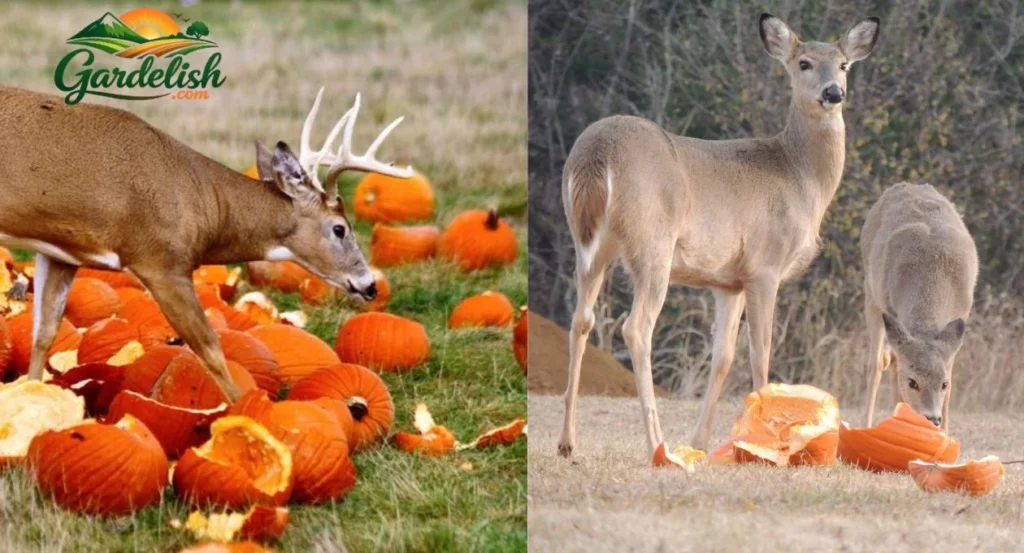
Yes, deer do like pumpkins, especially when pumpkins are ripe, cracked, softened by frost, or left outside after Halloween. Deer may also eat pumpkin leaves, vines, flowers, and young fruit during the growing season. In a vegetable garden, they usually go for the tender plant parts first, then become more interested in the pumpkin itself as fall food becomes limited.
For gardeners, the real question is not only “do deer like pumpkins?” It is how much damage they can cause, when pumpkins are most at risk, and what you can do before your vines and harvest are ruined. Pumpkins are large, rewarding plants to grow, but they are not deer-proof. If deer already visit your yard, your pumpkin patch deserves protection from the start.
Do Deer Like Pumpkins in the Garden?
Deer can eat pumpkins, but their interest depends on the season, local food supply, and how easy the pumpkins are to reach. A mature pumpkin with a hard rind may not be the first thing a deer chooses, but a cracked or softened pumpkin is much easier to eat.
In many gardens, deer begin by browsing the pumpkin plant rather than the fruit. Young leaves, soft vine tips, and yellow blossoms are more tender than the outer rind of a mature pumpkin. Once deer discover a pumpkin patch, they may return repeatedly, especially in quiet yards near woods, fields, or natural deer paths.
Pumpkins belong to the cucurbit family, along with squash, gourds, cucumbers, and melons. Many cucurbits produce broad leaves, sprawling vines, and moisture-rich fruit, which makes them attractive to several garden visitors, including deer, rabbits, squirrels, groundhogs, squash bugs, and cucumber beetles.
What Parts of Pumpkin Plants Do Deer Eat?
Deer may eat nearly every above-ground part of a pumpkin plant. The level of damage depends on how hungry they are and what other food is available nearby.
They commonly browse:
- Pumpkin leaves
- Tender vine tips
- Yellow flowers
- Young pumpkins
- Ripe pumpkin flesh
- Pumpkin seeds
- Cracked or carved pumpkins
Leaves are especially important because they power the plant through photosynthesis. If deer remove too much foliage, the vine may struggle to size up its fruit. A pumpkin plant can tolerate a little leaf loss, but repeated browsing weakens the plant.
Flowers are also valuable. Pumpkins produce separate male and female flowers on the same plant. Bees move pollen from male flowers to female flowers so fruit can form. If deer eat too many blossoms, you may see fewer pumpkins developing, even if the vines look healthy.
Why Deer Are Attracted to Pumpkins
Deer are opportunistic feeders. They prefer easy, nutritious food and adjust their diet with the season. Pumpkins can attract them because they contain moisture, natural sugars, soft flesh, and edible seeds.
In spring and early summer, deer often feed on tender shoots, young vegetable plants, hostas, beans, peas, clover, and other fresh growth. By late summer and fall, their diet shifts toward fruits, acorns, crops, and other energy-rich foods. That is when pumpkins become more tempting.
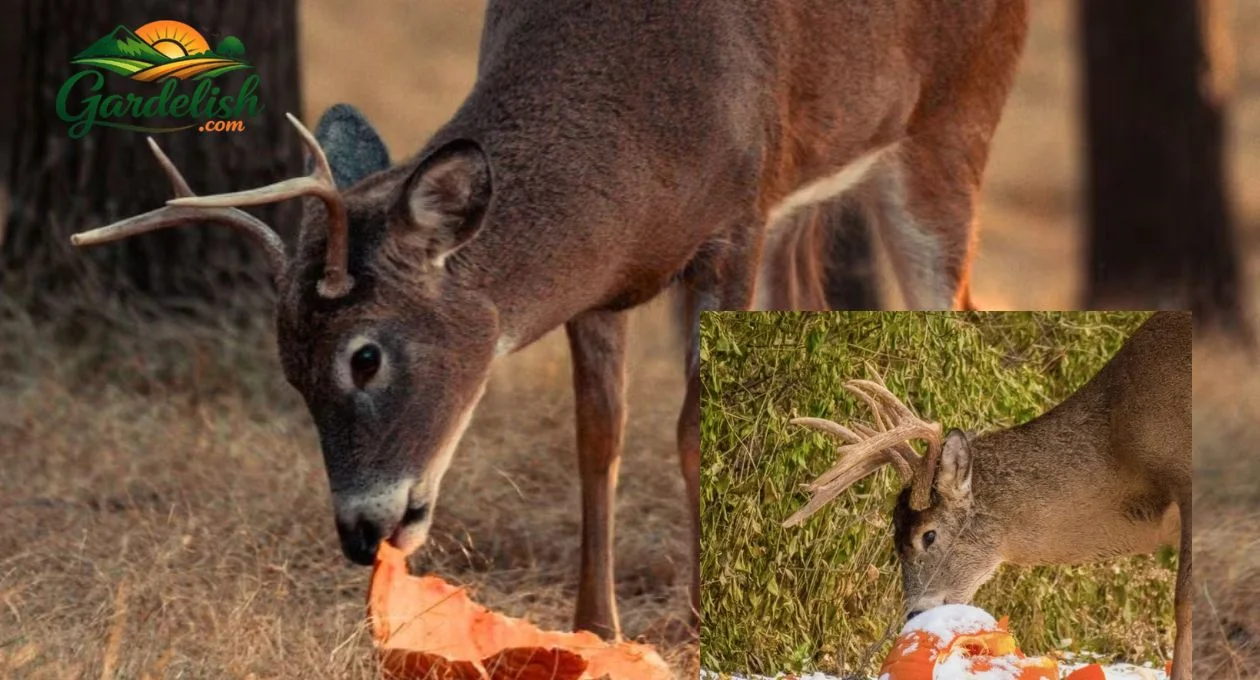
A pumpkin sitting on damp soil, split by weather, opened by squirrels, or softened after frost is much easier for deer to eat than a firm fruit with a hard rind. Decorative pumpkins left on porches or near garden beds can also attract deer into areas where they may later browse shrubs, perennials, fruit trees, or winter vegetables.
When Are Pumpkins Most at Risk From Deer?
Pumpkins are most at risk during three stages: early vine growth, flowering, and late-season ripening.
Young pumpkin plants are vulnerable because their leaves and stems are soft. Deer can set back a plant quickly if they browse the growing tips. In small gardens, losing only a few vines can reduce the entire harvest.
Flowering is another risky stage. If deer eat female flowers before they are pollinated, those potential pumpkins are lost. Female flowers are easy to identify because they have a small swelling behind the bloom that looks like a tiny pumpkin.
The final risk comes near harvest. As pumpkins ripen in late summer or fall, deer may become more active in the garden. Natural food changes with the season, and pumpkins become more visible. If you leave ripe pumpkins in the garden too long, especially after frost or heavy rain, they are more likely to be damaged by deer and other wildlife.
How to Tell If Deer Are Eating Your Pumpkins
Deer damage looks different from insect damage or disease. Deer do not make clean cuts. They tear leaves and stems, leaving ragged edges. Browsed vines may look snapped, stripped, or unevenly chewed.
Look for these signs:
- Ragged leaves with torn edges
- Missing flowers or vine tips
- Hoof prints in soft soil or mulch
- Deer droppings near the garden
- Damage higher than rabbits or groundhogs usually reach
- Pumpkins with rough bite marks or opened flesh
Do not confuse deer damage with common pumpkin problems. Squash bugs cause wilting and leaf decline. Squash vine borers damage stems near the base of the plant and often leave sawdust-like frass. Powdery mildew appears as white, dusty patches on leaves. Squirrels and rodents may gnaw pumpkin rinds close to the ground.
A related internal article on pumpkin pests and diseases would fit naturally here because many gardeners need help identifying the true cause of plant damage.
How to Protect Pumpkins From Deer
The best way to protect pumpkins from deer is to block access before the animals develop a feeding habit. Once deer learn that your garden is a safe food source, they are harder to discourage.
Fencing is the most reliable option. A tall deer fence around the vegetable garden gives the best protection, especially in areas with heavy deer pressure. For smaller pumpkin patches, temporary mesh fencing, electric fencing, or strong garden netting may be enough when installed early.
Repellents can help, but they are less dependable than barriers. Deer repellents usually work through strong odors or unpleasant tastes. They need to be reapplied after rain and rotated occasionally because deer can become used to them.
Motion-activated sprinklers, lights, and noise devices may help in low-pressure areas. They work best when combined with fencing or repellents, not used alone.
If you use row cover over young pumpkin plants, remove it when flowers appear so bees can reach the blossoms. Without pollination, pumpkin vines may grow beautifully but fail to produce mature fruit.
Garden Care That Helps Pumpkins Recover From Light Browsing
Healthy pumpkin plants handle minor stress better than weak plants. Good care will not make pumpkins deer-proof, but it can help vines recover from small amounts of browsing.
Plant pumpkins in full sun with fertile, well-drained soil. They grow best in soil improved with compost, aged manure, or other organic matter. Raised beds or mounded rows can help drainage, especially in heavy clay soil.
Use straw, shredded leaves, or clean grass clippings as mulch around the plants. Mulch helps keep soil moisture steady, reduces weeds, and prevents pumpkins from sitting directly on damp soil. It can also make footprints easier to spot if deer visit at night.
Water deeply at the base of the plant instead of splashing the leaves. A soaker hose or drip irrigation line is useful for large pumpkin vines. Consistent moisture supports steady fruit growth, while good airflow helps reduce fungal disease.
This section gives good internal linking opportunities for articles about composting, soil improvement, raised bed gardening, organic fertilizers, mulching, and seasonal vegetable care.
Should You Leave Pumpkins Outside for Deer?
It is usually better not to leave pumpkins outside specifically for deer. While clean pumpkins are edible, feeding deer can encourage them to return to your yard, gather in unnatural numbers, and lose their natural caution around people.
If deer begin visiting for pumpkins, they may also browse landscape plants, young trees, roses, hostas, berries, and winter greens. In some areas, feeding deer is also discouraged or restricted because it can affect wildlife behavior and disease spread.
If you have leftover pumpkins, composting is often the better garden choice. Remove candles, wax, paint, glitter, stickers, and decorations first. Plain pumpkin flesh can break down into useful organic matter. If you do not want volunteer pumpkin seedlings next season, remove the seeds before adding pumpkins to the compost pile.
Are Pumpkins Good for Deer?
Pumpkins can provide moisture, carbohydrates, fiber, and seeds, but they should not be treated as a necessary food for wild deer. Deer are adapted to seasonal diets and usually do best when they rely on natural forage.
A small amount of plain pumpkin is unlikely to be a problem in many situations, but regularly feeding deer is different. Frequent feeding can draw deer into yards, roadsides, and gardens. It can also create competition among animals and encourage them to gather where disease risks may increase.
For gardeners, the practical answer is simple: pumpkins may be edible for deer, but attracting deer to your property is usually not good for your garden.
Conclusion: Do Deer Like Pumpkins?
Do deer like pumpkins? Yes, deer may eat pumpkin plants, flowers, vines, ripe fruit, seeds, and leftover fall decorations. They are especially interested when pumpkins are soft, cracked, easy to reach, or available during seasons when natural food is less abundant.
If you are growing pumpkins, protect the patch early. Use fencing where deer pressure is high, keep vines healthy with good soil and steady watering, remove ripe pumpkins at the right time, and avoid leaving damaged fruit in the garden. With the right prevention, you can enjoy a strong pumpkin harvest without inviting deer to treat your garden like a fall feeding station.
FAQs
1. Do deer eat pumpkin leaves?
Yes, deer eat pumpkin leaves, especially when the leaves are young and tender. Repeated browsing can weaken the plant and reduce fruit production.
2. Will deer eat whole pumpkins?
Deer can eat whole pumpkins, but they usually prefer pumpkins that are cracked, cut open, softened, or damaged because the flesh is easier to reach.
3. Do deer eat pumpkin flowers?
Yes, deer may eat pumpkin flowers. This can reduce your harvest because pumpkin flowers are needed for pollination and fruit development.
4. How do I keep deer away from pumpkins?
The best method is fencing. Repellents, motion-activated sprinklers, mesh barriers, and early protection can also help reduce deer damage.
5. Should I feed old pumpkins to deer?
It is usually better not to feed deer. Compost clean, undecorated pumpkins instead, and avoid leaving painted, carved, moldy, or treated pumpkins outside for wildlife.
The Fruit That Looks Like a Tomato: What It Is and How to Grow It