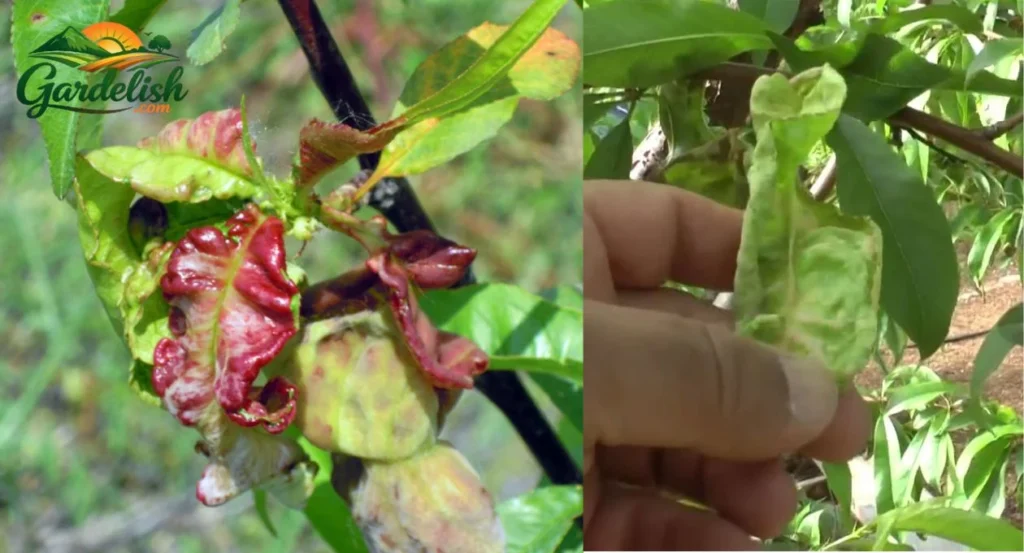
Peach tree leaf curl treatment is mostly a timing problem. Once the red, puckered, twisted leaves appear in spring, the infection has already happened, so spraying those leaves will not cure them. The best treatment is a preventive dormant spray, usually copper-based, applied after leaf drop in fall or winter and before buds swell in spring. In the meantime, help the tree recover with steady watering, sensible fruit thinning, and good cleanup rather than harsh pruning or repeated mid-season sprays.
Quick Answer
The most effective peach tree leaf curl treatment is a dormant fungicide spray applied after the leaves fall and before spring buds open. Copper-based fungicides are commonly used in many regions, while product availability and legal labels vary by country and state. Do not spray fungicide onto curled spring leaves expecting them to flatten out, because infected leaves will not recover. If the tree is already showing symptoms, support its health now and schedule the real treatment for the next dormant season.
Peach tree leaf curl is a fungal disease, not a nutrient problem
Peach leaf curl is caused by the fungus Taphrina deformans. It mainly affects peaches and nectarines, though related stone fruits such as almonds and apricots can also be affected in some regions. The first thing most gardeners notice is not a subtle yellowing or a few tired leaves. It is usually dramatic: new spring leaves look blistered, swollen, red, crinkled, and almost rubbery.
The disease infects young leaves as they are opening. Cool, wet spring weather gives the fungus exactly what it wants. UC IPM notes that prolonged leaf wetness, cool temperatures, and high humidity favor infection, with maximum infection occurring when trees stay wet for two or more days.
This is why one peach tree may look awful one year and almost normal the next, even with the same care. A dry, warm spring can make leaf curl seem to disappear. A cold, rainy spring can make even a carefully tended tree look battered.
Common symptoms
| Symptom | What it usually means |
| Red, pink, or orange swollen patches | Classic peach leaf curl infection |
| Thickened, puckered, distorted leaves | Fungal growth inside young leaf tissue |
| White or grayish bloom on curled leaves | Spores forming on infected leaves |
| Yellowing and leaf drop | Tree shedding damaged foliage |
| Newer leaves later look normal | Warm, dry weather has slowed disease development |
| Fruit is smaller or sparse | Tree used energy to replace lost foliage |
The best treatment is a dormant spray before buds open
The best treatment window is after the tree drops its leaves and before the buds swell in late winter or early spring. This is the part many gardeners miss. They see curled leaves in April or May, rush out for a spray bottle, and then feel as if the product failed. In reality, the spray was applied after the infection had already taken hold.
For many home gardeners, a copper fungicide labeled for peach leaf curl is the standard preventive treatment. UC IPM lists copper soap and fixed copper products among the least toxic effective fungicides available for backyard trees, and it stresses full coverage of branches and twigs. Chlorothalonil is another non-copper option in some regions, but availability and permitted use vary, so the label and local regulations matter.
How to spray for peach leaf curl
- Wait until leaf fall. The tree should be dormant, with most or all leaves gone.
- Choose a dry, calm day. Avoid spraying before rain, during wind, or when runoff is likely.
- Read the product label first. Use only products labeled for peach leaf curl and follow the rate exactly.
- Protect yourself. Wear gloves, eye protection, long sleeves, and any gear required by the label.
- Spray every twig, branch, bud, and bark crease. Peach leaf curl spores overwinter on the tree surface, so light misting is not enough.
- Spray to the point of runoff. The tree should be thoroughly wet, but not wastefully dripping into soil or drains.
- Repeat only when needed. In wet-winter climates or on trees with severe history, a second dormant spray before bud swell may be useful.
Good coverage matters as much as product choice. I see poor results most often when gardeners spray only the outer canopy, missing the inner scaffold branches, twig crotches, and the top of the tree. A small peach tree is much easier to treat well than a tall, neglected one.
Spring symptoms mean you should support the tree, not keep spraying
If the leaves are already curled, red, and blistered, fungicide will not repair them. UC IPM is direct on this point: once symptoms are seen in spring, there is little that can be done to control the disease at that time, and removing leaves or pruning infected shoots has not been shown to improve control.
That does not mean you should ignore the tree. It means your job changes from “kill the disease now” to “help the tree recover and prevent next year’s infection.”
What to do when leaf curl is visible
- Leave lightly infected foliage alone. The tree often sheds the worst leaves naturally.
- Remove fallen diseased leaves. Cleanup will not solve the disease by itself, but it is good orchard hygiene.
- Water during dry spells. A stressed peach tree recovers poorly.
- Avoid heavy nitrogen feeding. Excess nitrogen pushes soft, lush growth that can be more vulnerable to disease and pests.
- Thin fruit if infection is severe. A defoliated tree should not be asked to ripen a full crop.
- Mark your calendar for dormant spray. The next real treatment window is after leaf fall.
In my own garden, a moderately affected peach usually looks discouraging for a few weeks, then pushes a second flush of cleaner leaves once the weather warms. The crop may still be lighter, but the tree is often not doomed. The trees that struggle are usually the ones hit hard several years in a row without winter treatment.
The treatment calendar depends on your climate
Peach leaf curl is strongly seasonal. The exact month changes by region, but the growth stage is the real guide: spray after leaf fall and before bud swell.
| Season / stage | What to do | Why it matters |
| Late spring, symptoms visible | Support tree health, do not rely on curative sprays | Infection has already occurred |
| Summer | Water during drought, avoid excess nitrogen, manage pests | Helps tree rebuild leaf area |
| Early fall | Remove fallen fruit and diseased debris | Reduces general disease pressure |
| After leaf fall | Apply labeled dormant fungicide | Main treatment window |
| Wet winter areas | Consider a second dormant spray before bud swell | Rain can increase disease pressure |
| Bud swell | Last practical window before green leaf tips emerge | Delayed sprays become unreliable |
| Bloom and leaf-out | Stop leaf curl fungicide sprays unless label says otherwise for another disease | Leaf curl prevention window has passed |
In cooler northern locations, leaf fall may be around late November. In warmer southern locations, it may be closer to early January, according to UC IPM’s guidance for California climates. In places with wet winters and springs, the second spray is often the difference between decent control and another messy year.
Copper fungicide works best when used carefully
Copper can be very useful, but more is not automatically better. It is a protective fungicide, not a tonic. It needs to sit on the bark and buds before infection conditions arrive.
Look for products labeled for peach leaf curl and check the active ingredient. UC IPM notes that copper products vary in metallic copper equivalent, often shown as MCE on labels, and that coverage, rain, stickers or spreaders, and product formulation all affect performance.
Copper also deserves respect. Repeated use over many years can contribute to copper buildup in soil and create environmental concerns, particularly where runoff reaches waterways. Use it when needed, at the labeled rate, and avoid spraying before heavy rain.
What about horticultural oil, neem oil, or homemade remedies?
Horticultural oil alone is not a reliable treatment for peach leaf curl. UC IPM states that adding 1 percent horticultural oil to certain copper sprays can improve effectiveness, but oil by itself is not effective for this disease. Neem oil is often discussed online, but it should not replace a properly timed, labeled leaf curl fungicide.
Skip Epsom salts, buried copper scraps, compost teas, and vinegar sprays for this problem. They may make a gardener feel busy, but they do not protect newly opening peach leaves from Taphrina deformans. The practical choices are timing, coverage, resistant varieties, rain protection, and tree health.
Rain protection can prevent peach leaf curl on small trained trees
In damp climates, especially where peaches are fan-trained against a wall or fence, physical rain protection can be remarkably useful. RHS recommends a plastic rain shelter over wall-trained peaches from after leaf fall in November until mid-May, with the ends left open for pollinating insects. The goal is simple: keep the emerging shoots dry during the infection window.
This approach is especially helpful for gardeners who cannot use fungicides or prefer non-chemical prevention. It works best on compact, trained trees. It is much harder to use well on a freestanding, full-size peach in the middle of a lawn.
A good shelter should:
- Cover the top and front of the tree.
- Allow airflow so the tree does not sit in stagnant humidity.
- Stay open at the ends for pollinators.
- Be secured well enough to handle spring wind.
- Come down once the main infection period has passed.
Resistant varieties reduce the need for repeated treatment
If you are planting a new peach tree, resistance is worth considering. No variety is perfect in every climate, but some are much less troublesome than others. UC IPM lists ‘Frost’, ‘Indian Free’, ‘Muir’, and ‘Q-1-8’ as resistant or partially resistant options, while also noting that ‘Frost’ may still need fungicide protection for its first two or three years. It also describes ‘Redhaven’ and many related cultivars as tolerant.
RHS lists several cultivars with claimed resistance, including ‘Avalon Pride’, ‘Red Haven’, ‘Harken’, ‘Dixired’, ‘Redwing’, ‘Advance’, ‘Hylands’, ‘Robin Red Breast’, and ‘Rochester’.
For small gardens, this matters. A resistant peach in the right sunny, well-drained site is easier to keep healthy than a highly susceptible peach that needs perfect spray timing every year.
Troubleshooting peach leaf curl lookalikes
Not every curled peach leaf is peach leaf curl. Before treating, look closely.
| Symptoms | Possible cause | Solution | Prevention |
| Red, thick, puckered spring leaves | Peach leaf curl | Support tree now, spray during dormancy | Dormant fungicide, resistant variety, rain shelter |
| Green leaves curled around sticky insects | Aphids | Spray with water, insecticidal soap if needed | Encourage beneficial insects, avoid excess nitrogen |
| Blackened shoots after cold night | Frost injury | Prune dead tips after damage is clear | Choose sheltered site, protect bloom during frost |
| Wilting leaves in hot weather | Drought stress | Deep water, mulch, reduce weed competition | Consistent irrigation |
| Yellow leaves with poor growth | Root stress or nutrient issue | Check drainage, soil moisture, and soil test | Plant in well-drained soil |
| Curled leaves plus distorted new shoots after lawn spraying | Herbicide drift | Wait and assess recovery | Avoid spraying herbicides near trees |
The easiest field clue is texture. Peach leaf curl makes leaves thick, swollen, and blistered. Aphid damage usually involves softer curled leaves, sticky honeydew, and insects tucked underneath.
Common mistakes make peach leaf curl worse
The biggest mistake is spraying too late. The second biggest is spraying badly. A quick pass over the outside of the canopy will not reach spores hiding in bud scales, bark crevices, and twig junctions.
Other common mistakes include:
- Pruning heavily in panic after symptoms appear.
- Fertilizing hard to “push through” the problem.
- Letting sprinklers wet the canopy in early spring.
- Ignoring the disease after one bad year.
- Planting highly susceptible varieties in wet climates.
- Using products not labeled for peaches or peach leaf curl.
Sprinkler placement is a small detail that matters. If irrigation wets the leaves and trunk during cool weather, it can create the kind of wet surface conditions this disease needs. Drip irrigation or a low basin soak is much better for backyard peaches.
Frequently Asked Questions
Can a peach tree recover from leaf curl?
Yes, a healthy peach tree can often recover from a moderate case. The damaged leaves may yellow and drop, then the tree may produce a second flush of healthier leaves as weather becomes warmer and drier. Severe infection can reduce fruit size, weaken growth, and hurt next year’s performance, so repeated annual infection should be prevented.
Should I remove curled peach leaves?
You can remove fallen infected leaves and dispose of them, but stripping the tree bare is not helpful. Once symptoms appear, the disease has already developed inside that leaf tissue. Removing a few badly infected leaves for tidiness is fine, but the better strategy is to support the tree and spray during dormancy.
When is it too late to spray for peach leaf curl?
It is generally too late once buds have opened and green leaf tissue is visible. The ideal window is after leaf fall and before bud swell. A late winter spray may still help if the buds are dormant or only just swelling, but sprays after symptoms appear will not cure the current leaves.
Is peach leaf curl fatal?
Usually not in a single season. One bad spring may reduce fruiting and make the tree look rough, but healthy trees often releaf. The danger comes from repeated severe infections over several years, especially when combined with drought, poor soil, heavy cropping, borers, or neglect.
What is the best organic treatment for peach leaf curl?
For many gardeners, the best organic-style approach is a combination of resistant cultivars, rain protection, cleanup, good watering, and a dormant copper product approved for that use in your region. Not every copper product is approved for organic gardening, so check the label or certification listing. Rain shelters are especially useful where sprays are unavailable or unwanted.
Does peach leaf curl affect the fruit?
It can. Light infections mainly damage leaves, but severe infections reduce the tree’s energy and may lead to smaller crops or poorer fruit quality. UC ANR notes that untreated trees can decline over several years and that fruit quality can be affected in some cases. Thin fruit on badly defoliated trees so the tree is not overburdened.
Can I spray copper fungicide in summer?
Do not use copper in summer for peach leaf curl unless the label specifically allows it for another problem and conditions are safe. UC IPM warns against applying leaf curl fungicides during the growing season because they will not be effective for this disease and may harm foliage. Save the treatment for dormancy.
Conclusion
Peach tree leaf curl looks alarming, but the fix is straightforward once the timing makes sense. Red, puckered spring leaves mean the infection already happened, so do not waste the season chasing a cure on damaged foliage. Keep the tree watered, avoid overfeeding, thin fruit if the tree is badly defoliated, and clean up fallen leaves. Then treat properly after leaf fall with a labeled dormant fungicide, making sure every twig and bud is covered. In wet climates, add rain protection or choose resistant varieties. The best long-term peach tree leaf curl treatment is not panic spraying in spring. It is a consistent dormant-season routine backed by good peach tree care.
Blueberry Leaves Turning Red: What It Means and How to Fix It