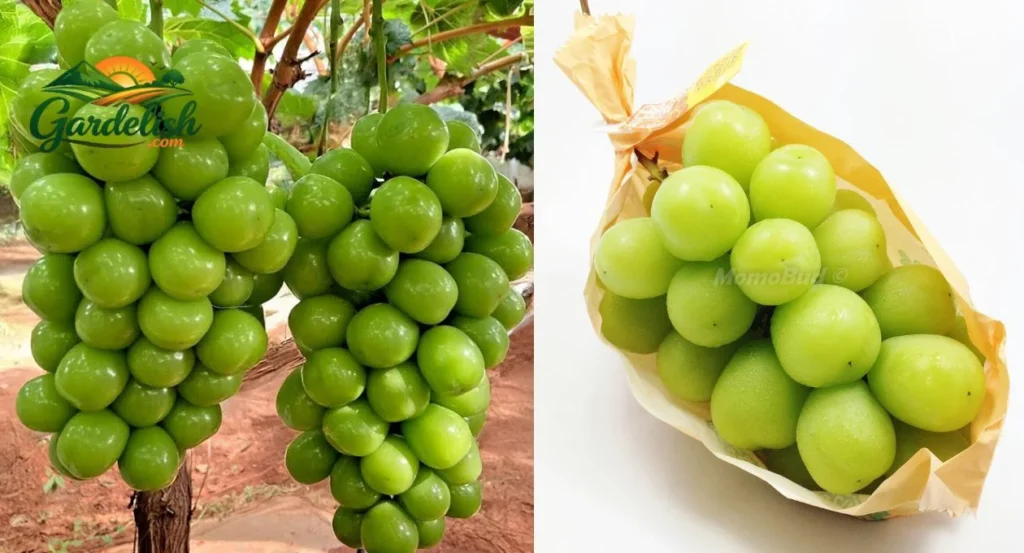
Shine Muscat is a premium green table grape known for its crisp bite, floral muscat aroma, thin edible skin, and sweet, low-acid flavor. Originally developed in Japan, it has become famous as a luxury fruit, but many gardeners now want to know whether they can grow it at home.
The short answer is yes, Shine Muscat can be grown by experienced home gardeners in suitable climates, but it is not a low-effort grape. It needs full sun, excellent drainage, strong trellis support, regular pruning, good airflow, and careful cluster management. In cooler or humid regions, disease prevention and site selection become especially important.
What Is Shine Muscat?
Shine Muscat is a yellow-green table grape cultivar developed from European and American grape genetics. Unlike common supermarket green grapes, it is prized for large berries, a crisp texture, muscat fragrance, and a skin that is pleasant enough to eat.
In the garden, it behaves like a vigorous grapevine rather than a small fruiting shrub. That means it needs space, structure, and disciplined pruning. A neglected vine may still grow heavily, but fruit quality usually drops when the canopy becomes crowded.
One important point for beginners: commercial seedless Shine Muscat production often involves gibberellic acid treatment at flowering and early fruit development. Home gardeners may not always achieve the same perfectly seedless, showroom-style clusters seen in premium fruit markets.
Is Shine Muscat Easy to Grow at Home?
Shine Muscat is best suited to gardeners who already understand basic grapevine care or are willing to learn. It is not difficult in the way some rare tropical plants are difficult, but it is demanding because fruit quality depends on timing.
A healthy vine needs the right balance between leafy growth and fruit production. Too much vigor produces shade and disease pressure. Too little growth gives weak clusters and poor ripening. The best results come from a warm, sunny site, open canopy, moderate feeding, and consistent watering during fruit development.
Beginners can grow it, but they should start with realistic expectations. The first few years are mostly about building the vine framework. High-quality harvests usually come after the vine is well established and properly trained.
Best Climate and Growing Conditions for Shine Muscat
Shine Muscat performs best in warm-temperate climates with sunny summers and enough seasonal warmth to ripen table grapes fully. A site with warm days and cooler nights is ideal because it supports sweetness while preserving aroma.
In USDA hardiness terms, exact performance depends on local winter lows, summer heat, humidity, rootstock, and disease pressure. Many table grapes grow across broad zones, but Shine Muscat should be treated as a premium cultivar that needs a protected, well-chosen site rather than a random corner of the yard.
Choose a location with:
- Full sun for most of the day
- Good airflow around the vine
- Well-drained soil
- Protection from late spring frost
- Enough space for a permanent trellis
Avoid low spots where cold air settles. Also avoid areas where water stands after rain. Grapevines dislike wet feet, and poor drainage increases root stress and disease risk.
Soil Requirements and Planting Tips
Shine Muscat grows best in deep, fertile, well-drained soil. Sandy loam or loam is ideal, but many gardeners can improve heavier soil with compost, raised planting areas, and better drainage.

Before planting, test the soil if possible. Grapevines generally prefer slightly acidic to near-neutral soil. If the soil is compacted, loosen a wide planting area rather than digging only a small hole. Roots establish better when they can move outward into improved soil.
Plant bare-root or nursery-grown vines in early spring after the worst freezing weather has passed. In mild climates, fall planting may also work if winter conditions are not severe.
A practical planting approach:
- Install the trellis before or soon after planting
- Plant at the same depth recommended by the nursery
- Water deeply after planting
- Mulch lightly, keeping mulch away from the trunk
- Remove weeds around the young vine
- Train one strong shoot upward as the future trunk
Do not over-fertilize a young vine. Strong early growth is helpful, but soft, excessive growth can become harder to train and more attractive to pests.
Sunlight, Watering, and Mulching
Shine Muscat needs full sun to develop sweetness, berry size, and strong flavor. Shade is one of the most common reasons table grapes taste flat. Even a healthy-looking vine can produce disappointing fruit if clusters are buried under leaves.
Watering should be deep rather than frequent and shallow. Young vines need steady moisture while establishing roots. Mature vines are more drought-tolerant, but they still need consistent water during flowering, berry set, and fruit swelling.
Mulching helps conserve moisture and reduce weed competition. Use composted wood chips, straw, or leaf mold around the vine, but leave a small gap around the trunk to prevent moisture-related problems. In humid climates, avoid heavy mulch piled too thickly, as it can keep the area overly damp.
Drip irrigation is better than overhead watering. Wet leaves and clusters increase disease pressure, especially where summers are humid.
Trellising and Pruning Shine Muscat Grapes
A grapevine without a trellis quickly becomes tangled and unproductive. Shine Muscat needs a sturdy structure that can support heavy growth and fruit clusters. A two-wire trellis, vertical shoot positioning system, pergola, or arbor can work, but the system should allow sunlight and airflow through the canopy.
Pruning is essential because grapes fruit on new shoots that grow from one-year-old wood. If the vine is not pruned during dormancy, it produces too much growth and too many weak fruiting points.
A simple home-garden pruning rhythm:
Year One
Focus on establishing a straight trunk. Select the strongest shoot and tie it to the support. Remove weak competing shoots.
Year Two
Begin forming permanent arms or cordons along the trellis. Keep the structure simple. A clean framework is easier to manage later.
Mature Vine
Prune during dormancy, usually late winter before bud break. Remove weak, crowded, dead, or poorly positioned wood. Keep enough fruitful buds for production, but not so many that the vine becomes overloaded.
Summer pruning may also be needed. Remove excess shoots, tuck growth into the trellis, and thin leaves around clusters carefully. The goal is filtered sunlight and airflow, not bare, sunburned fruit.
Flowering, Pollination, and Fruit Set
Shine Muscat produces flowers in clusters that later develop into grape bunches. Grapes are generally wind- and self-pollination friendly compared with many fruit crops, so a single vine may produce fruit if conditions are good.
Weather during bloom matters. Cool, wet, or windy weather can reduce fruit set. Excessive nitrogen can also encourage leafy growth at the expense of balanced flowering.
Cluster management is one of the details that separates average grapes from premium table grapes. Commercial growers often trim flower clusters and thin berries to improve shape, size, and appearance. Home gardeners can do a simpler version by removing weak clusters and avoiding overcropping.
If too many clusters remain on a young vine, the grapes may ripen poorly and the plant may weaken. It is better to harvest fewer good bunches than many sour, undersized ones.
Fertilizer and Seasonal Feeding
Feed Shine Muscat based on vine growth, soil quality, and leaf color. Grapevines do not need constant heavy feeding. In fact, too much nitrogen is a common mistake. It creates lush foliage but can reduce fruit quality and increase mildew problems.
Compost applied in spring can improve soil structure and provide gentle nutrition. If growth is weak and soil testing shows a need, use a balanced organic fertilizer or a fruit-vine fertilizer according to label directions.
Potassium is important for fruit development, while magnesium deficiency may appear as yellowing between leaf veins in some soils. Rather than guessing, soil testing gives the most reliable direction.
A good seasonal routine is:
- Compost or light feeding in spring
- Consistent water during early growth
- Avoid heavy nitrogen after fruit set
- Maintain mulch and weed control
- Stop pushing soft growth late in the season
The vine should enter dormancy with mature wood, not tender late growth.
Common Pests and Diseases
Shine Muscat may show tolerance to some grape diseases, but no grapevine should be treated as problem-free. Local conditions matter more than the reputation of the cultivar. Humid gardens, crowded canopies, and overhead watering can turn a promising vine into a mildew problem.
Common grape issues include powdery mildew, downy mildew, anthracnose, botrytis bunch rot, birds, wasps, mites, and Japanese beetles in some regions.
Powdery mildew often appears as pale, dusty growth on leaves or fruit. Downy mildew is more associated with wet conditions and may show yellowish leaf spots with pale growth underneath. Anthracnose can cause dark lesions on shoots, leaves, and berries.
Prevention is better than rescue. Use these habits:
- Prune for airflow
- Keep leaves and clusters dry
- Remove diseased plant material
- Avoid overcrowding
- Use clean pruning tools
- Net fruit before birds discover it
- Choose organic or conventional sprays only when appropriate for grapes and your region
For organic gardening, canopy management is the first defense. Sprays alone rarely fix a badly crowded vine.
Growing Shine Muscat in Containers
Container growing is possible, but it is more demanding than planting in the ground. A grapevine has a large root system and becomes heavy when mature, so small pots are not suitable.
Use a large container with drainage holes, a strong potting mix, and a permanent support. A half-barrel-sized planter is more realistic than a decorative patio pot. The vine will need careful watering because containers dry out faster, especially in hot weather.
Container-grown vines also need winter protection in colder climates. Roots in pots are more exposed to freezing than roots in the ground. Move the container to a sheltered place or insulate it if winter temperatures are harsh.
For small spaces, consider whether a grapevine is truly practical. Shine Muscat can be grown on a sunny patio, but it still behaves like a vigorous vine, not a compact houseplant.
When and How to Harvest Shine Muscat
Shine Muscat is harvested when the berries are fully sweet, aromatic, and crisp. Color alone is not always enough. Green grapes often shift toward a warmer yellow-green tone as they ripen, but taste is the best home-garden test.
Grapes do not continue ripening well after picking, so avoid harvesting too early. Sample a berry from the lower part of the cluster before cutting the bunch. If it tastes watery or sharp, wait longer.
Use clean pruners to cut clusters from the vine. Handle them gently because premium table grapes are valued for appearance as well as flavor. Store harvested clusters in a cool place and avoid washing until close to eating.
Conclusion
Shine Muscat is worth growing if the gardener can provide sun, drainage, trellis support, pruning, and patient seasonal care. It is not the easiest grape for a casual grower, but it rewards good management with crisp, sweet, aromatic fruit that feels very different from ordinary green grapes.
For the best results, start with a healthy vine from a reputable nursery, train it carefully in the first two years, and focus on balanced growth rather than quick harvests. With the right climate and consistent care, Shine Muscat can become one of the most rewarding table grapes in a home garden.
5 SEO-Friendly FAQs
1. Can Shine Muscat grapes be grown at home?
Yes, Shine Muscat grapes can be grown at home in suitable warm-temperate climates with full sun, well-drained soil, and a strong trellis. The vine needs regular pruning and good airflow for healthy fruit.
2. Does Shine Muscat need full sun?
Yes, Shine Muscat needs full sun for best sweetness, flavor, and berry quality. A shaded vine may grow leaves well but produce grapes that taste less sweet or ripen unevenly.
3. Is Shine Muscat naturally seedless?
Commercial seedless Shine Muscat production often uses gibberellic acid treatment during flowering and fruit development. Home gardeners may not always get the same seedless results without proper management.
4. How long does Shine Muscat take to fruit?
A young grapevine usually needs a few years to establish before producing a reliable crop. The first years should focus on trunk training, root development, and building a strong vine structure.
5. Can Shine Muscat grow in containers?
Yes, but it needs a very large container, excellent drainage, regular watering, and strong support. Container vines also need more winter protection in cold climates.
Pink Pineapple: What Gardeners Should Know Before Growing This Tropical Fruit