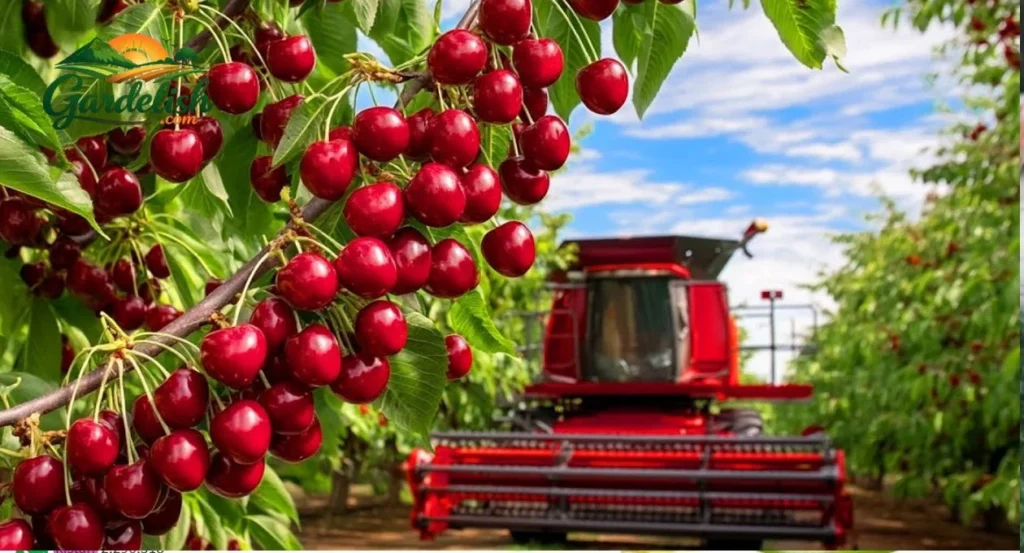
California cherry harvest is one of the shortest, most weather-sensitive fruit seasons in the garden and at the market. In a typical year, California cherries arrive from late April or May into June, with the heaviest harvest often landing in May, depending on the region, variety, and spring weather. Official California cherry guidance describes the season as a brief six-week window, usually from mid-May through June, while Delta-area orchards often begin earlier, from late April to mid-June.
For home gardeners, the rule is simple: do not wait for cherries to soften on the counter. Cherries do not ripen after picking, so they need to be fully colored, firm, and sweet before they come off the tree.
Quick Answer: California cherry harvest usually peaks in May
California cherry harvest usually runs from late April through June, with peak picking often in May. In normal years, early varieties such as Brooks, Tulare, and Chelan start the season, while Bing and Rainier follow soon after. Cherries should be harvested when they are fully colored, firm, and sweet because they do not continue ripening once picked. In hot or rainy years, the harvest can shift earlier, shorten dramatically, or end before shoppers and gardeners expect it to.
California cherry harvest is short because the fruit ripens fast
California cherries do not give gardeners a long picking season. Once color starts deepening, the crop can move from almost ready to overripe in a matter of days, especially during warm weather.
Commercially, California has an advantage because its cherries reach U.S. markets before many northern cherry-growing states. UC Davis notes that California growers produce fruit from late April to late June, giving the state an early-market window.
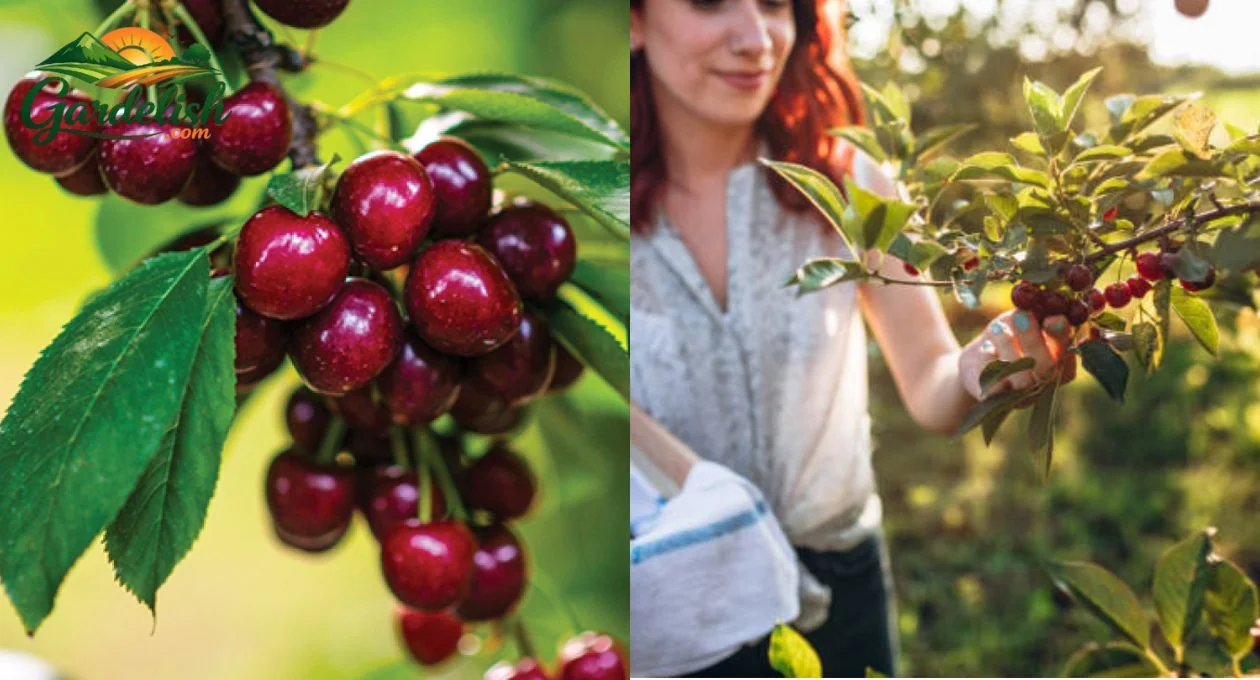
In the backyard, that same early-season advantage can feel like a race. I usually tell new fruit growers to start checking trees as soon as the first cherries turn from green to straw, blush, red, or mahogany, depending on variety. The first thing gardeners notice is usually bird activity. Scrub-jays, finches, crows, and starlings often find ripe cherries before people do, especially near brushy areas, power lines, or wild edges.
California cherry harvest timing by season
| Timing | What usually happens | Gardener’s task |
| Late winter to early spring | Bud swell and bloom begin | Watch frost, rain, and bee activity |
| April | Earliest districts and varieties may begin harvest | Start checking color and bird pressure |
| May | Main California cherry harvest often peaks | Pick every 1–2 days once fruit is ripe |
| Early to mid-June | Later varieties and cooler regions finish | Harvest quickly before heat, birds, or cracking |
| After harvest | Tree rebuilds energy for next year | Irrigate deeply, prune appropriately, and clean up fallen fruit |
Ripe California cherries are firm, fully colored, and sweet
A ripe cherry should look finished, not merely red. Color is useful, but flavor is the final test. UC IPM recommends picking cherries when they are firm and have reached full maturity and color; sweet cherries should be tasted to confirm readiness.
For dark sweet cherries, such as Bing, look for deep red to mahogany skin, glossy shoulders, and a firm bite. For Rainier, do not wait for dark red skin; a creamy yellow base with a rosy blush is normal. Brooks, Tulare, and Chelan often ripen earlier than Bing and may color quickly during warm springs.
A common beginner mistake is picking too early because the cherries “look red enough.” Those cherries taste flat, watery, or sharp. Another mistake is waiting for fruit to soften like peaches or plums. Sweet cherries should be juicy and flavorful, but still firm.
How to test cherries before harvesting
- Check the mature color for the variety. Bing should be dark; Rainier should be yellow-red, not mahogany.
- Taste fruit from several parts of the tree. South-facing fruit often ripens first.
- Feel the firmness. Ripe cherries are firm, not hard-green and not mushy.
- Look at the stem. Green, fresh stems usually mean better storage quality.
- Watch the birds. When birds start pecking, the harvest window has usually arrived.
Pick California cherries with the stem attached for best storage
For fresh eating, pick cherries with the stem attached. UC IPM recommends harvesting cherries with stems for better storage, while cherries picked for cooking or canning can be pulled without stems.
The best technique is gentle. Hold the cherry between your fingers, lift slightly, and roll the stem away from the spur. Avoid yanking clusters downward because that can damage the fruiting spur that may carry future crops.
Step-by-step cherry harvesting guide
- Pick in the cool part of the day. Morning harvest keeps fruit firmer.
- Use shallow containers. Deep buckets bruise the cherries at the bottom.
- Lift the stem, don’t pull the fruit. Keep the fruiting spur intact.
- Sort as you pick. Separate cracked, bird-pecked, soft, or moldy fruit.
- Move fruit into shade immediately. Sun-warmed cherries decline quickly.
- Refrigerate soon after harvest. UC IPM says cherries can be stored at cool temperatures for about 10 days.
For freezing, pit the cherries first. I prefer freezing them in a single layer on a tray before moving them into bags. That way they do not freeze into one solid block, and you can grab a handful for smoothies, pies, sauces, or compote.
Rain, heat, and compressed bloom can reduce the California cherry harvest
A beautiful bloom does not always mean a heavy crop. Cherries are fussy at exactly the wrong moments: bloom, pollination, fruit sizing, and final ripening.
The 2026 California season showed how quickly things can change. Produce Market Guide reported that record March heat pushed the season ahead of schedule, with the California Cherry Board expecting production mainly from late April through the third week of May. FreshFruitPortal later reported that weather abnormalities and quality issues brought the season to an abrupt end by late May, with shipments far below early expectations.
For home gardeners, the same weather patterns show up as sparse fruit, uneven ripening, tiny cherries, cracking, or sudden bird pressure.
Common reasons a cherry tree has little or no harvest
| Symptom | Likely cause | What to do |
| Lots of flowers but few cherries | Poor pollination, cold rain, low bee activity, wrong pollinizer | Plant compatible varieties and avoid spraying during bloom |
| Fruit drops when small | Natural fruit drop, heat stress, water stress | Keep soil evenly moist and mulch the root zone |
| Cherries split before harvest | Rain on ripe fruit or soggy soil | Harvest before storms when possible and avoid overhead watering |
| Fruit disappears overnight | Birds or wildlife | Net small trees early and use deterrents before fruit colors |
| Cherries taste bland | Picked too early or overwatered near harvest | Taste before picking and reduce irrigation swings |
| Fruit molds after cracking | Exposed flesh after rain split | Pick promptly, chill quickly, and discard moldy fruit |
Cherry cracking happens when ripe fruit gets wet
Rain near harvest is one of the most frustrating cherry problems. UC IPM explains that cherry cracking in California mostly happens when rain wets ripe or nearly ripe fruit. Water on the fruit surface can move into high-sugar fruit, and saturated soil can also push excess water into the fruit. Once the skin cracks, decay can follow quickly.
Bing, one of California’s major fresh-market varieties, is especially known for cracking susceptibility.
How to reduce cherry cracking
- Harvest ripe fruit before a forecasted rain.
- Avoid sprinklers that wet the canopy.
- Keep irrigation steady, not erratic.
- Mulch to moderate soil moisture.
- Pick cracked fruit quickly and use it first.
- Refrigerate immediately to slow decay.
What usually fails is waiting for the tree to “dry out” after a storm. Once ripe cherries have cracked, they do not heal. They need to be harvested, sorted, and used quickly.
Bird protection should start before cherries turn fully ripe
Birds do not wait for your calendar. UC IPM notes that several bird species can damage ripening fruit, and damage can be worse near wild vegetation, poles, or other bird habitat.
For backyard trees, netting works best when the tree is small enough to cover completely. Loose netting tossed over a large tree often becomes a mess, catches branches, and still lets birds in through gaps. On mature trees, gardeners often accept sharing the top crop and focus on harvesting reachable fruit early and often.
Practical bird-control checklist
- Net dwarf and semi-dwarf trees before cherries fully color.
- Secure netting at the trunk so birds cannot enter underneath.
- Use reflective tape, scare balloons, or noise only as short-term helpers.
- Pick ripe cherries every day or two during peak harvest.
- Prune for a manageable canopy so future harvests are easier to protect.
California cherry varieties ripen in waves, not all at once
One reason the California cherry harvest can stretch across several weeks is that growers plant varieties with different ripening times. The California Cherry Board lists Brooks, Tulare, Chelan, Coral, Bing, and Rainier among important varieties, with Brooks and Tulare arriving early and Bing dominating much of May into early June in normal years.
| Variety | Typical harvest position | What gardeners notice |
| Brooks | Early | Large, firm, heat-tolerant, rich flavor |
| Tulare | Early | Dark red, good flavor, ripens before Bing |
| Chelan | Early | Mahogany skin, firm texture, mild sweetness |
| Coral | Early-midseason | Very sweet, glossy, low acid |
| Bing | Midseason | Dark red, firm, classic cherry flavor |
| Rainier | After Bing | Yellow with red blush, very sweet, premium fruit |
This matters because “red” does not mean the same thing on every tree. A Rainier cherry will never look like Bing. A Chelan may be ready before a nearby Bing looks finished. Always judge by variety, color, firmness, and taste together.
Protect next year’s California cherry harvest after this year’s crop ends
The next cherry harvest starts long before spring bloom. A tired, drought-stressed, poorly pruned tree is less likely to carry a clean, easy-to-pick crop.
After harvest, keep the tree watered through dry California summers, especially in inland valleys. Do not overfertilize with nitrogen late in the season; soft, excessive growth can make pruning and pest management harder. Remove fallen fruit to reduce pests and disease pressure. Prune to keep the canopy open, reachable, and bird-net friendly.
Most sweet cherries also need compatible pollination unless the variety is self-fertile. If a tree blooms beautifully every spring but rarely fruits, do not assume it is “lazy.” It may need a pollinizer variety nearby, better bee activity, or protection from bloom-time weather.
FAQs About California Cherry Harvest
When is California cherry harvest?
California cherry harvest usually runs from late April or May into June, with peak harvest often in May. Official California cherry timing commonly describes a short mid-May-through-June season, while some Delta and warmer-region orchards begin in late April. Weather can shift the harvest earlier or shorten it dramatically.
Why was the 2026 California cherry harvest so short?
The 2026 California cherry harvest was shortened by unusual weather. Industry reporting said March heat pushed bloom and harvest earlier than normal, compressing the crop window. Later reports said weather abnormalities and quality problems brought the season to an abrupt end by late May.
Do cherries ripen after picking?
No. Cherries do not ripen after picking, so they should be harvested only when fully mature, properly colored, firm, and flavorful. A cherry picked too early may soften slightly in storage, but it will not develop the full sweetness and flavor it would have gained on the tree.
How do I know when Bing cherries are ready to harvest?
Bing cherries are ready when they turn deep red to mahogany, feel firm, and taste sweet with good acidity. Do not pick them at the first sign of red. Bing is also prone to rain cracking, so if fruit is nearly ripe and rain is forecast, harvesting a little early may save part of the crop.
Should I pick cherries with or without stems?
Pick cherries with stems attached for fresh eating and better storage. The stem slows moisture loss and helps the fruit hold longer in the refrigerator. For cooking, canning, or immediate processing, cherries can be harvested without stems, but they should still be handled gently and cooled quickly.
Why did my cherry tree bloom but produce no cherries?
A cherry tree may bloom without fruiting because of poor pollination, cold or rainy bloom weather, lack of compatible pollinizer, frost damage, low bee activity, or a young tree that is not mature enough. Sweet cherries often need another compatible variety nearby unless the cultivar is self-fertile.
How long do fresh cherries last after harvest?
Fresh cherries can last about 10 days at cool temperatures when picked at full maturity and handled properly. Keep them dry, refrigerate them soon after harvest, and avoid washing until just before eating. Cracked, bruised, or bird-damaged cherries should be used first because they spoil faster.
How can I stop birds from eating my cherry harvest?
Start protection before the cherries are fully ripe. Netting is the most reliable option for small or pruned trees, but it must be secured tightly so birds cannot enter. For large trees, combine early picking, canopy management, reflective deterrents, and realistic expectations. Birds often take the top fruit first.
Conclusion: California cherry harvest rewards gardeners who act quickly
California cherry harvest is brief, early, and highly dependent on spring weather. In a normal year, cherries ripen from late April or May into June, but heat, rain, poor pollination, and bird pressure can shorten the crop fast. The best harvest comes from checking trees daily as fruit colors, tasting before picking, harvesting with stems attached, and cooling fruit quickly. For next year, focus on steady irrigation, good pollination, bird protection, and an open, manageable canopy. With cherries, waiting is rarely the winning move. When the fruit is fully colored, firm, and sweet, pick it.
Florida Orange Crop Update: What the 2026 Forecast Means for Growers, Gardeners, and Orange Trees